The head of strategy for PepsiCo’s in-house agency tells Tim Healey why sameness is strangling creativity, how subculture-level understanding fuels ideas like ‘Doritos Silent’ and why brands must stop talking at people and start truly understanding them.
You’ve worked at Omnicon, RAPP, Nonsense, Mullen Lowe, ODD and now you’re at PepsiCo, where you are head of strategy for its in-house agency. Tell us about your career journey.
I was meant to be a doctor, and I am very much not a doctor. Please do not come to me for any injuries. I did a biology degree, then I went to med school. Six months in, I quit. It had dawned on me how much I needed creativity in my life, and you cannot have a huge amount of creativity in medicine because it gets ‘a bit deathy.’ You can’t go: “OK, let’s try this new craaaazy way of operating today.” I found that every day I was regurgitating a textbook, and actually, it suddenly became very clear that to feel fulfilled, I needed to be surrounded by ideas.
I pivoted to a masters in psychology, which has always been my passion. I learned about the brain, about consciousness, how we learn a language, addiction, neurological disorders – phenomenal things. It was the best year. I realized that I’m mostly interested in people: their brains, how they think, why they make decisions, why they do what they do and why their behavior is weird or ugly or otherwise.
This helped me realize that the path I needed to follow was not medicine: it was marketing. I was lucky enough to find, apply for and get on to the Omnicom marketing grad scheme, which sadly no longer exists. It was fantastic; four people get taken through a whistle-stop tour of five Omnicom agencies, three months in each, allowing you to learn about different roles and types of work. I covered PR, market research, branding and digital.
I was an account manager, a researcher and a strategist. What a luxury to be able to try all of that. It was in strategy that I found all the things that I was looking for. I think I’ve got the best job in the world. I call myself ‘a professional people watcher’. I try to understand, observe, and consider how to get into people’s heads, which, for someone who did psychology, is a fabulous paid pastime. No wonder there’s a lot of ‘strategy psychologists’ out there.
After the grad scheme, I worked in a number of agencies, big, small and weirdly named. Essentially, I like being in places where ideas trump processes. I had a call from a copywriter friend that I used to work with. He was at PepsiCo’s in-house agency, which I’d never heard of. ‘In housing’ was far more nascent back then. Big companies were just starting to experiment with it.
There were about 10 people there at the time, and he said: “We need some strategy and some help. Can you come in and help us crack some briefs?” My initial thought was: “Absolutely not. I do not want to be part of a huge corporation.” It felt really different to how I’d begun my career and the things that I most enjoyed and where I had added the most value. But no one should turn down a chance to have an interesting conversation, so
I met the then team, including Matt, now the chief creative officer for PepsiCo, and thought, “Oh crap, I love their energy and attitude.”
We instantly clicked. So suddenly there I was, entering the corporate world. Four years in, I’ve had the pleasure of working on some of the world’s best-loved food & drink brands. Yes, I’m ‘in-house’, but I’m not building one brand only. It works for me because I’m a bit of a magpie: I like shiny new things. New brands, new audiences, new problems.
One day I can be working on Doritos, then on Pepsi. Next I’m working on porridge, or Monster Munch, or helping create new products. I’ve got a depth of category knowledge and experience, but I am constantly presented with variety, which I think maintains the freshness of my thinking. Working solely on one brand, there’s a danger that you get blinkered by that brand, and that’s not the case here.
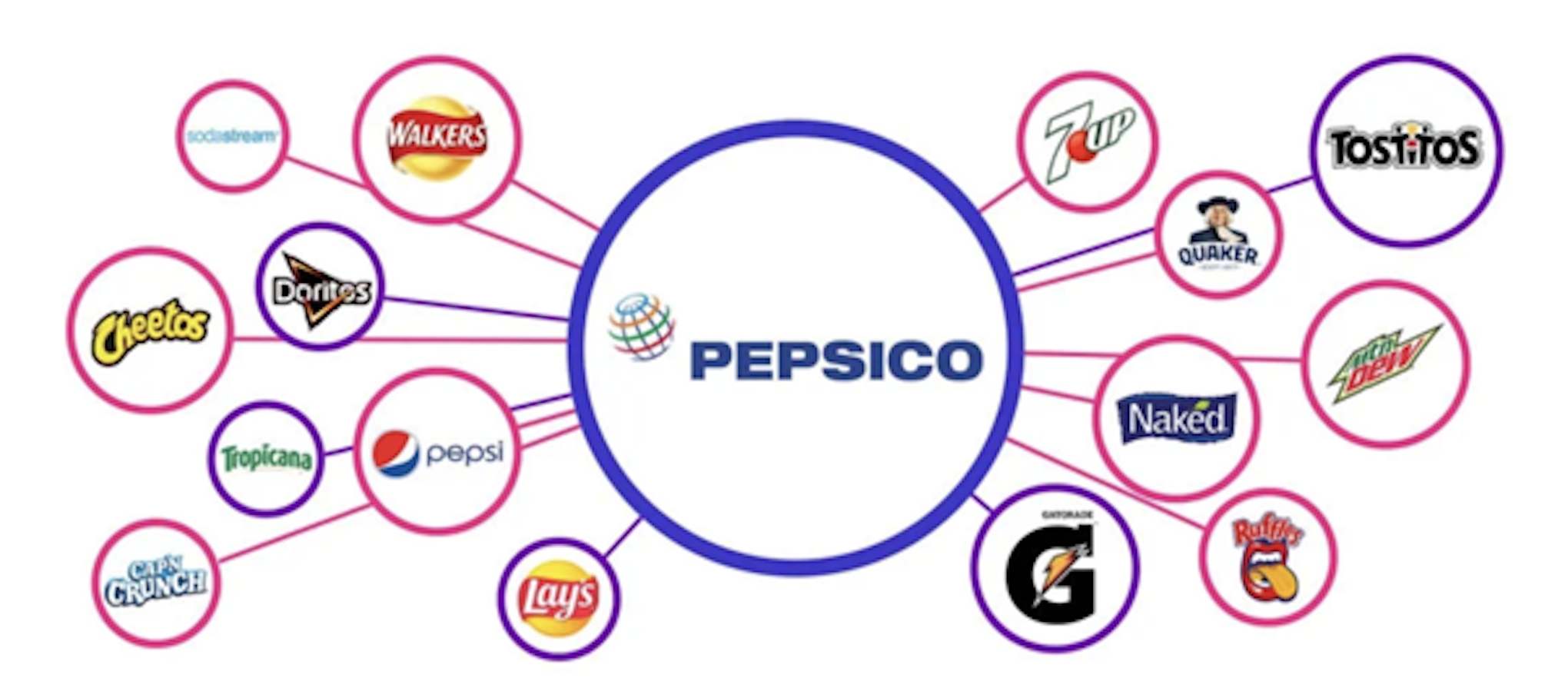
PepsiCo reported a $9.4 billion net profit for the year ended March 2025. Through your strategic lens: what does next year look like?
The landscape around food and drink is changing fast. There are new consumer trends, new consumer understanding, and people are more aware of what they are putting in their bodies. There’s a lot going on in the world that will create change at the macro-cultural level. PepsiCo has always managed to predict many of these changing demands because we have talented teams that help us do that. As a result, there’s an awful lot of portfolio and product development happening.
In the States, we’ve just launched a prebiotic Pepsi. We just bought Poppi for $1.3bn. We are making strong signals to the market that we’re here to invest in food and drink futures – and that will keep happening. This is not about removing loved brands: it’s about evolving loved brands. Where innovation and marketing used to talk to each other sporadically, I’m now seeing those functions come together so much more. Innovation is something I’ll be spending a lot of my time working on over the next year.
Beyond the product itself, we need to continue to evolve our marketing approach. We buy into the rules of Byron Sharp and understand the theory around how brands grow. But we need to balance mass reach and penetration-driving activity with sharp subculture relevance, which I think we’ve probably been guilty of not doing enough of in the past. My mantra for this is: ‘Know them deeply, then prove it.’ Talk to your target audience, spend time with them, understand them – the real basics.
Once we understand a cohort, we look to do two things. The first is to knowingly reflect their reality. A great recent example is the Burger King delivery advert that caused a bit of a storm. Mothers, minutes postpartum, blissfully tucking into their freshly delivered Burger King burger. That campaign revealed such a sharp and specific truth around how BK is craved. After my firstborn, I had a takeaway burger as soon as she was out, so that campaign spoke to me wholeheartedly. I also had a bottle of Prosecco on the side that I hid from the midwife whenever she came in! But that Burger King idea felt so real. It was as if they knew me deeply – and they proved it. And I think that was very powerful.
The second thing you can do with an intimate knowledge of subcultures is solve a problem for them. At PepsiCo we know we don’t solve big life problems. We can’t help you buy a house, or a car, or learn a new language. But there are still pain points we can ease as brands.
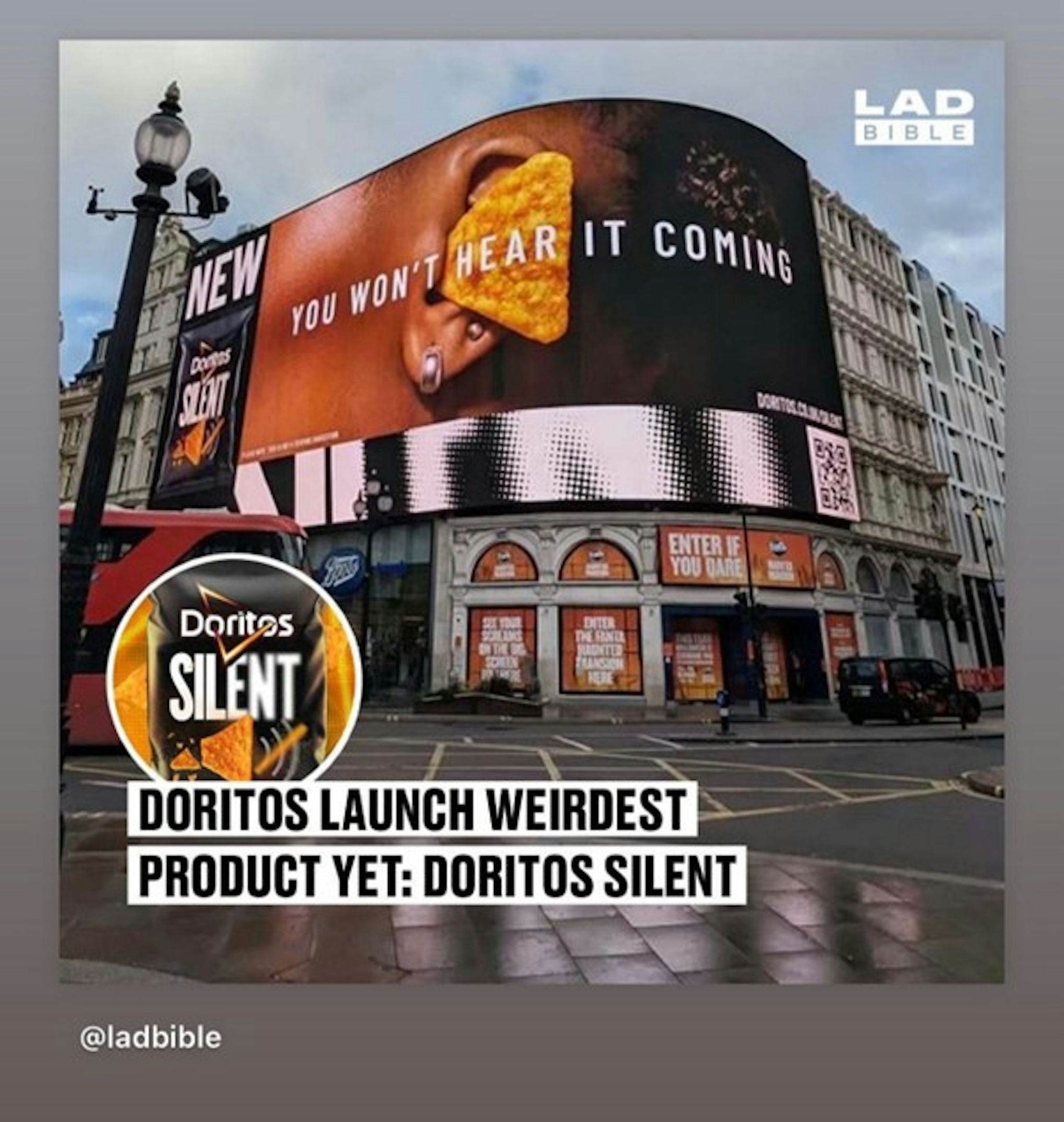
Last year, we won an obscene number of awards for something called ‘Doritos Silent’, which was a campaign aimed at the gaming community. Specifically, those who game in squads over a microphone. They chat to each other during long gaming sessions, and snack liberally at the same time. And this causes a problem – the sound of a crunchy tortilla chip can at best piss people off, at worst get in the way of an important conversation – the ultimate jeopardy being that you might die, and then your squad hates you or even kicks you from the party chat. We were the problem, so we needed to create a solution.
Using ‘Crunch Cancellation’ technology – clever tech that could remove the sound of a Doritos crunch from audio transmittance – people were able to snack and game freely. We wrapped this up in a creative idea that was a bit subversive, called ‘Doritos Silent’, and gamers loved it because we were being both playful and genuinely helpful. This kind of subculture sharpness is something we want to do so much more of next year. It moves us from saying “We’re tasty please buy us” to “we get you, and the role we play in your lives.”
Can you tell us about a customer research discovery that you’ve made that you found surprising?
I’m working on a project right now for Pepsi. We’re trying to encourage the shift from full sugar to zero sugar in Eastern Europe, where zero sugar is seen as a huge taste sacrifice. To land a compelling enough message to change behavior, we need to understand the motivation to do so.
We did a huge amount of insight work. We looked at various data points, we really tried to understand where the benefits might lie in drinking a zero-sugar drink – if we could capture that, then we could facilitate change. One small data point on one spreadsheet jumped out at us. We saw that people had far stronger preferences for drinking full-sugar colas at a party, at lunch, at home, and at a BBQ. But when it came to ‘being on a date’ we saw the exact reverse. Normally, on a date, people opt for a zero-sugar drink if they have the choice.
You could immediately imagine that to be true: on a date you would want to put your best foot forward in front of the significant other. Perception versus reality. It felt like there was so much humanity sitting behind these numbers on a spreadsheet. A small, powerful nugget. Goodness knows how we will develop that, but what a fascinating insight.
What’s the benefit, in your experience, of being in-house rather than having external agencies?
This is my first in-house role. I’ve had the luxury of seeing it from both sides. Here, I’ve worked across the same set of brands for four years, so I have an intimate understanding of the brands and the categories. It’s fair to say my business understanding has also grown exponentially! I now understand the interconnected roles of marketing versus R&D, distribution, HR, finance – the whole piece.
I really care about the growth and success of the brands I work across. If you are at an agency working on haircare, off-grid gas and eggs at the same time, it’s hard to care equal amounts about all three. Unless you’re a very stylish farmer. I’m genuinely passionate about building brands that people love and care about – and helping PepsiCo see success as a result.
The thing we always have to have an eye on is that, as the ‘wife’ versus all these ‘sexy external agency mistresses’, we have to keep things fresh. As a result, we make sure that we keep coming up with proactive ideas and new angles on problems and are always spotting opportunities. We have to keep pushing and keep poking.
What myth about marketing would you most like to bust?
The first is the opinion that “marketeers are all wankers.” I’ve heard that at many parties. When I say I work in marketing, people say: “Oh, isn’t everyone a wanker?” Why do people think that?! I think maybe there can be a bit of over-intellectualization in marketing. Possibly some inflation of self-importance. Marketing is not open-heart surgery, that’s for sure. But the marketers I know are all great people and so I’m very happy to debunk this myth.
A second myth is that marketers, certainly at senior level, don’t ever spend any time with the people they’re trying to market to anymore. The perception is: there’s a lot of jumping from boardroom to boardroom and having lofty, high-level conversations, when we’re just trying to create genuine demand from a specific set of humans. I’d like to bust the myth that we don’t just sit locked up in boardrooms, because here at PepsiCo we do not. We do a lot of empathy work.
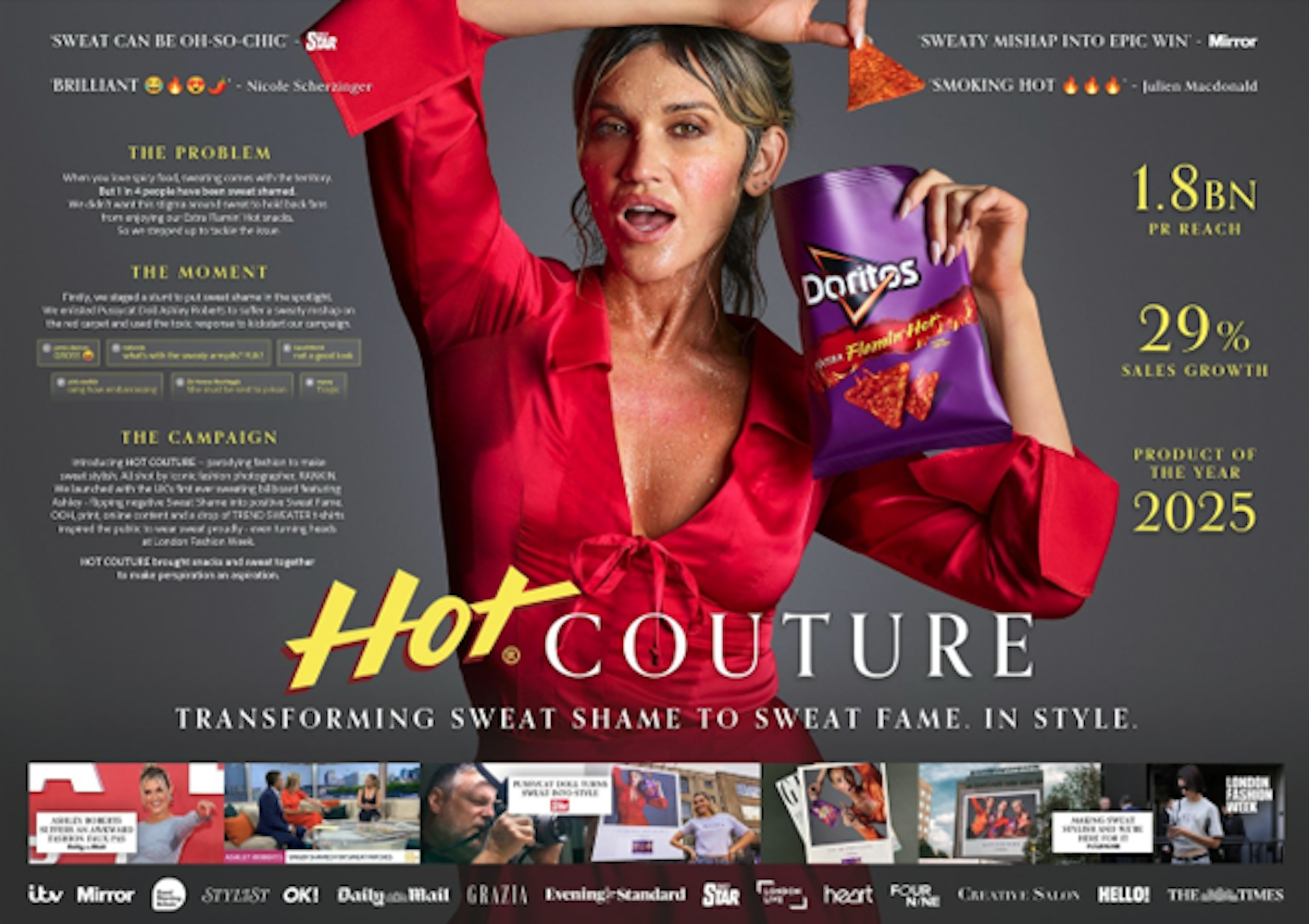
In the last month alone, my team have spent time with farmers in France, talked to uni students about their recreational drug use at BBQs (among other things), and been taught how to play SkyJo by the avid board game community.
What question would you like me to ask the next senior marketer that I interview?
Building on my last answer: my question would be… when was the last time that they spoke to the person they’re trying to market to? I’d also like to know what method they used. So: when did they and how? Help me bust the myth!
Your question from the last senior-level marketer that I interviewed is: do you think advertising as an industry has lost its way?
Yes, absolutely. There is so much ‘boring’ out there. There is so much bland. On social for example, there’s a real of homogenization of content… everything’s starting to look the same. When I go on Instagram, I can see 12 different beauty brands trying to sell me what looks like the same product in the same way. I don’t see or feel any of their distinctiveness. I don’t feel their identity. I definitely don’t know what their point of view is.
I have a real passion for brands with a clear point of view. The more ‘pokey’ the better. Help me really understand who you are. Do that by telling me who you’re not, or give me a brand enemy. A lot of brands advertise at surface level. If they were humans, they’d be forgettable background characters.
Marcus Collins, the amazing cultural professor said: “If your brand doesn’t have a clear identity, how can you expect people to identify with it?” A lot of brands are guilty of this. I’m definitely drawn to challenger startups: Oat Cult grabbed my attention. They’re bonkers, and I love it, because I remember them. Nutter Butter, Liquid Death, The Ordinary. Whatever you think of them, you notice them and what they have to say. Don’t play it safe, take a stand.
If there’s one thing you know about marketing, it is…
That if it’s not ultimately about people, it’s nothing.
You might die tomorrow so make it worth your while. Worth Your While is an independent creative agency helping brands do spectacular stuff people like to talk about. wyw.agency.
This interview has already appeared in The Drum. Discover the best campaigns, industry insights and interviews from world-leading marketers, creatives and more.