If you’ve attended a marketing conference lately, you could be forgiven for thinking the industry’s entire future hinges on a single question: how do we harness AI?
Every panel, every strategy deck, every keynote seems to orbit the same anxious conversation: adapt, optimise, automate. And obviously those conversations matter. But in our collective rush toward ‘smarter’, faster systems we are quite possibly, letting a more fundamental problem fester, one that no algorithm can fix.
Who is actually doing the thinking?
After nearly 25 years in marcomms, including 11 at LinkedIn, I’ve watched our industry chase waves before. The tide today is AI, and rightly so. But technology has never been a substitute for perspective. And right now, while we obsess over building smarter tools, we are failing to build more representative rooms.

We speak regularly with CMOs, brand leaders, and agency heads across the sector. What we hear is not outright resistance to diversity – it is sometimes a hesitancy. A creeping sense that the “post-DEI” moment has made the subject politically awkward, too charged to champion loudly. But the need for different voices has not gone away. If anything, in an age of AI-accelerated decision-making, it has never been more urgent.
Because the thing about AI that its most enthusiastic advocates tend to gloss over: it amplifies what already exists. It does not neutralise bias, it scales it. Feed tomorrow’s strategy into a system shaped by yesterday’s narrow perspectives, and you will get yesterday’s thinking delivered faster and at greater volume. That is not innovation – that is acceleration in the wrong direction.
The marketing teams that will genuinely win in this next era will not simply be the most technically fluent. They will be the ones that bring together people who challenge inherited assumptions, who carry lived experiences that data alone cannot replicate, and who can see audiences the way audiences actually see themselves, not through the distorted lens of what historical datasets tell us to expect.
At People Like Us, we are seeing the most forward-thinking organisations move well beyond token hires. The real work, the hard structural work, is about all manner of fundamental things, such as rethinking recruitment from the ground up, rebuilding talent pipelines that have long been quietly gate-kept, and dismantling the barriers that keep too many talented people from reaching the rooms where decisions are made. More importantly, it is about ensuring that when different perspectives do enter those rooms, they actually shape the work, not just decorate the org chart.
The good news is that awareness is no longer the barrier it once was. The opportunity now lies in translating that awareness into presence, ensuring different voices are in the room when it counts, not just consulted after the fact. Perspective is not an aspirational line on a slide deck. It is the engine of better thinking, and the organisations acting on that are already seeing the difference.
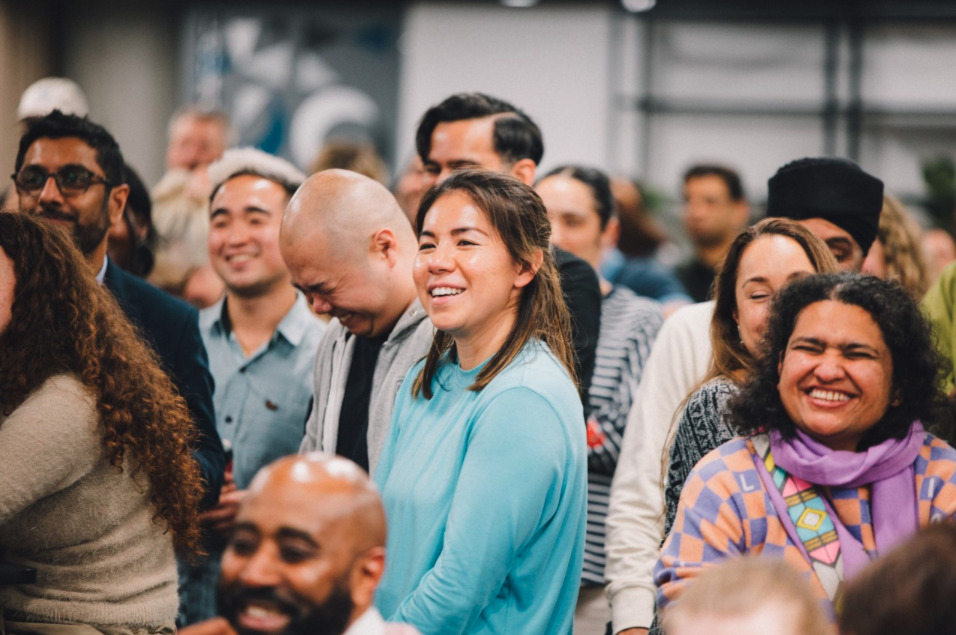
If we fixate on keeping pace with technology while ignoring the quality and diversity of the people creating the work, we won’t just miss culturally – we will miss commercially. Audiences are not monolithic – and marketing that fails to reflect that will increasingly fail to land.
Smarter tools in the same hands will only ever produce smarter versions of the same mistakes. The future belongs to organisations bold enough to change who is doing the thinking.
Darain Faraz is Co-Founder of People Like Us, a not-for-profit helping organisations build more representative and effective teams across creative, media, and communications. He began his career in PR agency land before moving in-house to MySpace, then spent 11 years at LinkedIn, most recently as International Brand Marketing Director. Through People Like Us, he helps organisations rethink hiring, close pay gaps, and create environments where diverse talent can progress and genuinely shape better outcomes.