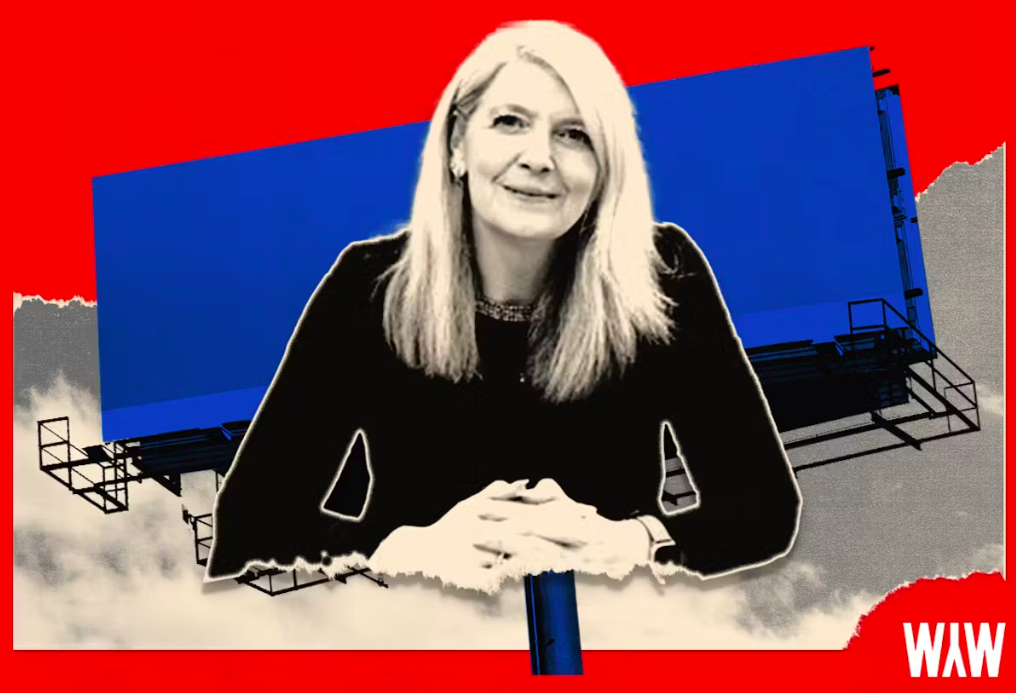
The vastly experienced marketer tells Tim Healey how she’s drawing on decades at Unilever, Cadbury and beyond to help NatWest win trust in an age when some would rather take financial advice from ‘a complete stranger’ on social media than from their bank.
You’ve held senior marketing roles at Unilever, Sara Lee, Cadbury, Bird’s Eye, British Gas and Centrica, and since 2020, you’ve been CMO at NatWest. Could you walk us through your career journey?
I did a chemistry degree and a PhD in laser chemistry. My first job at Unilever was as a research scientist. So I joined in Port Sunlight, creating new products. It was the R of the ‘R and D’ (Research and Development) – lab specs, white coat and I was working on skincare.
A few years into my role, Unilever wanted to do an experiment: they wanted to team a scientist up with a marketeer to improve the cycle time of innovation to market. So my partnered marketer would do all the concept development and I would then make up all the samples, and we’d go and test them with consumers.
I loved being in contact with customers and I decided I wanted to become a marketeer. At the time, Unilever were making great adverts for Lynx and Dove and I went to talk to loads of people across the business, looking for opportunities, and everybody said: “No – technical people are not creative. Marketing is a magical black art”.
The woman that was running Unilever’s personal care business was an ex-chemical engineer, and when I spoke to her, she said: “I’ll take a punt on you.” She gave me the role of senior brand manager for Dove deodorant: profit and loss, responsible for the UK, doing all the advertising and innovation for Europe.
I didn’t even know the difference between PR and promotions: I was chucked in at the deep end. But I’ve always had this sort of ‘sink or swim’ mentality: if it all goes wrong, I’ll go and be a teacher or do something else. I moved down to London and stayed with Unilever for 15 years. I was hugely lucky as learning about marketing at Unilever, was learning from the best. I worked on Dove, Vaseline, Lynx…
At that time I got married, had a couple of kids. I was traveling around 170 days a year. I would go on a Sunday, come back on a Friday or a Saturday, and I would have been in Buenos Aires, Singapore, Kuala Lumpur, all over North America. It sounds glamorous, but it’s really not. It was the era before video conferences and we’d have these conference calls, and I would be like Charlie Boswell from ‘Charlie’s Angels’ – the voice on the end of a phone…
I decided I was going to leave as I wanted to be more UK based. I became body care marketing director for Sarah Lee, which was like a little mini Unilever. And then 18 months in, Unilever bought Sarah Lee. I had spent 18 months building the team, applying what I had learned at Unilever to Sarah Lee, which was a great experience as theirs was a smaller company. Once they were acquired, I ended up getting headhunted for Cadbury’s.
The day I started at Cadbury’s, there was a hostile takeover from Kraft. Despite Cadbury’s initially opposing the takeover, two years later, Kraft bought Cadbury’s. Kraft wanted to run everything through their head office in Switzerland. My boss left immediately, because he didn’t want to work for Kraft. As a result, I ended up running the integration, which was really, really hard.
So I ended up at Birds Eye. It was a very different culture: you were not paid for career development. The day I started, my boss said to me: “I’ve paid a lot of money for you, so you better deliver. We’re buying your expertise. This is a very commercial organization. So as a marketeer, you’ve got to justify your existence. You’ve got to be able to talk return on investment. You’ve got to show this money drives that return and sells as many fish fingers as possible.” My four years there taught me to be extremely commercially-minded.
Next I was approached by British Gas. I was fascinated. In consumer goods, you don’t own the customer relationship – the retailer does. You drive people into store and then you’re trying to figure out who the hell bought your product at the end of the day. Whereas in banking, where I am now, and in energy: we know where you live, we know how much money you spend with us. I can do so much with that. Brand is everything.
With each of the roles, I’ve taken something with me to the next one that’s made me a better marketer. I couldn’t do the job I do now if I hadn’t had a regulated role in a service industry. If I’d come straight from Unilever to here at NatWest, I would have died. The Sarah Lee role taught me all about full refit and loss accountability.
Someone said to me early on in my career: “Any situation is dead easy, accept it, change it, or move on”. If I’m not happy, then can I do something about it? Life’s too short. I spend more time working than I do with my family so I’ve got to enjoy it. If a role is not giving me what I need, and I can’t change the organization to get what I want, then I need to go and do something else.
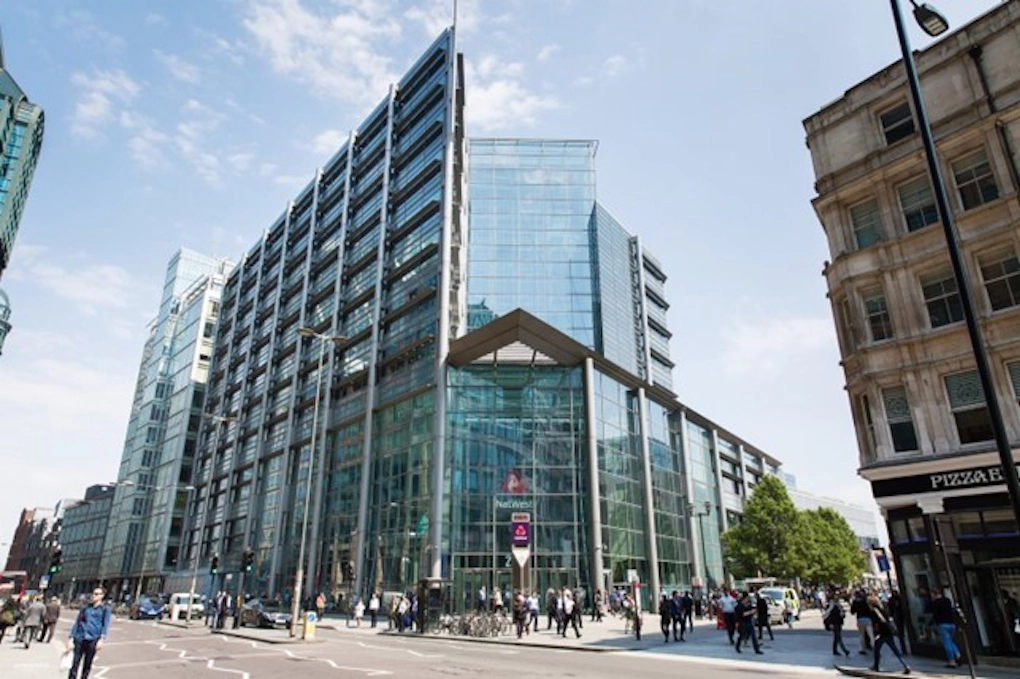
NatWest’s London headquarters.
Anyone reading this in the UK will know that NatWest is a high street bank but how would you articulate the offer?
Helping people build their financial well-being is at the heart of we what do. At NatWest we can help you from cradle to grave – and we’re proactive in that relationship. If we’re successful, and our customers are successful, then ultimately our share price will grow. If you’re in debt, how do we get you out? If you’re trying to find and buy your first home, we see ourselves as your partner in that, and we can help you get there faster.
Our positioning is: let’s take action. What we see is a lot of fear and inertia: specifically fear of money, or not knowing how to navigate financial situations. The average savings in the UK is £200. People are not planning for their future. Typically people in debt put their head in the sand and that’s the worst thing you can do.
As a bank we want to help people practically: we can give you the materials that help, the support, the motivation and we can be an active part of the solution – not the problem. That shift in perception – that as a bank we can help – is key.
Some would look at TikTok and take financial advice from a complete stranger rather than go into their bank and talk to the people who actually understand this stuff. As an industry, banks aren’t always seen to be on the customer’s side. What we’re trying to build is brand trust and authenticity.
A lot of the work we’re doing is around: how does the brand show up? Where does the brand show up? How can we attract people to our proposition and how do we really differentiate? We’re very focused on brand power: how do we build difference, salience and meaning into what we do?
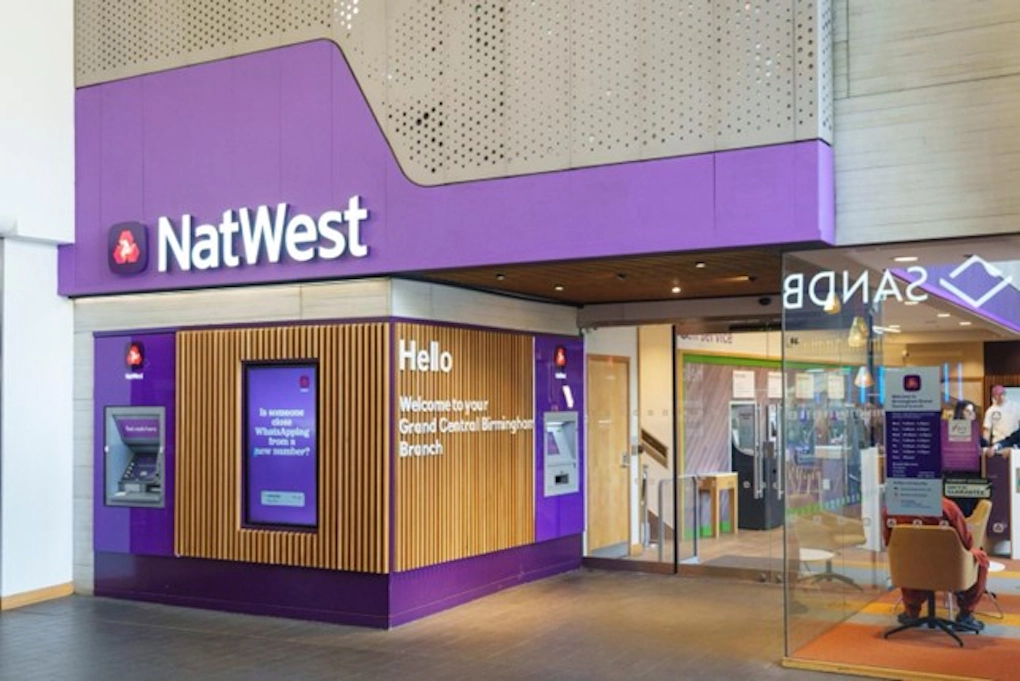
NatWest Bank, Grand Central Birmingham branch.
Operating profit before tax was up on 2023, at £6.2bn. And you welcomed 500,000 new customers to NatWest group. That’s all pretty impressive in an age where people have got lots of banking choice. What does the next year look like for you?
As I am sure every business will tell you: we’re really focused on growth. Our portfolio is diverse. Our 19 million customers are spread across our retail business, our wealth business, and we’ve got a commercial institution. We’re the number one commercial bank in the UK. We’re very focused on the segments that we want to grow, and then how we will deliver products and propositions to them.
We’re doing a lot of work focussing on the UK’s youth: how do we help to build financial capability, whether it’s a student account, whether it’s our Rooster account if you’ve got kids. We’re also No 1 for market share of the startup market. How we grow wealth and wealth management tends to be focussed on high net worth through Coutts, which is bit more exclusive than inclusive. But we are always thinking: how do we build that capability?
From an acquisition perspective, we’re quite targeted on who we want. We get them to the shop front, and then our goal is to create lifetime value and loyalty. We have to understand the needs of our customers and know what they want before they even know it.
Our technology can predict if you’re going to take out a mortgage in the next 12 months with 90% accuracy based on your behaviors: you start saving for your deposit; you start searching for properties on Rightmove. At NatWest, we want to be there for you before you realize that you need us.
How’s your marketing team structured?
We’re matrixed. We mimic the business structure. I’ve got three ‘go to market’ teams who are embedded in the business. We have ‘enabling capabilities’, or centers of excellence. So we’ve got one for brand & sponsorship/partnerships, one for insights that handle customer insight, all the brand tracking, market research – all that lovely stuff.
We’ve got a team specializing in digital media technology because what we recognize is the future of the function is going to be all around tech. We have a team for operations planning and risk management. We also have one for human-centered design: how do we build central design capability to support designing journeys, products, propositions? We’re building it off the brand positioning, so that we drive consistency.
The central capabilities that I have listed either work pan-bank into the business or specifically support marketing and help the ‘go to market’ teams that build the total brand plan and ultimately take our products to market.
Drawing on your leadership expertise, what has your career taught you that helps you to make a great team?
I believe that I’m very good at selling the dream: storytelling, inspiring and empowering people to do what they need to do. My view is: I don’t want to do your job for you, but I’m very clear on what the outcomes are that we need to deliver – and I’ll hold you to account on that delivery. Having laid these foundations: I’m more likely to pick up the phone to you. I’m more likely to do something for you when you need me. And I’m more likely to forgive you if you screw up.
I’m a big believer in good working relationships: knowing each other, knowing what motivates you and creating environments where you can have honest and frank conversations and even sometimes say – in the nicest possible way – “I think you’re talking rubbish.”
I also find organizations are slightly mad: the more senior you are, the more that you’re expected to make decisions about stuff that you know so little about. My job is to remove blocks so that people can get work done and also make their lives as easy as possible. I’m inverting the pyramid: I believe my team know more about their specialisms than I’m ever going to know.
I’ve been around the block a few times so I can ask questions based on what I’ve seen, but my big assumption is that my team understand their area of expertise way better than I ever will. I’m very keen on non-hierarchical empowerment: creating environments where people can speak up and tell it like it is.
I believe that marketing as a function is an art with science. There’s no black and white. It’s not like you run a spreadsheet and you get an answer. We operate in shades of gray and some of that is opinion. If your team are encouraged to speak up then you’ll get better outcomes. My job is to create the conditions where that is possible: people can speak up and feel heard when they do.
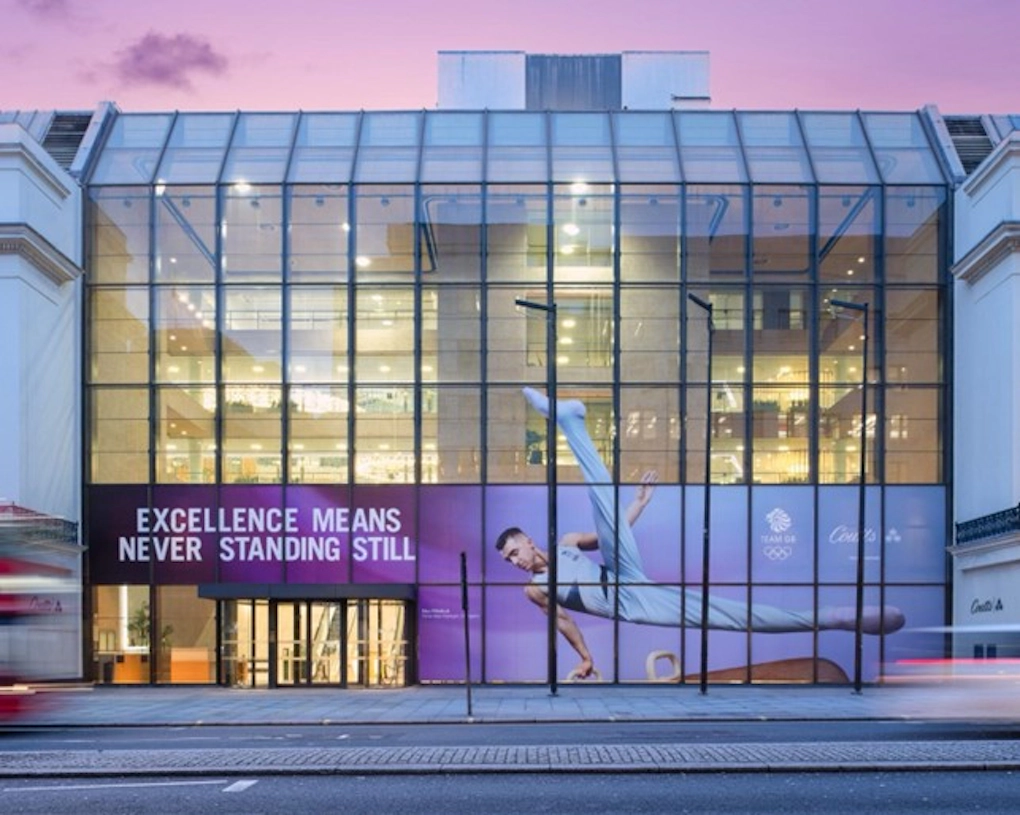
Coutts & Company forms part of NatWest’s wealth management division.
What’s your first memory of a marketing success that you were part of where you felt: this is the role for me?
At Unilever, when they brought me across to marketing and I was running Dove and Vaseline at the same time. The way they used to run the meetings, it was always the most senior person who spoke last. This meant that the most junior person would be asked to comment first when there was a creative presentation.
In those early days, we sat through an explanation of six routes for Vaseline intensive care deodorant and the marketing director turned to me and said: “What do you think?” I basically garbled on for 10 minutes. She then went round the room, and at the end when she spoke I was in awe. I thought it must be a real skill turning an emotional reaction to a campaign into something that sounds rational and tangible that someone can respond to. It was like I was listening to some great oracle.
It wasn’t until I was a bit more experienced that I realized that by speaking last, and listening to what everyone has said, this had given her 20 minutes to reflect, and then by the time she spoke, drawing on what others have said in the room, she sounded incredibly intelligent and coherent.
The first time when I thought “I’m actually not bad at this” was when I was in an advertising meeting and was asked to give feedback on a load of scripts for Dove. I had been trained well and knew that you needed to rate it using the ‘ABC’ system: attention, brand and communication. Does it grab your attention? How does it make you feel? Is it well-branded? What’s the message you’re taking away with you? I summarized and everyone thought my review made sense. I remember thinking, I’ve cracked this.
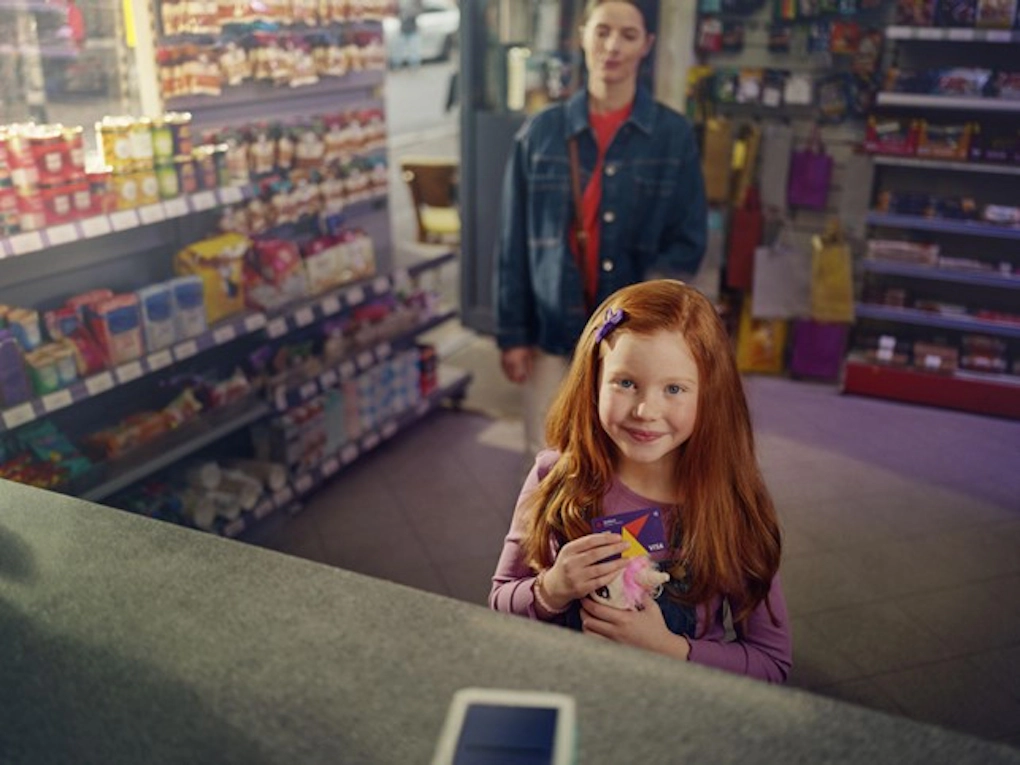
Helping customers manage their finances throughout their lives is key to NatWest’s offer.
How do you go about avoiding ‘silo mentality’ within marketing teams?
If you said to me, what’s my real job title, I would say: ‘chief dot joiner.’ There’s silo potential everywhere. First, you’ve got to ensure that your own team is not siloed. If I let my three ‘go to market’ teams operate without any intervention, I’d end up with three different brands. Everyone is so busy working on the day-to-day, they’ll all interpret the brand in their own way, you’d end up with the retail, the wealth and the commercial version of it.
You have to put in governance: processes and ways of working that forces joining up – and this is just in marketing. So I have a leadership team. My brief to the leadership team is you need to operate for both club and country, and it’s possible to do both. Just as a footballer might play for Spurs, but also play for England.
You need to balance your specific goals with that of the over-reaching business. If you’re working on retail then you need your retail mindset on. When you’re in the function part of the business, you need your function mindset. Everything we do needs to ladder back to the business as a whole, otherwise you’ll get proliferation.
Outside of marketing, I always say: start with the customer. Two thirds of our business customers are also retail customers. So we can’t just operate in one swim lane, because the way those customers perceive the brand is a result of their overall brand experience – not just what you’re doing in your area of the business. You’ve got to put an audience lens on it.
My role is to ensure that the voice of the customer is heard in internal business conversations. If we are operating in our own silos, then the person who will see that is the customer. Being the voice of the receiver of complexity is a very strong and easy place to be: the business can’t argue with that.
Could you tell us about a customer research discovery you made that you found surprising?
We used to spend considerable amounts on quantitative testing. If you were testing a new antiperspirant that was more effective than the last one, you’d send customers a can, and give them a questionnaire. They’d be asked to use it daily, and then they would tell you if they felt like they perspired more or less.
One test round, we put a microchip in a can. It tracked how often the product was used. You were supposed to shake before use, and spray for a set amount of time. The chipped can recorded this. Comparing the results recorded by the can versus what people said they did was enlightening.
I’ve also done research on tooth-brushing. You can talk to a group of people and ask: “How often and for how long do you brush your teeth?” And they’ll tell you: “Twice a day and for five minutes.” Twice a day is debatable, particularly for a younger audience. And it’s 30 seconds, not five minutes. So for me, most of the “aha moments” have come out of ethnography, spending real time with customers and monitoring what people actually do.
We did a load of research on chocolate and talked to people about going into their fridges and looking at what they do. When I first joined Cadbury’s we tested a fridge pack as a concept. Coca-Cola had one, where you open a fridge and a can would appear ready for you to grab it and drink. We made something similar for Cadbury’s chocolate.
We tested the concept of it and everyone said: “That’s a great idea.” Then we tested it in people’s fridges and customers, particularly women, told us that the last thing they want is for every time they open the fridge to be confronted with a bar of chocolate.
I am quite cynical, because, as I’ve said many times, and much to the disgust of my team: you pay people £20, give them a Kit Kat and a coffee, and ask them to talk about stuff they never think about – ever – and expect rational responses to questions on things like usage. But there is a yard of difference between “tell me what you do” versus “let’s watch what you do.”
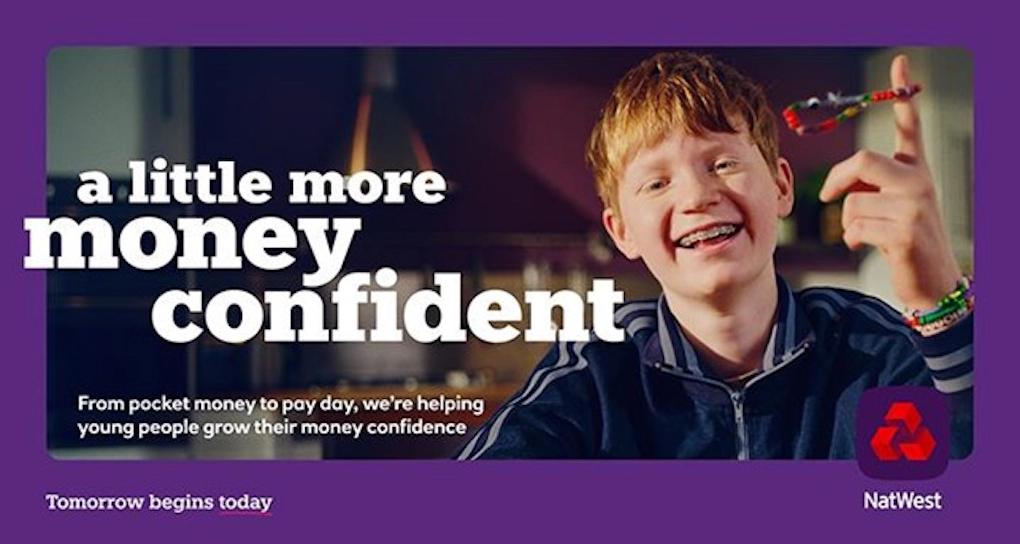
NatWest’s February 2025 campaign celebrated young people’s side hustles and growing their confidence with finances.
What myth about marketing would you most like to bust?
That marketing is the coloring-in department. It drives me nuts. Marketing is a skill. It’s an occupation. Marketing is a bit like sex and driving: everyone thinks that they’re really good at it, and they’re not. Everyone’s got an opinion – and often that opinion comes from a place of not really understanding there is a lot of art and science in marketing.
Marketing has really evolved: we’re metric, we’re commercial, we’re tech-enabled. We’re on the precipice of the biggest change that I have seen in the last three decades of my job. In terms of capability and how marketing will operate, things are about to radically change.
The myth that I would like to bust is that marketing is not a real skill. We’re a growth driver for the business, and we deliver real commercial returns. And those businesses that get it will grow, and those businesses who don’t, won’t.
I’m in the middle of an insight transformation project right now. As a marketer, your ability to connect complex data sources and make sense of them will be of huge value to businesses. In a legacy businesses like ours, we have more data than ever before but operationalizing and commercializing that data in a sophisticated way to better understand the triggers and behaviors of your customers can be hard.
Right now, that data is trapped in different systems. As marketers we need to harness what that looks like in the future.
What advice would you give your younger self if you could go back in time?
Experimentation is king: experimentation is a way to de-risk. Be brave. Experiment, test, learn and try things out. The results – good, bad and ugly – are all a learning. When I was at Unilever, one of the most fun projects I was given was when the CMO said: “What’s the future of the digital landscape?” It was back when mobiles were just being adopted. We spent two weeks traveling around the US. We went to Google, eBay, Activision and met Mark Zuckerberg.
What I learned more than anything was that you’ve got to be ‘in it to win it.’ Nobody actually knows what the future of the marketing landscape is today. To stay relevant, you’ve got to get in there, learn, test, optimize and move on. It is more true today than ever before.
What question would you like me to ask the next senior marketer when I interview them?
What do you think your role will be in five years’ time?
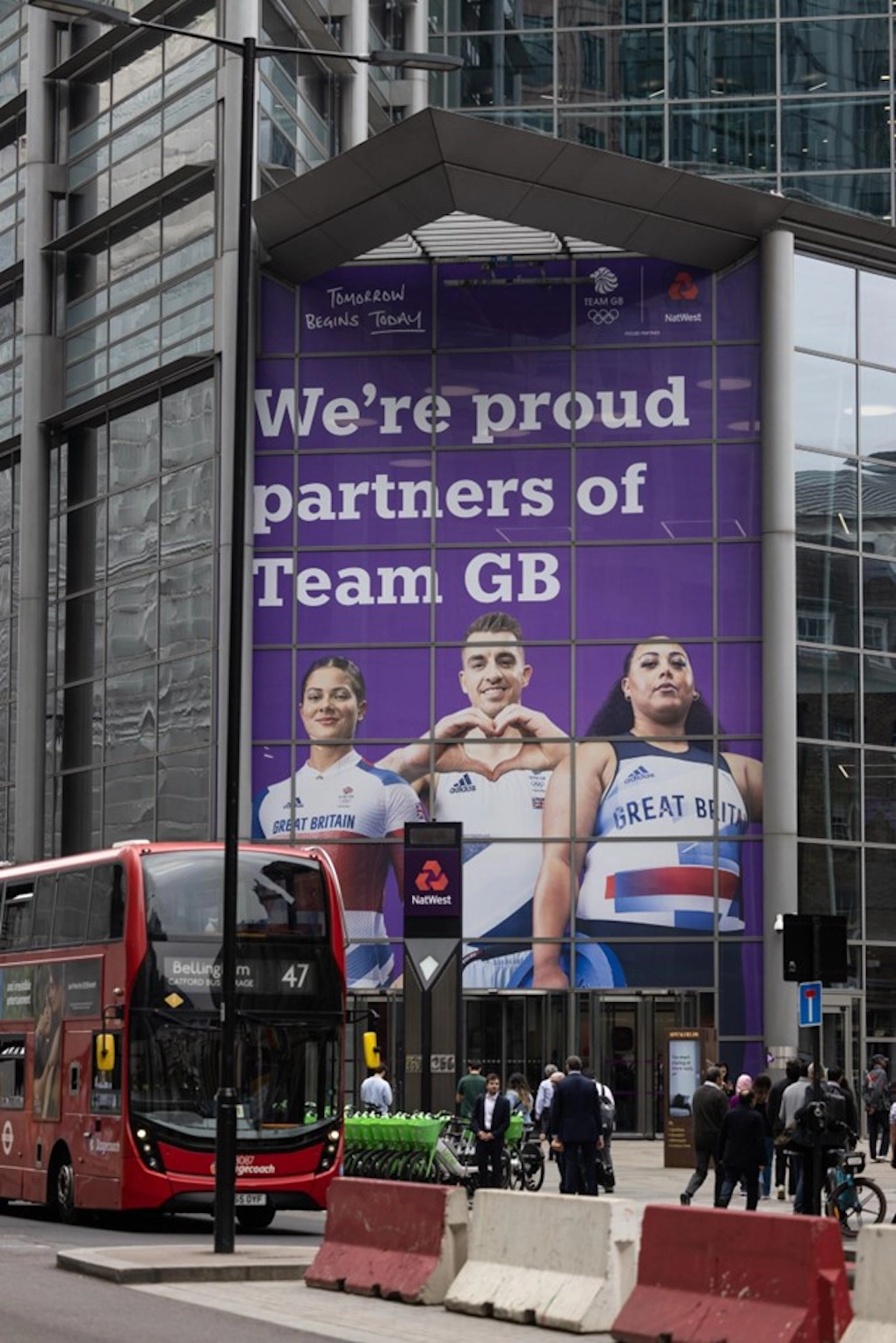
NatWest and Team GB have extended their partnership to the Olympic Games in Los Angeles 2028.
Your question from a senior marketer is this: can you tell us about a time in your career when you regretted not taking a risk?
My approach has always been ‘jump and swim girl’. I’m a bit more impulsive, and will jump and then figure it out, and that’s how I learn. I haven’t got an ‘I wish I had…’ Instead I’ve got ‘stuff that was harder than I thought’. But I’ve always just jumped in, tried to swim and given myself six months to see if I can make it work.
My one regret would be that I have never worked full-time in another country. I’ve traveled a lot for work. Once I had children, I wanted them to have social foundations. I didn’t want to be a nomad. If I could have found an opportunity pre-kids, I would have loved to have gone and lived in China for example, but you never know, my kids have left home, they’re at uni, so it might yet happen.
If there’s one thing you know about marketing…?
It is common sense: understand your customer. Never assume you are them, but really understand them. After that it is all common sense. Think like a consumer.
You might die tomorrow so make it worth your while. Worth Your While is an independent creative agency helping brands do spectacular stuff people like to talk about. wyw.agency.
This interview has already appeared in The Drum. Discover the best campaigns, industry insights and interviews from world-leading marketers, creatives and more.