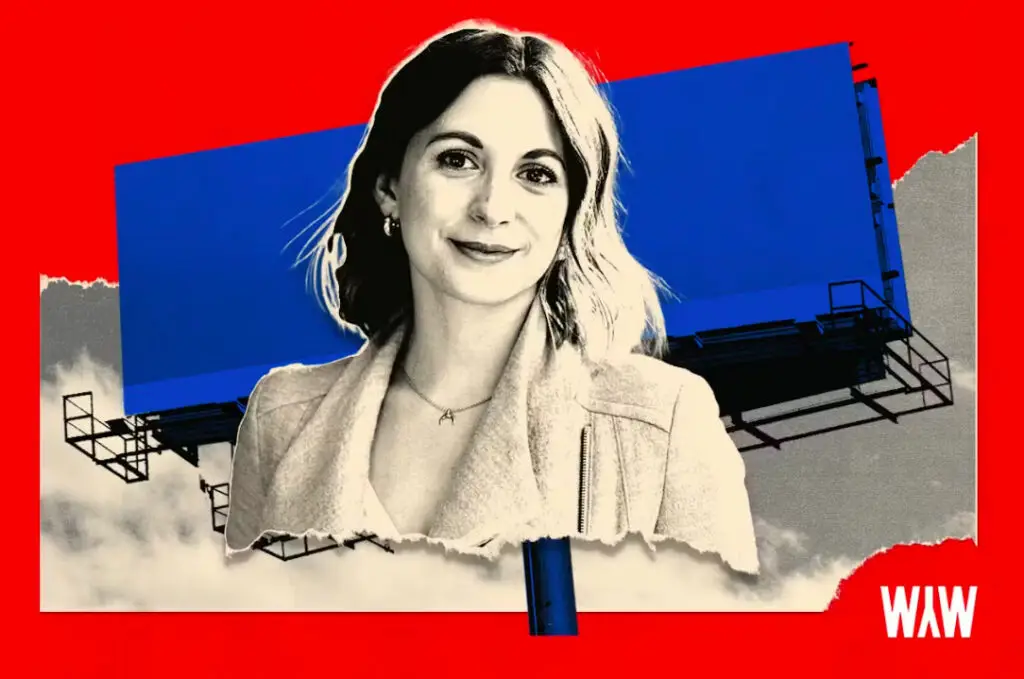
The online florist’s CMO tells Tim Healey why modern brands must share control with creators, listen harder to customers and sometimes trust instinct over obvious data – even if that means ditching red roses at Valentine’s Day.
You’ve worked at L’Oreal, you’re a Marketing Academy scholar, and since 2021 you’ve risen through Bloom & Wild to chief marketing officer. Please walk us through your journey to your current role.
I started out at L’Oréal on their grad scheme. It was a great grounding in each of the 4Ps of marketing. Marketers don’t really talk about them as much as they used to, but I do think that provides such a good foundation, even or perhaps especially in today’s tech-driven environment where there’s constant evolution to contend with. We worked across all of that and of course brand positioning and behaviour at what was the start of the influencer boom.
I spent nearly seven years there, won a place on the Marketing Academy Scholarship, and then I realized that I didn’t want my boss’s boss’s boss’s job, so felt I needed a change in direction.
I joined Bloom & Wild after a stint at an Aussie makeup brand Nude By Nature that was expanding into Europe. There I learned that I actually wanted to be at the heart of a scaling brand, not in an international spoke.
I took up my role at Bloom & Wild just before Covid. It was a period of intense growth and company change: not only did e-comm go crazy – we were very fortunate during what was of course globally an immensely difficult time – but also we made a couple of international acquisitions as a business. Things really shifted.
Over time at Bloom & Wild, I built my scope. I started with brand and creative, and now I have the full marketing overview and am responsible for brand and creative, performance marketing, our product range and insights as well. I also sit on the executive team. There it ’s my job to bring the voice of the customer to that team and to our board as well.
What’s the offer at Bloom & Wild?
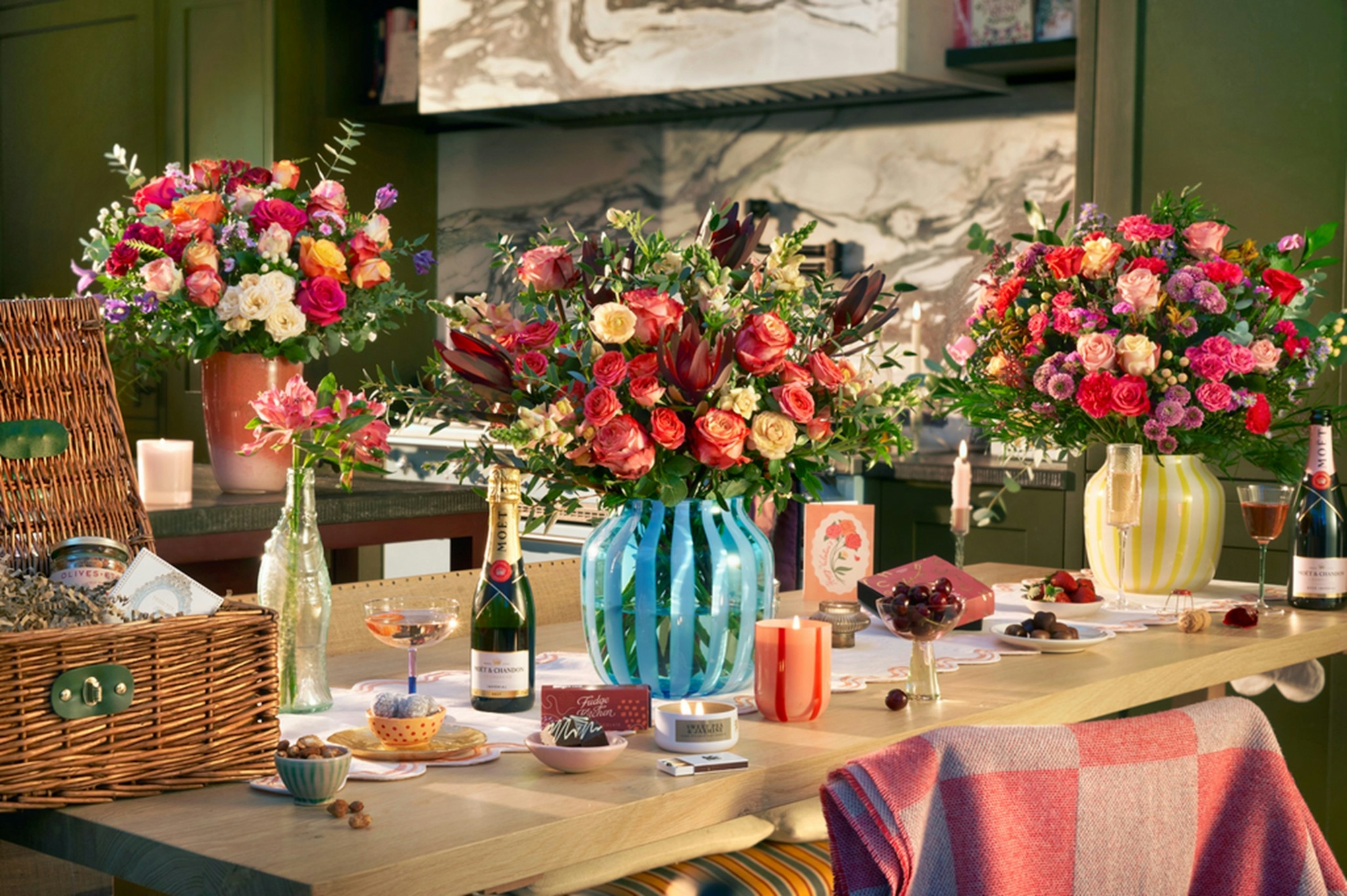
We are Europe’s leading direct-to-customer flower and gifting platform. We have three brands: Bloom & Wild, Bloom o n and Bergamot te that operate across eight markets in Europe. In the UK, we’re best known for inventing letterbox flowers, which really disrupted the category and gave people new ways in which to give flowers for different occasions. And we know that letterbox flowers drove whole new behaviors – female-to-female gifting for things like birthdays and smaller ‘just because’ occasions too.
We are very focused on ‘care from afar gifting’. As a brand we are standing in for that really important emotional interaction between people when they can’t actually get there themselves. That drives a lot of how we think about things, how we do things, how we treat our customers and how we design our products.

What’s coming up for Bloom & Wild in the next year?
Firstly we will be growing our broader gifting business. We had a very strong Christmas and we’ll be expanding our ranges in our existing categories, like hampers, and also growing into new categories. Second, we are also focused on our international markets. Germany is our main focus in terms of international growth and whilst we ’re seeing strong growth we have more work to do on localizing our messaging so that will be a big focus alongside building out our brand marketing there.
The third area we are looking at over the next year is our loyalty program. Bloom & Wild rewards has over 1.7 million members now. It drives double-digit uplift in frequency, so we’ll continue to build on those foundations.
Bloom & Wild invests in brand marketing: could you perhaps explain a little bit about what changed to unlock that confidence?
We ’ve actually had confidence in investing behind our brand for some time. When I joined in 2020 there was already the appetite, but we needed to sharper our positioning and develop a strong brand platform to invest behind. ‘Care wildly’ was born and we started investing more heavily in ATL brand marketing in the autumn of 2020. We invested heavily in 2020 and 2021 when we were seeing exceptionally strong growth.
And, of course, post-pandemic we shifted to a profitability focus so that shifted our brand spend slightly, but we’ve always continued to invest because we understand the longer term returns it delivers. The creative we shot in 2021 has delivered strongly for four years, but it was shot during different times, cov id times, so we wanted to look at a fresh perspective on ‘care wildly’. A s the business is now growing profitably, we decided now was the time to invest into new creative to see us through the next period.
I think we’ve been lucky that our brand marketing journey has been pretty smooth: we’ve consistently measured it over time and we’ve always seen very strong ROIs. We’ve built real confidence in the care w i ldly platform, and we continue to build on that.
How’s your marketing team structured?
So as I mentioned, my team brings together the product range, performance marketing and insights. We are organized by brand for our brand and range fu nctions, for deep thinking about how each brand shows up and to ensure we align customer needs with each particular brand.
Creative is split by brand but both brands report to one group creative director, which really helps us share learnings and processes across brands. We have a central performance marketing team working across all brands and markets. It ’s the same for our insights team. I’ve recently brought in a new marketing innovation function. It’s a tight team of three and it allows us to move faster on new channels or initiatives, because that team is not caught up with day-to-day execution.
You’ve been associated with the thoughtful marketing movement. Could you tell us about that please?
This began before I joined Bloom & Wild and it was a reaction to customer feedback. We had some feedback through our customer delight team: people were asking if they could not receive emails about Mother’s Day because it was painful for them – perhaps their mum had recently died or they had a tough relationship with their mum. This got passed on to our retention team, who decided that we could do something more structural about this.
They built the function for people to opt out of those communications. We then built on that. Now, if you’re logged in and you’ve opted out, you see a different view of our homepage – you won’t be presented with options to buy Mother’s Day flowers, for example, if you have asked not to be told about them.
We built this out across lots of different occasions that might be considered sensitive. In 2020, we launched the ‘Thoughtful Marketing’ movement and tried to bring others on this journey with us. Lots of brands started offering opt-outs for these sensitive occasions. It became so successful that we started to hear social conversations where people were saying that getting multiple opportunities to opt out of Mother’s Day was actually worse than getting the promotional emails about Mother’s Day!
So these days we invite brands to build preference centers for their customers. Remind people, without mentioning the occasion and at a different time of year, that they can always set their preferences. The movement has evolved over time. The whole thing was born of listening to a few customers and sensing that there might be a hidden, deeper problem: it turned out that there was. Sometimes the data only shows you a small thing, but actually, if you act on your instinct about it, you can have a much bigger impact.
If you had one piece of advice for mid-weight marketers looking to become marketing leaders, what might that be?
Get interested in the rest of the business and not just marketing. As you become a leader, you need to be able to put everything together and understand how marketing contributes to the whole business strategy. Get interested in that and also stress test for yourself how much you actually enjoy leading. The job of leadership is really quite different to being part of the delivery of projects day-to-day.
Ultimately, as a leader you will one day stop being part of the execution altogether. You have to be comfortable with that. And I do miss it sometimes, but as a leader you need to get as much joy from seeing your team deliver great work as you would from actually doing it yourself.

Could you describe a moment when your instincts and the data pointed in different directions? How did you decide and what was your takeaway from the experience?
In 2021, we decided not to sell red roses for Valentine’s Day anymore. I was fairly new to the business, and obviously looking at the data, the most popular product around Valentine’s Day were our red rose bouquets.
I also listened to our C O O and heard that red roses were an operational headache. On February 15, the demand disappears. This made the numbers tricky to forecast. Then there was the whole sustainability issue as the leftover roses generated lots of waste, and waste management is an important part of our sustainability strategy. What ’s more, o ur core customers are mainly women, but every February we found ourselves completely shifting our range to cater for th ose wanting to buy red roses for Valentine’s Day, which is largely men. We were changing our range to speak to a customer who wasn’t even our core customer. It started to feel like something here isn’t right.
Further research revealed that the general population isn’t that keen on red roses anyway, because they’ve become so cliched. We decided to go out on a limb and stop offering red roses, but we knew that the risk was mitigated because our core customer wasn’t buying them anyway.
We may have upset a few people who couldn’t get what they wanted from our site any more, but actually it said something a lot more powerful about who are as a brand, who we’re serving and what we believe in – in terms of really thoughtful gifting and delivering floral designs that are different and stand out.
What may have at first appeared to be a bold pivot away from sales data proved to be the right decision and was backed up by our insight data that gave us confidence in making that decision.
How do you surf the tsunami of rapidly evolving marketing technology?
You’ve got to be really hot on strategic application over hype. So what are the specific areas of your business that you need to improve? What is the tech that could help you with that? Never start the other way around with shiny new tech and then thinking, “How can I put this in my business? ”
On AI, I think you need to be careful not to try to do everything at once. You should choose some projects that build momentum: develop one or two really strong use cases that have a tangible financial impact and that will inspire others.
For the greeting card side of our business, we’ve created a whole AI-enabled batch process which has allowed us to launch hundreds of designs. We just wouldn’t have done it prior to having an AI-powered system. We made that happen without adding team members or hiring loads of freelancers: we could see that AI was the solution. That’s a successful example of applying AI to a challenge and that process is one we can reapply to different aspects of our business.
The other thing I’d say about AI is it’s also very much about cultural change. As a leader, you have to steward the cultural changes and not just the technical adoption. We have an AI champions group: people from across the business who have really thrown themselves into learning about AI. They help steer the business on big questions like ethics, training and resources. We created a set of guidelines for our senior leadership team. In marketing, I’ve worked with my leaders hip team to distill where we should focus and what our should priorities be. Th en it’s over to them to ensure the outputs don’t just sit in the workshop summary, but actually feed through to team roadmaps and OKRs.
To integrate this into our work culture, we have an AI Learning Channel. We have an ‘AI win of the week’ in our weekly business stand-up. This gets people using AI, demystifying it a bit, and making it feel a bit less scary. We also have a buddying system so that people who are more confident can help people who are less confident. It’s really about helping people to feel comfortable, and for those people for whom it’s less of a natural leap, a giving them tools and people also that they can get support to go on their own learning journey.

What has your career taught you that leads to maintaining the best marketing teams?
First of all, any team needs strategic clarity. That’s probably the biggest thing people overlook. Dedicated, smart people without unifying strategic clarity will start pulling in different directions. Everyone in your teams must be clear: how do their activities and initiatives map on to the marketing strategy at their team level?
In our business we have sub-teams within marketing: they each need to understand the difference that their personal contribution will make. That then needs to ladder up their OKRs, or their team roadmaps, into some sort of strategic pillars that they can see how they connect to what the business is trying to achieve. I definitely haven’t always got that right, but overseeing a larger team, I’ve realized how this is suc h an important part of my role – and the role of the marketing leaders in my teams.
Next, having the right structure: one that has people well organized and that allows them to shine. In my time at Bloom & Wild, I’ve brought the brand and range teams together under single leadership. For us, the products that we sell are so much a part of our brand that we really needed that ‘joined up thinking’. It just didn’t make sense to have the two pillars ‘siloed’. As I mentioned earlier, we also have our marketing innovation team. I didn’t add people to the team to create this, but reorganizing the team in this way enabled us to be more agile.
Next: giving your team members – no matter how junior – permission to have ideas and make things happen is crucial. Everyone needs to feel that they can suggest new ways of doing things and then make those a reality. If all that thinking is concentrated within your leadership team, you’re going to be really limited in what you can actually achieve.
I love it when one of our more junior people suggests a new idea, and they have looked into it, and the business case. That’s the energy and productivity that you need given the pace of change in marketing today.
Finally, there are personal relationships. I read that there’s evidence that having at least one good friend at work is a key indicator of your happiness, your performance and ultimately your retention. As a team leader, making the effort to get to know your colleagues matters: knowing the names of children and dogs; checking in on how their house move is going – all that stuff is genuinely important.
It’s all important: from clear strategy to personal connections – and if one of those things is off, you can start to see the cracks.
What myth about marketing would you most like to bust?
We’ve all heard this one, but I still get it a lot: “Oh, you do marketing? So you make ads.” I always explain: ‘I do make ads. That’s only one bit of what we do.’ Marketers should be seen as custodians of business growth. We are the connective tissue between product, data and emotion. By bringing together instinct, a deep understanding of human behavior, the emotions that drive them and data – very quickly you realize that marketing is both an art and a science. You require quite particular skills to make it work.
What question would you like me to ask the next senior marketer?
When you look back at what you’ve achieved in your current role, what’s the one thing you’re most proud of?
Your question from a senior marketer: what’s the most disruptive development marketing that you’ve experienced in the last year?
I think a big shift I am seeing is thatbrands don’t own their own brands any more. As a brand, you’re going to have insights about the kinds of things that people need to understand about your category and your brand in order to make it attractive, but increasingly you have to put your brand in the hands of other people – like creators – and you need to work out the ways in which you can then harness their output in a way that still responds to the insights you have about your products or business.
We can also learn from user-generated content and better understand what people spontaneously talk about: how does that shape what we need to say about ourselves as a brand?
You can’t just ‘show up as a brand’. You have to show up as something that is useful, meaningful or entertaining in people’s lives. That consideration shapes the type of organic social content we put out. Five years ago, I would not have signed off on some of the content my team publishes these days. I would have said: “Where’s the product? Where’s the brand?”
And by extension, where social media marketing sits within our team is one of the structural challenges we are addressing. How do you plug people into squad formats to make sure that you’re getting that organic trend creator insight into your paid social media marketing? That is a real shift from when I started out in marketing.
If there’s one thing you know about marketing, it is…?
Nobody cares about your brand as much as you do. To deliver the best marketing, you need to have ‘radical humility’ and assume that everyone is distracted not devoted.
You might die tomorrow so make it worth your while. Worth Your While is an independent creative agency helping brands do spectacular stuff people like to talk about. wyw.agency.
This interview has already appeared in The Drum. Discover the best campaigns, industry insights and interviews from world-leading marketers, creatives and more.