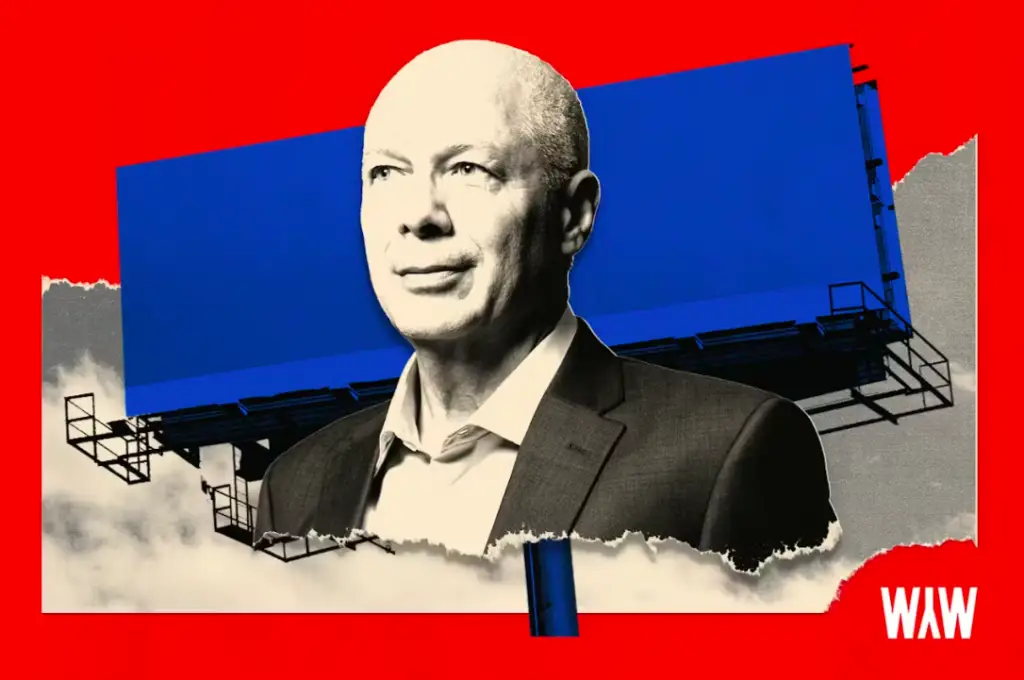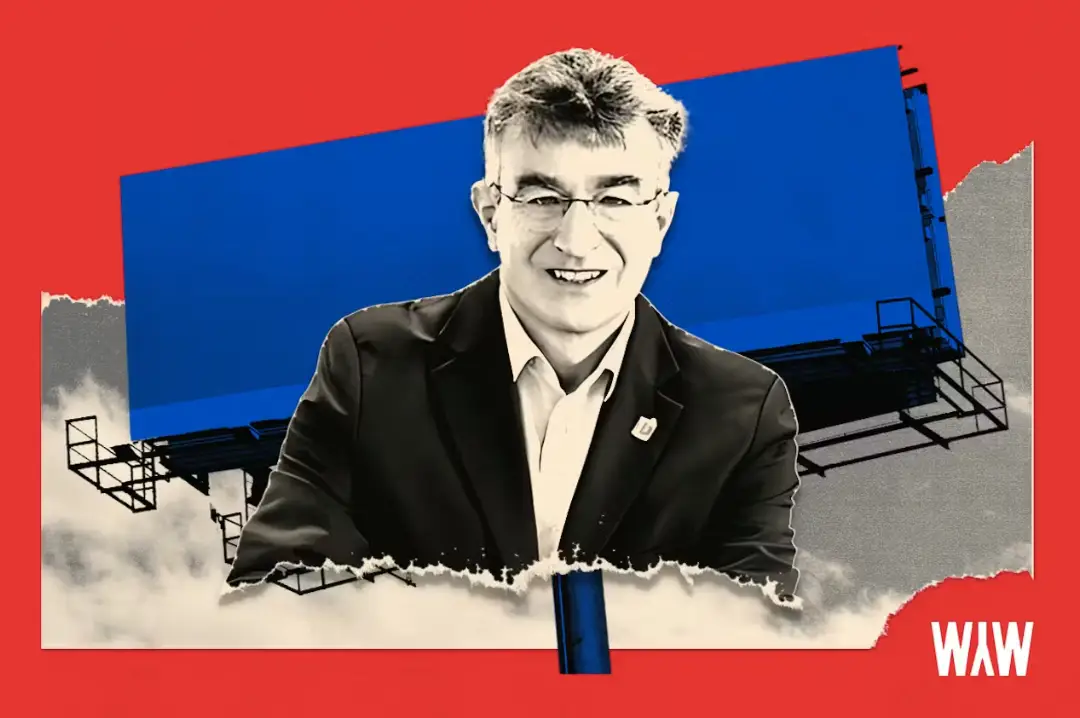
The managing director of Campari’s House of Aperitifs tells Tim Healey how a local Italian ritual was scaled globally, why Aperol’s rise required patience as much as ambition, and what brand leaders can learn from building long-term cultural relevance.
Your career spans Duracell, 10 years at Procter & Gamble, then Campari group, where you’re now managing director of the House of Aperitifs. Could you walk us through your career and how you discovered marketing?
I’m Italian – I was born and live in Milan. I’ve managed to live and work in different countries in Europe and I feel like I am a European citizen. I’m a marketeer by mistake: I studied philosophy at university – a different discipline, but one where the ability to think critically, put things in perspective, challenge your beliefs and be attentive to people and how people think has been very, very useful in my career.
I started as a junior marketeer: a junior brand manager for Duracell, in Italy. At that time, as an American multinational, they were cutting costs locally, centralizing activities, and running advertising from their center of excellence. They invited me to work in London for two years and at that time, Duracell was acquired by Gillette. I worked through Duracell’s transformation from a single, standalone brand company into a much bigger organization.
Then I returned to Milan and started working on one of the four key brands of Gillette at the time, Braun. Originally a German company, Braun made and sold small domestic appliances, including electric shavers and hair dryers. Procter & Gamble then acquired Gillette. So we became part of an even bigger multinational company – gigantic to be honest.
Working within a local market sometimes meant feeling a bit removed from the brand’s strategic decision-making. This could limit opportunities to fully apply one’s marketing expertise, as brand plans often followed established patterns from previous years, and, not unusually for FMCG businesses, single-digit growth was celebrated.
Then I met Campari. At that time, 2008, Campari was pretty much still a company that was focused on Italy. It was driven by one brand: and the brand was not Aperol – it was Campari itself. It was a huge export business powered by distribution that enabled it to reach all the markets in the world.
At the time, they were hiring from different multinational companies, [thinking] that bringing experience, expertise and the ability to navigate multicultural environments and complex organizations into the Campari business would drive their aspiration of becoming bigger through acquisition and growing brands that were part of the portfolio. I joined and it has been a great, great ride.

As someone that once owned my own restaurant, drinks provenance was a big thing for me and I was very aware of the return of Campari. Campari was not so fashionable 20 years ago; it was a drink of the 70s and early 80s. Whereas now, to you and your team’s credit, you’ll find a negroni cocktail, whose key ingredient is Campari, on most menus. For the benefit of our readers, could you tell us what products are in your portfolio?
In the group portfolio, we have over 50 premium and super-premium brands. We recently divided our portfolio into four houses. We have the House of Cognac & Champagne, the House of Agave, the House of Whiskey & Rum, and the one that I have the pleasure of leading is the House of Aperitifs. Aperitivos (or aperitifs) are by far the biggest and most important category within Campari Group.
The Campari brand itself was founded in 1860 in Milan, Italy. At its core, the company is an aperitif business that has expanded into different portfolios and different brands and categories that you see today.

Net sales for the first half of 2025 for Campari were €1.53bn. With such strong sales in mind, what does 2026 look like?
A big focus will be dedicated to Aperol, which is still growing rapidly across the world. It’s a brand that the company acquired around 20 years ago, which had been a bit of a ‘sleeping gem’ for few years, and since 2006 we started developing the brand. We have been exporting Italian aperitivo culture around the world.
2025 saw the launch of our new global marketing campaign, commercial platform and TV campaign: ‘L’unico. Per tutti’ – an Italian phrase meaning: “The only one. For everyone.” The engagement platform is linked pretty much to music and to music festivals. We’ve been part of Coachella, USA for the last two years and Primavera Sound in Barcelona.
Aperol continues to be a key priority for us, but many brands contribute to the spritz portfolio at Campari Group. The Campari brand spans negroni to Campari spritz in leverage and versatility. The negroni is the most sold classic cocktail and was once again rated the number one cocktail in the world in 2025, again, after three years of being in that position. There are also other classic cocktails where Campari is a protagonist, from the Americano to the boulevardier to Campari shakerato.
We have two brands in the portfolio that are probably less known. One is Crodino, a non-alcoholic drink created in Italy in the 1960s and which was sold almost exclusively in Italy (with some sales in the Netherlands, Switzerland and Austria). We decided a couple of years ago to build out our non-alcoholic options and positioned Crodino as tapping into the desire of the younger generation who favor moderation and often choose non-alcoholic drinks.
They are approaching drinking habits in what we call ‘the zebra stripe’ approach, where you have in the same evening one alcoholic and one non-alcoholic drink, where moderation and staying in control is the name of the game. We are rolling out Crodino across Europe and internationally and recently launched in the UK and the US.
The fourth one is a newly created aperitivo called Sarti, also referred to as Sarti Rosa. ‘Rosa’ in Italian means pink. It is a sweeter aperitivo for consumers who find Campari a little bitter for their palate and can be appreciated as a spritz. Having launched in Germany three years ago, it is taking Europe by storm, and the international rollout of Sarti Rosa is also part of our 2026 plan.

How is your marketing team structured?
We are a global team. In ‘the House’ that I look after, the team is structured along the lines of what I refer to as brand building. We have gone beyond the consumer, trade and customer marketing. We manage brands in all their facets, including consumer or shopper understanding. We also have a team working on category and insights.
As a result, we have vertical competence. We have brand managers and we have customer marketing managers, but we tend to manage the brand as a whole. We have a global finance team, because value chain and the P&L of the brand are crucial. We also have teams for research and development, innovation and supply chain.
All of this brand management then works with local marketing teams that are sitting in the individual market companies, and that is a crucial element. Having two-way communication and a fruitful relationship with them is crucial.

Drawing on your leadership expertise, what has your career taught you that helps to make a great team?
Having trust in the team is important. Providing empowerment for your team is also crucial. When I look at new candidates for roles, I tend to value potential and ambition more than the current and specific skill set.
In the job market, you can buy any level of competence. But when you see a special light in the eyes of a candidate, that is a magic element. Then you can engineer empowerment and provide freedom within a framework. As a leader, you need to be an enabler; you design the vision, but let your team execute and move the project forward.
How do you surf the tidal wave of marketing technology?
Given my age, I started working in business before the internet was commonly used and before email. I consider myself, and those from my generation, as being mentally agile enough to have gone through many technology changes. That being said, there comes a point where you have to acknowledge that a 25-year-old knows more about a type of technology than you do, and then you have to rely on them and their expertise.
I consider anything related to digital technology a tool, not an end in itself. So, with that in mind: whatever the technology will give us as an opportunity to better understand – the consumer insights, consumer needs, shopper needs – is super welcome. But our business exists in a world of physical and personal relationships, and not one that is entirely digital. At Campari Group and the House of Aperitifs, we value real-world interactions.

Could you please tell us about a customer research discovery that you have made that you have found surprising?
The Aperol brand hails from the northeast of Italy: it was sold between Venice, Padova, Verona and Treviso. We developed it into a global brand. The journey has been impressive. But as you can imagine at the very beginning, it was not an easy one.
In 2010, we ran research in London: we wanted to test how the audience found our orange liquor when mixed with Prosecco. At the time, Prosecco was not widely available, and I remember receiving very critical but also insightful answers from the people interviewed. For example: ‘You will never see a bloke holding a glass, a stem glass outside the pub.’ Also ‘This will never work. It’s orange like Lucozade.’
And yet, if you walk around London today, you see many men drinking from stem glasses and enjoying it. Now I am not saying that we should not rely on consumer research – not at all. But I do think we need to apply the right level of intention and interpretation to research. At the same time, we should also listen to the long-term strategy that we have designed sometimes and go beyond it.
When asked, sometimes consumers answer by staying in their paradigm. It’s our objective as brand leaders or category leaders, to acknowledge existing paradigms and then to design new paradigms: to define a new frame of reference or source of business, and pave the way to future success. Eye-opening as that research was, and I’m glad we did it, I’m glad that we didn’t stop on our mission to expand the Aperol market.

What myth about marketing would you most like to bust?
When I listen to people talking about marketing, most of the time marketing is spoken about in a very negative sense. Marketing stands accused of being ‘a disguising and sometimes even deceptive selling technique, that forces or persuades consumers to do what they don’t want to do but what you want them to do’. I think this is absolute nonsense.
Marketing is all about brand management – getting to the core of what a brand stands for. It’s about understanding consumer insights and needs. We are all driven by a few key and very similar needs. We give these needs different names, and show those needs in different forms, but ultimately, those needs are very, very similar.
This became very apparent when exporting our aperitivo culture. I remember going to markets outside of Italy and thinking: ‘Yeah, this is perfect for the aperitivo.’ Sometimes people would say: “What is an aperitivo? We don’t have any aperitivo culture.” I would then ask if people meet after work? Do they socialize? Do they drink something at those times? Are they in a light-hearted mood? If the answer is ‘yes’, then they have an aperitivo culture.
Maybe they don’t call it aperitivo – for them it is a ‘daily social gathering occasion’. We give similar needs different labels: ‘pub time’ in the UK, ‘tapas time’ in Spain, “feierabend” in Germany… so on and so forth. At the end of the day, marketing is about understanding consumers’ needs and and shaping your brand promise and product offer to meet those needs.
What advice would you give your younger self if you could go back in time?
First of all, I would advise ‘younger me’ to be a little bit more patient in my career progression and take that magic time when you are aged 25-30 to build experiences that you may not be able to build afterwards. For example, if you want to be a good marketeer, it’s important that you understand how the commercial team, customers and salespeople think.
Having the privilege of spending one or two years in a commercial role at the beginning of your career is not wasted time; quite the opposite – this is golden time. When younger, many of us would want to become a senior brand manager fast. You might think moving horizontally to a commercial role is a waste of time. It’s not.
Secondly: don’t spend too much time in the closed rooms of an office. Go outside. Talk to customers, talk to consumers and to shoppers. In my industry, go to bars and listen, watch, see how people behave, see what people drink. Talk to bartenders. This is much more insightful than just staying in front of a screen and looking at endless PowerPoint presentations.
Those are two things I would tell my younger self, or to any younger marketer I come across today.

What would you like me to ask the next senior marketer or business leader that I interview?
What have you learned about marketing in the last few years? How are your core principles of marketing performing in the fast-changing world? Have you been able to stop, take a step back and get into the mental mode of learning again?
If there’s one thing you know about marketing, it is…?
Marketing is a marathon and not 100 meters. It’s a long-term game. It’s about having a vision and a strategy; and as always: consumer is king. It all comes back to understanding consumers’ insights and needs, developing products to meet those needs and fostering long-term relationships between your brands and your customers.
You might die tomorrow so make it worth your while. Worth Your While is an independent creative agency helping brands do spectacular stuff people like to talk about. wyw.agency.
This interview has already appeared in The Drum. Discover the best campaigns, industry insights and interviews from world-leading marketers, creatives and more.