In his new weekly series, strategist Rob Estreitinho looks at the advertising that actually works (with results), so you don’t have to. This week: Hiscox.
Few things keep more of us at night than someone – usually the boss, or the boss’s boss – saying “this campaign is a total disaster”. Except, when this was pitched at Hiscox, who would know they were onto a banger. Here’s an espresso-sized overview of why it worked so well.
The problem
Insurance advertising is based on a clean, fancy looking… lie. Lots of customer success stories, with people feeling ‘peace of mind’, doing the B2B equivalent of showing women laughing while eating salad.

Nice. Neat. And absolutely forgettable.
Hiscox looked at it differently. They knew that business customers were actually terrified of failure. But no one was willing to admit it in their communications, because heaven forbid that your brand is associated with a problem or negative outcome. I get it. And yet.
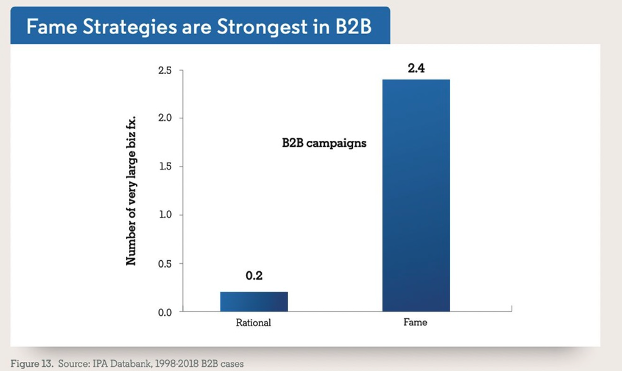
IPA data shows that famous B2B comms outperform rational ones by a factor of 12x. And humour, contrary to popular belief, doesn’t kill brand trust, it makes the messenger believable (Pratfall Effect).
The solution
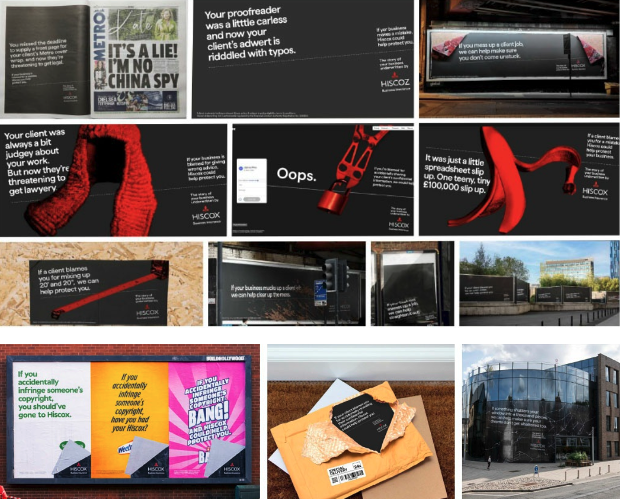
Instead of being another nice-looking insurance brand showing nice-looking benefits for nice-looking customers, Hiscox flipped it. Go all in on disaster. Make fuck-upness the real source of distinctiveness.
But don’t just do it once. Keep doing it. Make use of the benefits of compound creativity so that the message can wear in over time. By dramatising the problem, Hiscox not only stood out but showed that they understood the real fears business owners lived with every day.
This is where I should tell you that the LinkedIn commentariat said it was genius, and therefore we should learn a thing or two about it. Except, even though that was true, you and I need more than that.
How did it work? Their 2025 Marketing Society paper offers a pretty compelling case, which I’ve tabled up below. I’ve also done a few extra calculations based on the paper’s data to give you a more complete picture of absolute and relative lifts. (Dork alert!)
| Campaign results | |
| Ad recall | Top-of-industry ad recall, despite Aviva and AXA outspending them by 4x |
| Ad recognition | Recognized by at least 1/3 of target audience, showing strong potential for market penetration despite lower spend |
| Google search results | +49%, which despite having no baseline suggests potential for future share growth, based on what we know about Share Of Search analysis |
| Brand results | |
| Spontaneous awareness | 32% at 9 months (a +9pp absolute uplift and +39% relative lift vs 23% pre-campaign), and ~46% by January 2025 (a +18pp absolute lift and +64% relative lift vs the original target of 28%) |
| Brand perception | Improved across all key metrics, specifically consumer confidence (+5 vs original trajectory of +1, a 400% relative lift), brand trust (+5 vs -1, a 600% lift), reputation (+7 vs +4, a 75% lift) and specialist in small businesses (+5 vs +2, a 150% lift) |
| Staff engagement | Record levels, with the campaign cited as a significant driver of pride and positivity vs trajectory of declining morale from post-COVID |
| Commercial results | |
| New business growth (YoY) | +10.2% vs pre-campaign baseline of 2%, a +8.2pp absolute lift and 410% relative lift, or if you prefer a single striking figure: it worked 5x as hard |
| Vertical specific growth | The verticals they actively targeted (e.g. consulting, recruitment) delivered 4,568 more quotes and 1,093 more sales than expected vs non-targeted verticals, resulting in a projected £2.5m of premium over a 5-year lifetime period |
Not bad for ‘a total disaster’ of a campaign.
Do this next week (while sipping an espresso)
- Reframe the risk conversation. Don’t just talk about the fuzzy benefits of distinctive advertising. Stress the cost of not doing it.
- Explain what terrifies customers. Sure, give your agency an overview of what they look for. What do they avoid at all costs?
- Ignore your boredom. It’d be easy to do this once and boom, done, next. But creativity, just like stocks, compounds like crazy.
—
About the author
Rob Estreitinho runs Salmon Labs, a strategy studio for marketers who want to move fast and make things. Learn about his strategy work.