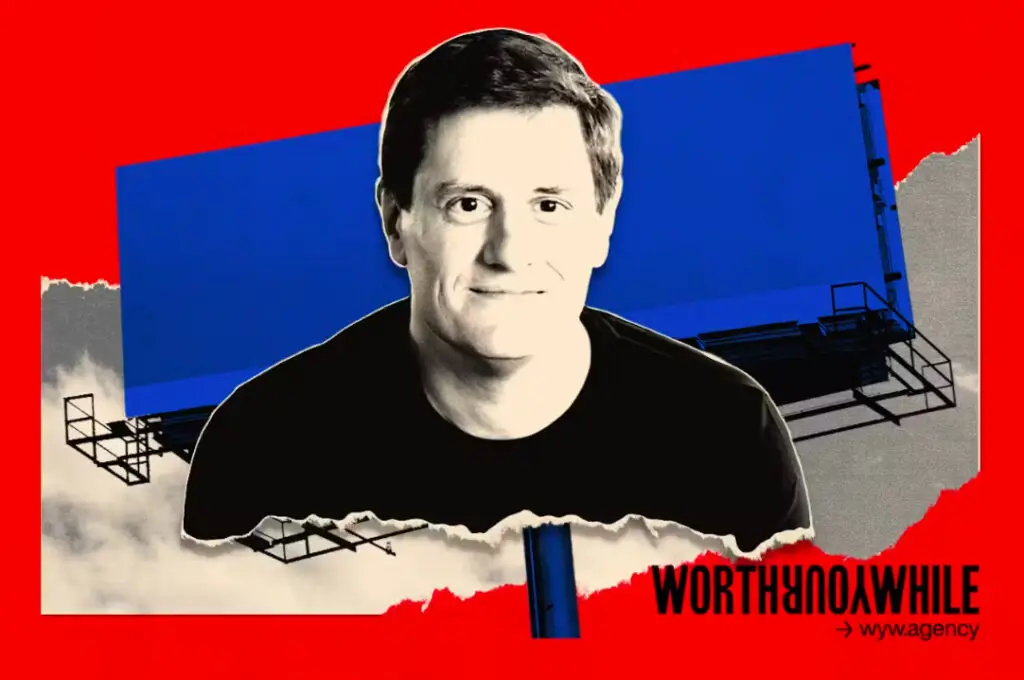
The online marketplace for freelance services is reimagining work beyond the 9-to-5. With AI promising even greater disruption to the creative workplace, CMO Matti Yahav tells Tim Healey why the irreplaceable value of human talent remains at the heart of its vision.
You’ve worked with Nestle, SodaStream, HoneyBook, and since 2023 you’ve been CMO at Fiverr. Walk us through your career to your current role.
I joined Fiverr as CMO at the end of 2023, bringing with me nearly 25 years of marketing experience across both consumer and tech brands. Storytelling and leading marketing teams are what I’m most passionate about. I’ve been fortunate to work on some truly iconic brands, which laid the foundation for how I approach brand building and team leadership today.
I gained invaluable experience working with companies like Nestlé, Lego and Disney. But if there was one place that felt less like a traditional marketing school and more like an amusement park of marketing, it was SodaStream. It was bold, disruptive, and a lot of fun – a place where we pushed boundaries and took creative risks.
Throughout my career, one constant has been my passion for connecting people through compelling brand stories and building brands that resonate deeply and endure.
What is the offer at Fiverr?
Our mission is to connect businesses with freelancers – and ultimately, to change the way the world works together. That means creating opportunities for both freelancers and businesses to thrive. My role is to bring that mission to life through bold, creative storytelling.
Whenever I meet members of our community, I’m inspired by their journeys – people who’ve left the traditional nine-to-five to pursue freelance work on their own terms. They’re empowered to build a career and lifestyle that truly reflects how they want to live and work.
What are the challenges that Fiverr Go addresses?
Having worked in marketing for many years, it’s clear that we’re at a pivotal moment for the industry. Technology – particularly AI – is transforming how we work, and that’s incredibly exciting. At Fiverr, our focus is ensuring that talent remains at the heart of that transformation.
We built Fiverr Go to address a major challenge we consistently see among startups and early-stage businesses. Founders are expected to do everything but often lack the time, team or resources to get it all done effectively.
Fiverr Go was designed as a fast, flexible solution to give entrepreneurs and business leaders immediate access to top freelance talent alongside the tools needed to manage their projects efficiently.
It takes the pressure off founders who are juggling design, marketing, tech and growth all at once. From a marketing standpoint, Fiverr Go is a natural extension of our mission: to democratize access to talent. It reflects what Fiverr is all about – speed, simplicity and empowerment.
Our broader strategy is about meeting users wherever they are in their journey – whether they’re launching their first brand or scaling their tenth product. Wherever they are, we’re here to help.

Fiverr Go empowers freelancers to train and control personalized AI tools and enables clients to generate unique work instantly.
Latest quarterly revenue for Fiverr is up 13.29% at $103.67m. In light of that news, what does 2025–2026 look like?
The working world is undergoing profound transformation. This era will likely be remembered as a time of transition, marked by bold ideas, rapid innovation and a fair amount of disruption.
Throughout this shift, Fiverr’s business has continued to grow steadily. Evolving market dynamics have pushed our marketing to lean even further into targeted storytelling – not just as a creative approach, but as a strategic response to what our audience values most right now.
Our customers demand speed and quality. In an increasingly fast-paced and crowded landscape, storytelling helps us break through the noise, create emotional relevance and clearly communicate how Fiverr delivers on both – combining exceptional talent with efficient, high-impact solutions.
Given concerns about AI biases and AI replacing jobs, how are these being addressed by Fiverr?
There are certainly valid concerns about AI – and we take them seriously. At Fiverr, we see AI as one of the most transformative forces shaping the future of work. But we believe it should be viewed as a tool to empower, not replace, human creativity.
Our marketing reflects that belief. We’re not here to fuel fear or sell a fully automated future. Instead, our campaigns focus on celebrating the irreplaceable value of human talent – creative thinkers, designers, developers, marketers – and how AI can help them move faster, think bigger and go further.
We’re also fully aware of the conversations around AI bias and job displacement. That’s why our storytelling centers on real people – freelancers and business owners – who are using AI to enhance their skills, not erase them. For us, it’s about amplifying human potential, not replacing it.
I went to Google’s headquarters in London earlier this year and the talk was all about all the new AI stuff they are rolling out for marketers. It was both impressive and a bit frightening as they have end-to-end solutions for creating adverts and even brand tracking.
Companies like Google have developed incredible technology, and even they acknowledge the importance of keeping humans in the loop. Our point of difference at Fiverr is that we go a step further – we believe humans should be at the center.
It’s all about the unique talent and creativity that only people can bring. While we absolutely use AI to optimize processes and enhance efficiency, we’re clear in our belief that human creativity should always lead. Technology is here to support and amplify – not replace – the human touch.
How is your marketing team structured at Fiverr?
As you know, there are traditionally two sides to the marketing equation: growth and brand. But I believe they should work as one holistic motion. Of course, some initiatives are more short-term and performance-driven, while others are focused on longer-term brand building. We have dedicated teams across brand, creative, design, and SEO but my approach has always been, and even more so today, to avoid working in silos.
We strive to operate under one clear strategy, ensuring that our short-term efforts support our brand goals and that our brand marketing reinforces performance. When these elements work together, the impact is far greater.

In 2024, Fiverr released an over-the-top musical spot to remind people that AI is only as good as the creatives using it.
A common issue among senior marketers is what you referred to as ‘silo mentality’ – teams operating independently of each other but often to their detriment. How do you avoid it?
It all comes down to the company’s DNA – its leadership, culture and the environment you create. At Fiverr, we’re very clear on our strategy. We have a bold, shared vision that the entire organization is aligned around, and we empower our teams to move toward it with confidence. My role is to ensure that our teams stay in sync while executing against that vision.
Even though Fiverr is no longer a small company, we’ve maintained a startup mentality. We move fast, we experiment, we celebrate our wins and we learn from our failures. I genuinely love that energy.
We foster a culture that encourages courage. When people aren’t afraid to fail, they’re free to think bigger and take smarter risks. Of course, failure should come with reflection – learning from mistakes is critical. But it’s this mindset that helps us break down silos, stay agile and continue building a truly dynamic organization.
What’s your first memory of a marketing success? A time when you went: “I think I can really do this job.”
When I was a teenager living on a kibbutz, I was given the responsibility of organizing a local flea market. I was 17 at the time, and traditionally, this event drew around 200 people – limited by space and parking. I agreed to take it on, but only if we set a much bigger goal: to bring in thousands.
Somehow, I pulled it off. The event was a huge success, and it was the first time I truly felt that spark of entrepreneurial spirit. It was also the moment I fell in love with marketing.
Fast forward to more recent years and one of the biggest highlights of my career was the acquisition of SodaStream by PepsiCo. It felt like a powerful validation of the work we had done to build a bold, disruptive brand – and a clear reminder of the impact great marketing can have on a business.
Could you tell us about some customer research that you’ve done that you found surprising?
At Fiverr, we invest heavily in customer research, combining external insights with our own internal data. With over 750 categories on the platform, we have access to a vast amount of behavioral data. But I’m particularly interested in the external research – especially from people who don’t use Fiverr – because it helps us understand what’s holding them back and how we can better meet their needs.
We’re also focusing on research with younger audiences, and what we’re seeing is a clear shift in aspirations. When I was growing up, I had a very traditional path in mind: go to university, earn an MBA and become a marketing leader. In contrast, my teenage sons want to be creators – people like ‘Mr. Beast.’
Our research shows that many young people no longer dream of a traditional ‘nine-to-five’ corporate career. The rise of the creator economy is just one example of how work, and ambition, are evolving. I believe Fiverr has a major role to play in supporting this next generation as they define success on their own terms.
What myth about marketing would you like to bust?
There’s a persistent myth that marketers speak in ‘fluff’ and aren’t truly connected to the business. But in my experience, the best marketers I’ve known are deeply aligned with the business and its goals.
I start every day early by looking at the numbers: tracking performance and understanding what’s driving results. There’s this false idea that being a storyteller or brand-builder means you don’t need to be across the financials. That’s simply not true.
To be a strong marketer, you have to be deeply connected to the reality of the business – the profit and loss, the KPIs, the growth drivers. That’s the foundation for building powerful stories and impactful brand strategies that actually move the business forward.

In 2025, Brett Gelman starred in the Fiverr Go campaign promoting tools that allow creators to train AI to support their work.
What advice would you give your younger self if you could go back in time?
I was extremely ambitious from a young age. I wanted to move fast, do big things and get promoted quickly. If I could speak to my younger self now, I’d say: “Hey, relax. You’re going to be fine. You know how to build strong relationships, you’re creative, and you have what it takes. So take a breath – don’t stress so much.”
Sometimes, trusting the process is just as important as pushing forward.
Looking beyond your latest campaign with Brett Gilman, what is next for Fiverr in terms of marketing and products?
We’re focused on building more targeted solutions tailored to specific user needs and expanding from there. The goal is simple: to make it easier for anyone, anywhere, to turn ideas into action by seamlessly bringing together human talent and AI.
Looking ahead, we have strong ambitions to move further upmarket with Fiverr Pro. This offering provides a differentiated experience designed for more complex projects and more mature businesses – and we’re already partnering with major brands to support their evolving needs.

Fiverr’s homepage immediately offers to connect you with freelancers who can support your business needs.
For the uninitiated, what is ‘vibe coding’ and how is this impacting Fiverr’s offer?
Vibe coding is a creative-technical approach that enables brands, marketers, and creators to build interactive, personalized digital experiences like landing pages, microsites and apps without needing extensive developer resources. It allows for quick, low-cost creation of tailored customer journeys that are experiential and data-driven. This empowers even non-technical teams to experiment with and deploy branded digital assets that engage audiences and collect insights.
Fiverr is embracing vibe coding by expanding its offerings to help brands easily access freelance talent for these kinds of projects. It lowers the barrier for companies to create rich, interactive campaigns, enabling them to work with freelancers on custom, audience-specific experiences.
What question would you like me to ask the next senior marketer that I interview?
One thing I hear consistently from CMOs today is their focus on how AI can make their teams more efficient. But for me, that’s only part of the conversation. I’m less interested in incremental gains and more curious about how CMOs plan to leverage AI to drive real business growth.
Rather than asking how AI can streamline operations, I’d challenge the next CMO you interview to consider this: what can we do on the brand side with AI to unlock dramatic growth?
At Fiverr, we’re actively exploring a range of AI-driven ideas and solutions but that’s the question I believe more marketing leaders should be asking. Efficiency is important, but transformation is where the real opportunity lies.
My question for you from the last senior marketer I spoke to is this: what will your role be like in five years?
I believe the role of the CMO will look quite different in five years – technology will continue to reshape many aspects of the job. But at its core, the role will remain grounded in the same essential foundations: being strategic, being creative, and getting things done.
Senior marketers will still need to move the needle in a big way – driving impact at scale and leading bold initiatives. While tools and tactics will evolve, the ability to think strategically, bring ideas to life creatively, and execute with purpose will remain just as critical as ever.
If there’s one thing you know about marketing, it is?
In today’s world, breaking through the noise is more important than ever. There’s an overwhelming amount of content and messaging out there – and frankly, much of the marketing we see is average. It blends into the background and fails to make an impact.
What excites me is marketing that stands out, whether it moves you emotionally, disrupts expectations, or offers something truly original. The most important rule for any marketer is simple: don’t be like everyone else. If your work looks and sounds the same as everything around it, it won’t be seen – and it certainly won’t be remembered.
You might die tomorrow so make it worth your while. Worth Your While is an independent creative agency helping brands do spectacular stuff people like to talk about. wyw.agency.
This interview has already appeared in The Drum. Discover the best campaigns, industry insights and interviews from world-leading marketers, creatives and more.