The Nextdoor CMO and co-founder tells Tim Healey why community must sit at the heart of brand strategy, what scaling from Windows 95 taught her about word of mouth and how AI is surfacing real customer insight at speed.
You’ve been at Microsoft during the Windows 95 era, helped build Epinions and Shopping.com through to its eBay acquisition and co-founded Nextdoor. How did that journey shape your approach to marketing and community?
I began my career at Microsoft as a product manager during one of the most exciting times for the company. Over five years, I contributed to three major product launches: the first version of Microsoft Office, Windows 95, and Office 95.
The launch of Windows 95 and Office 95 was not only a major milestone experience for me, but for the entire tech industry. It was a cultural moment that everyone was talking about on the day of launch. I vividly recall the excitement on that day: August 24, 1995. People lined the streets outside stores in cities like Auckland, Sydney, Hong Kong, Dubai, Paris, London, New York, and Seattle through the night. And then at midnight, Windows 95 and Office 95 finally went on sale. It was remarkable – people couldn’t wait to get their hands on our product. The anticipation was akin to the release of a new Harry Potter book or the early days of the iPhone launches.
What was even more amazing was that there was zero traditional advertising spend ahead of that launch to drive interest in Windows 95 and Office 95. Excitement was built through word of mouth, press coverage, and a community of influential end users and developers. This became a generational industry event that was unmissable.
In fact, people would stop me on the plane when they saw that I worked at Microsoft and would ask to get a demo of Microsoft Office. When you have that experience so early on in your career, it changes your expectations of scale and impact. From that point, I knew I only wanted to work on things that had the potential to be used by millions of people and would have a lasting impact on people’s lives.
I was introduced to a group starting a company called Epinions, which aimed to leverage the internet for word-of-mouth recommendations. At the time, it was a small, 15-person company pioneering the idea of using the Internet as a platform for user-generated content, allowing people to share reviews on everything from baby car seats to Parisian hotels.
What truly resonated with me was the democratisation of the internet, empowering individuals to voice their opinions. The challenge of building trust around reviews and creating lasting communities of reviewers was both intriguing and energising.
Epinions then went on to merge with Dealtime and rebranded the combined company into Shopping.com. We were very fortunate that the company went public in 2004 and was then acquired by eBay for $620 million in 2005.
After the acquisition by eBay, I found myself back in a large company environment. We managed the eBay, Shopping.com, and PayPal brands. I learned that while product and technology are crucial for success, ultimately, it’s about people and community.
This brings us to the third chapter of my career: founding and building a company from scratch. During this phase, we founded and built Nextdoor, which required leveraging all my experience in technology and community-building to create something impactful on a local level.
Everyone lives in a neighbourhood and everyone is a neighbour. Nextdoor is the essential neighbourhood network that can be used around the globe to help improve people’s lives.
We decided to harness the power of community to drive word-of-mouth recommendations, encouraging people to join and invite their neighbours to the platform.
What is the offer at Nextdoor?
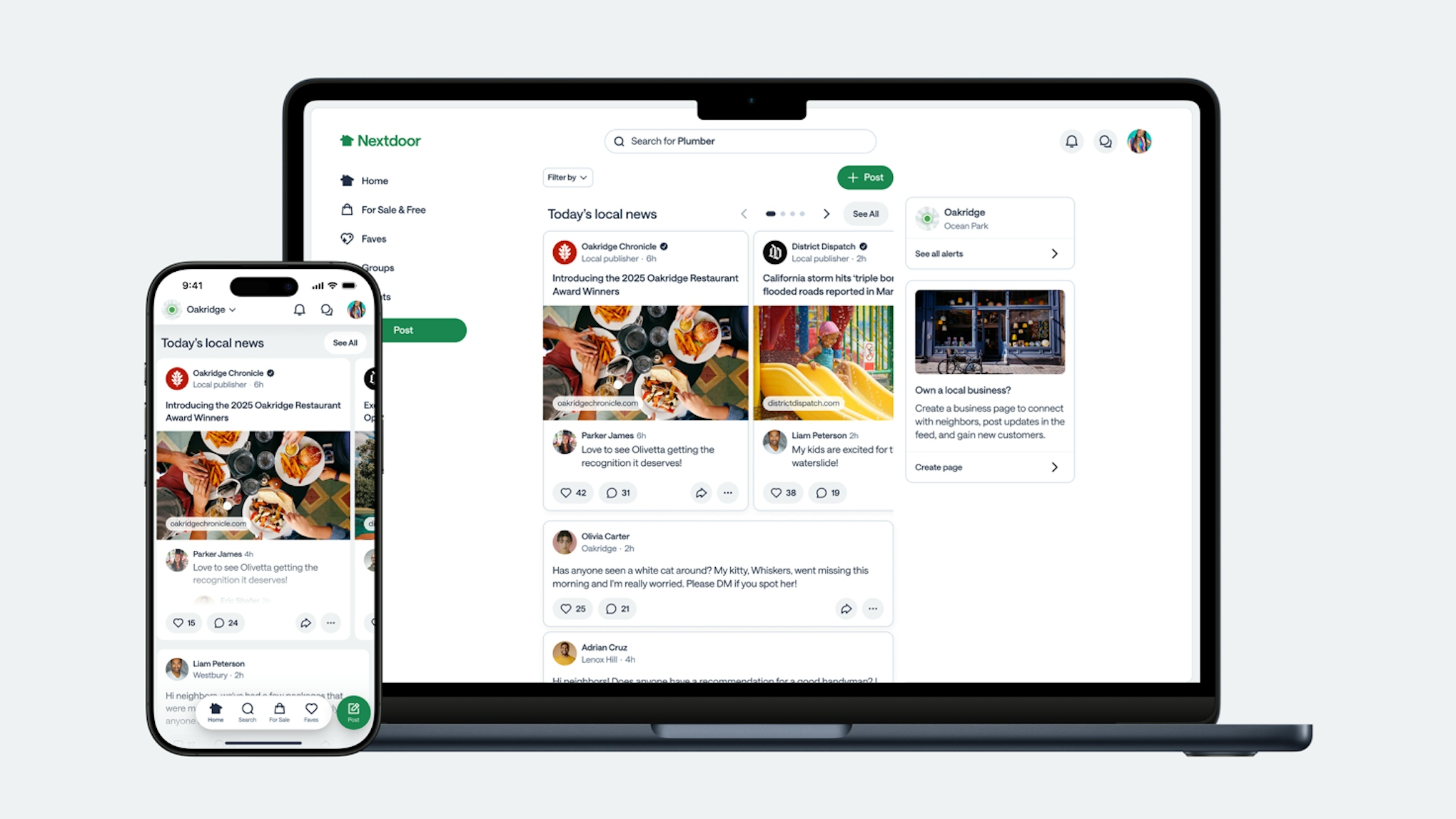
Nextdoor is the essential neighborhood network. We connect people to their neighborhoods so they can activate the power of ‘local’ to live better lives. We help neighbors stay informed with local news, stay safe with local alerts and get the best out of their neighborhoods thanks to trusted recommendations from fellow neighbors.
Anyone can sign up. Neighbors need to verify that they live in their neighborhood, and then they can tap into all the insight and information that is available in their local community. The real power lies in starting conversations with real neighbors about local happenings, from news and alerts to recommendations. We help people stay informed, keep safe, and confidently discover hidden gems and the best of their immediate area.
What’s coming up at Nextdoor this year?
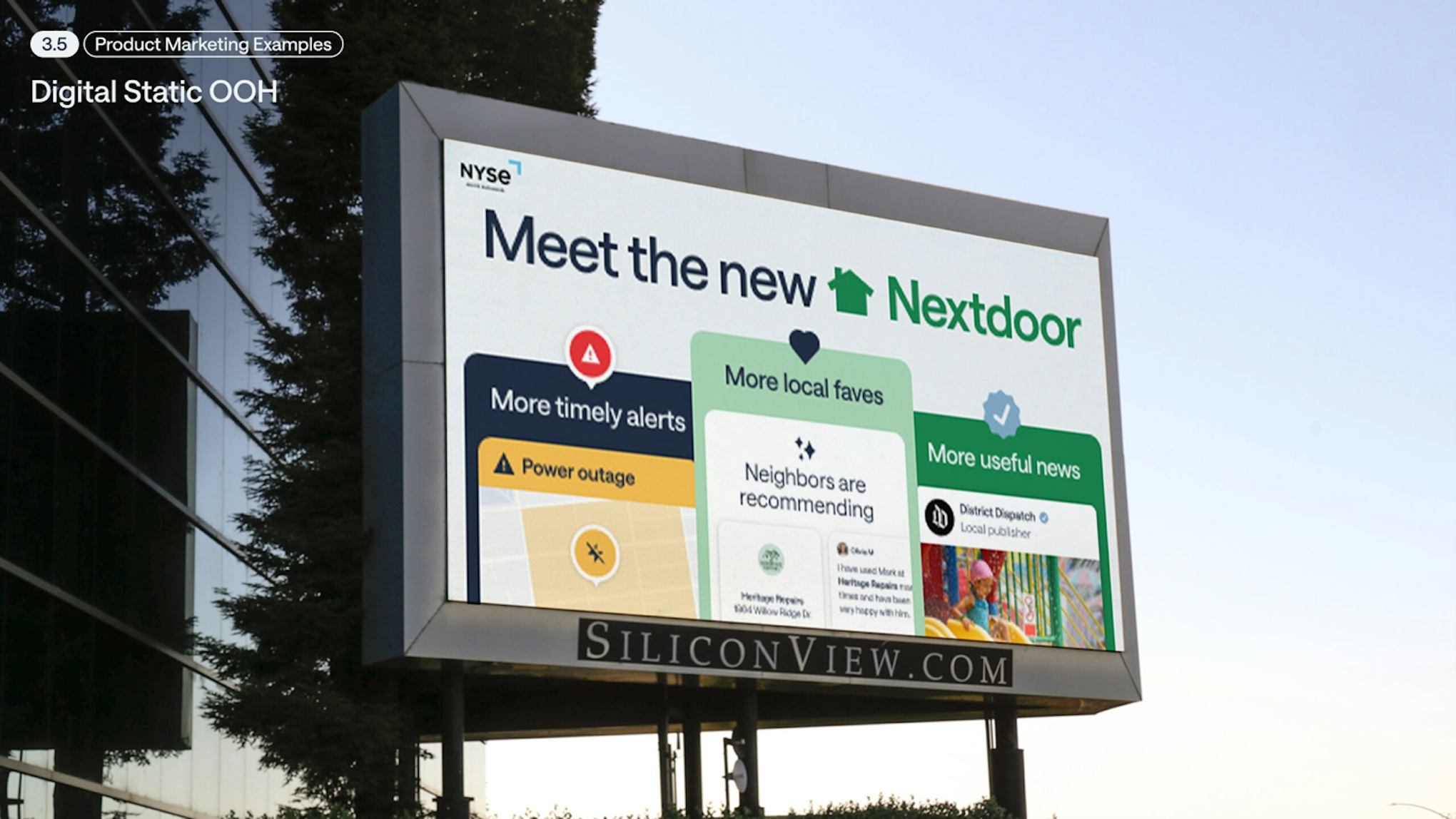
Last year, we launched a new version of Nextdoor, marking the most significant transformation of our core product in years. We’re incredibly proud of this achievement. We’ve partnered with thousands of local news publishers across the US, UK, and Canada, allowing neighbors to see local news content in their feed and engage in discussions about their community happenings.
This was a “refounding moment,” centered on what neighbors told us they wanted and needed from a local network. We also launched our new Alerts feature, which will be expanding further across the UK, US and Canada, providing timely updates, such as information on fires and power outages to extreme weather events. Our goal is to make sure people have the information they need, as it’s happening, so they can act quickly and support each other.
We’re also heavily investing in one of the most valued parts of Nextdoor: local recommendations. This is something that really speaks to the power of the platform – getting information from folks that live nearby. It could be a restaurant, a contractor, a handyman – or it might be a good hike on your doorstep. A local, trusted and authentic voice is something we are hearing from neighbors want to see more and more of. We’re combining this with the powerful use of AI. The influence of word-of-mouth recommendations remains strong, and we hear this repeatedly. By utilizing AI, we can surface these real gems more quickly and easily, allowing neighbors to access recommendations effortlessly.
At the heart of all this, our mission is to make everyday neighborhood life stronger, safer and more connected.
Could you tell us how your marketing team is structured?
We have dedicated teams for neighbors, advertiser customers, small businesses, public services, and community. Our community team focuses on groups of neighbors who are particularly active on Nextdoor. They are the leaders in their neighborhoods and our community team works collaboratively with them to help inspire the type of activity we want to see others adopting on the platform.
By organizing our team around these different customer segments, each team can bring insights and expertise back to our product team to help them better understand what we should be building, how we should go to market and how we’re serving each customer segment.
Drawing on your leadership expertise, what has your career taught you that helps you to make and maintain a great team?
I strongly believe in the power of the team and having people who are experts in their individual areas. It’s really important to lead by example in terms of understanding the real users and customers that you are serving. I get some of my best ideas and inspiration by being as close as possible to our users and our customers.
If you want a team to behave in a certain way, you need to lead by example. It’s also crucial to celebrate key players and teams, showcasing them to highlight the behaviors the organization values and wants to encourage.
There’s a great book called “The Founder’s Mentality” by Chris Zook and James Allen. One of the things that it focuses on is ‘frontline obsession’. Having that is so important – and it’s not just about serving your customers and being responsive to them. It’s also the source of so much innovation and creativity. You always have to be listening. If you’re not doing that, you’re going to lose touch with who you’re serving.
How do you manage to surf the tidal wave of marketing technology?
I’m a big believer in testing something and figuring out if it can serve you as quickly as possible. There are some areas where I want us to be on the cutting edge and be one of the first to try things. In particular, anything to do with community and community engagement – this is where we should be in a spot of excellence.
In other areas, I love having a network of marketing professionals that you can ask: “What’s working for you?” And then cherry-pick from those things. At Nextdoor, we make sure that each team can test and iterate on something that they think can work. If it’s working, great! We’ll roll it out across the company.
Could you tell us about a customer research discovery you’ve made that you found surprising?
In our conversations and partnerships with local news publishers, a common theme is their desire to reach a wider audience. At the start, we were thinking of news as just a point of distribution and content. What we have since learnt, from testing and interacting with local news publishers, is that they also want a two-way dialogue with neighbors about what’s happening. For example, there’s an ongoing conversation in my neighborhood at the moment about bike lanes.
That’s a hyper-local topic, and Nextdoor allows people in each neighborhood to share views and perspectives. Now this is a conversation that is really helpful for the local newspaper to access so they can also reflect local opinion and feelings. Before, reporters used to walk around an area, visit local cafes and places of interest to talk to people. Now, they’re seeking online ways to connect, and Nextdoor serves as an excellent partner to facilitate that interaction.
What myth about marketing would you most like to bust?
A lot of people think of community as this ‘nice to have’ thing, that you bolt on at the end of a marketing mission. That’s flawed. The best brands out there have built meaningful and enduring communities with their users.
The only way to do that is by putting community at the center and heart of what you’re doing. That’s a big part of what we’re doing at Nextdoor. When speaking to local businesses or national brands, we always ask them: “What are you doing to connect with folks authentically?”
Nextdoor is a way for household brands and small businesses to reach those different communities and be engaged in a two-way dialogue at the neighborhood level. It’s hard to find that in the landscape of endless options available to advertisers these days. Of late, investing in community as a core marketing function has been overlooked. But for the greatest brands out there, their customers consistently feel like they have a relationship with them. If you start there, it’s not a fast win, but it is an enduring win.
What advice would you give your younger self if you could go back in time?
Early on in your career, you tend to focus on speed: ‘How do we grow as fast as possible?’ While I’m always looking for growth – especially for scaling startup companies to larger companies – I’ve learnt over time that fast growth isn’t always enduring growth. Be patient. Do it the right way. Shortcuts will come back to haunt you.
When I am hiring for a marketing role, I look for someone who has been in the role for a couple of turns. I like to see that the decisions that they’ve made have had ramifications, and they’ve learned over the length of not just one campaign but over time.
So much of marketing has to be thinking about the long term. If you are building a brand, you are basically building trust, and that cannot be built with one interaction. It has to be compounded over time.
What question would you like me to ask the next senior marketer that I interview?
I’d love you to ask them about how they are thinking about community as a strategic lever to help build long-term brand equity and value in their business.
Your question from the last senior marketer I spoke to is: how are you leveraging AI right now?
One of the most powerful things we are doing is using a piece of software called Interpret. We’re using it to listen to all of the channels that we have for customer feedback and user feedback.
Since the start of 2025, we’ve had over two and a half million individual signals of feedback. We can now take that feedback and categorize it by different areas of the product or different segments of users, and that information becomes available to the entire organization.
Not only does everyone in our team have the underlying data, but they also have the verbatim text from our customers. It includes support tickets, surveys and mentions on social media. We are listening to all of that, aggregating it and then comparing it against our customer data set to understand which segments of our users are saying what.
This has really highlighted the voice of our customer. And through the platform, it is accessible to every engineer, product manager, designer, support person – anyone who’s working across the organization. This couldn’t have been done so efficiently without the power of AI.
What was your last cultural experience that stopped you in your tracks?
The last cultural experience that really startled me and stopped me in my tracks was at the Esplanade in my hometown of Boston, which is a large open-air area near where I live. I stumbled across a group of people who had come together to watch Star Wars. The musical composition for Star Wars was written by John Williams, who was the conductor of the Boston Symphony Orchestra. And so they had Star Wars playing on a big outdoor screen and the Boston Symphony Orchestra playing the score live. It was so amazing. And what was even more incredible was that around a thousand people had come together – picnic style – to share this moment.
There were people our age there, who remember Star Wars when it first came out, along with people much older and then families with teenagers and children running around with toy lightsabers. It was this incredible moment of serendipity that I just stumbled upon in my local park.
Those moments are really special when they happen. I feel my community, I see it, and I’m having this shared experience just because I happened to be walking by it at the time. Moments such as these can restore your faith in humanity and the power of community.
If there’s one thing you know about marketing, it is…
In the long run, authenticity always wins.
You might die tomorrow so make it worth your while. Worth Your While is an independent creative agency helping brands do spectacular stuff people like to talk about. wyw.agency.
This interview has already appeared in The Drum. Discover the best campaigns, industry insights and interviews from world-leading marketers, creatives and more.