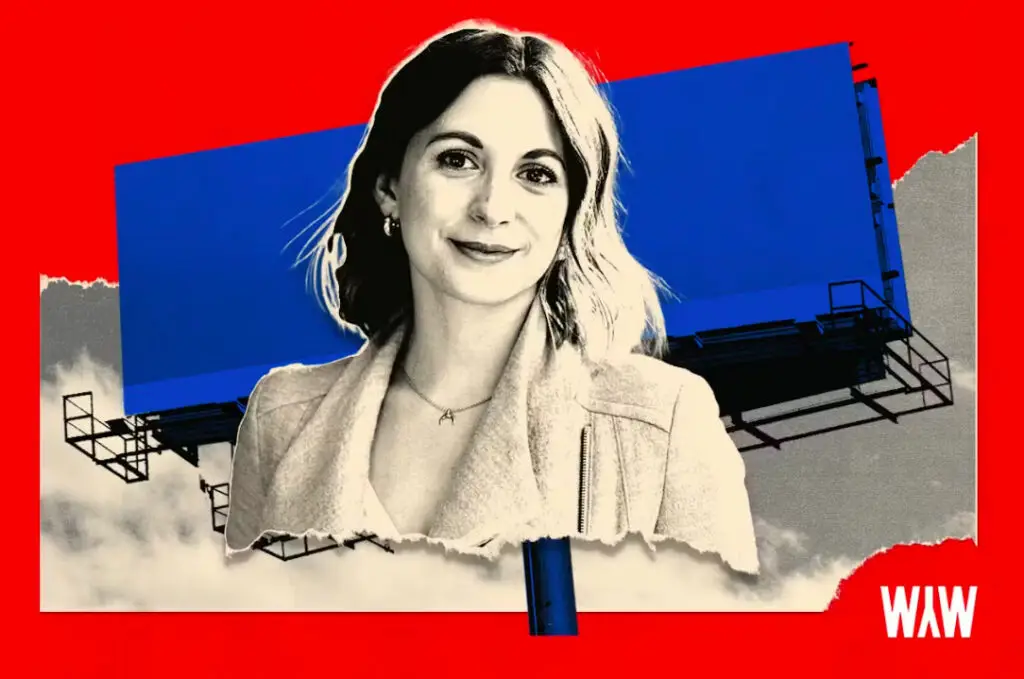
The price comparison service CMO tells Tim Healey why clarity, trust and timing matter more than hype when marketing categories people would rather avoid altogether.
Your marketing career has taken you to Johnson and Johnson, Bertelsmann, NatWest, Tommy’s, Bounty UK, Foundry, Just Eat, Compare the Market, Busuu and since 2022 RVU, as CMO for Uswitch. Please give us a whistle-stop tour of your journey so far.
I’m most motivated by businesses that have a growth mindset and the energy that comes with it, f ocused more on delivery scale and positive customer outcomes than red tape. I like to know that my actions can have a meaningful impact on the businesses I work for.
Early on, my specialism was digital – what was ‘new media’ back in the day. I’ve always been fascinated by the data and tech side of marketing but coupled with deep customer insight. In my early roles, I worked at the cutting edge of data and segmentation, understanding how to harness them to personalize experiences.
Mine has definitely been a ‘squiggly’ career, but every move for me has been really motivated by asking: C an I make an impact there? Is this exciting to me? Can I leave a legacy? Can I learn stuff?
So RVU has Uswitch, Confused.com, tempcover.com , money.co.uk and Mojo mortgages in its brand portfolio. What’s the offer at RVU?
We’re a collection of both larger consumer-facing brands, like Confused, U s witch (the brand I look after) and then high-growth businesses like Tempcover. At a group level, we are helping consumers save money on the stuff that they don’t want to really spend time on: energy bills, broadband, car insurance – grudge purchases that we’d all like to be as simple and cheap as possible.
Some consumers think a price comparison site is just AI serving up prices on a table. A key focus for our business is working closely with suppliers and providers to get the best deals we can – many of which are exclusive – and then getting that information in front of people at the right time for them. That way, consumers can feel confident they’ve got a great deal and then move on with the rest of their lives.
No one really wants to think about switching their car insurance or energy provider. Our job is to make that as friction-free, painless and rewarding as possible.

How are things looking at Us witch, and in the light of your most recent financial results, what does the next year look like?
The last few years have been a real turnaround period for us. Before the energy crisis, we were very much an energy-first business. Due to the crisis, there were no deals available for consumers and, as such, switching went to zero. While we worked with the industry and government to support the return of competition into the energy market again, we also doubled down on building a more robust portfolio of switching products.
As a price comparison site, our relationships with both suppliers and consumers are very impo rtant. We’re not just about driving switching for the sake of it. In fact, during the energy crisis we ran a campaign urging consumers to ‘just stay put,’ providing a calm and confident voice during a time of great uncertainty.
We are no longer solely reliant on energy switching. We have a well-balanced P&L that is performing strongly. That being said, energy in particular has seen a lot of growth this year, which is great for consumers as there is more choice, competition and actual savings to be made. Looking to next year, we are focused on a similar growth trajectory.
How’s your marketing team structured?
My team is around 50 people, split across brand comms, PR, CRM, SEO, content, performance marketing and analytics.
Coming from such a thorough tech-based background, what are your feelings about the implementation of AI in the marketing mix? In which areas has Uswitch found it most helpful? And in which areas do you believe a human is still essential?
I feel optimistic about the opportunities AI will unlock for marketers, from creative production to search transformation, analytical capabilities, operational efficiencies and beyond. At Uswitch, we’re proactively exploring and embracing AI across all teams, seeking out ways to augment our human expertise and fast-track growth.
For example, we have seen positive results from leveraging AI Max to broaden our PPC landscape. We’ve also produced a highly effective and cost-efficient TV ad created using AI technologies. This is, in fact, our highest-performing asset according to System1, performing well across emotional response as well as short-/long-term metrics. This gives me confidence in further investment in the future.
AI technologies today are the worst they’ll ever be, so we have a lot to gain from being curious and proactive. Whilst we may decide AI capabilities can’t support us in certain areas now, it should remain a watching brief as technologies evolve. That said, AI won’t be the answer to everything. I believe we’ll still need human-first thinking when it comes to areas such as creative strategy, PR and strategic decision-making. AI will undoubtedly support these too, but I believe the most value will be gained by combining human creativity with AI capabilities.
Want to go deeper? Ask The Drum
Drawing on your leadership expertise, what has your career taught you that helps you to build and maintain the best marketing teams?
In 26 years on the job, I’ve learned the value of clear and regular communication. The more my team understands in terms of current priorities, what’s working, what we’ve learned etc, the more able they are to make high-quality decisions day-to-day.
I don’t believe in information being something that only the upper echelons have access to. I’m very big on the entire team having access to important information for full transparency and having an opportunity to ask questions or challenge.
Psychological safety is key too, creating a safe space f or open discussion. I will say, “Look, I fluffed up on this” or “I thought this would be the case, but it hasn’t transpired. So how do we take this forward?” In my experience, this openness creates more of a sense of team.
Thanks to my ‘squiggly career’, I have done the job of many of the people in my team. So I feel very fortunate that I can have detailed, rigorous conversations – technical conversations where necessary – with each member of my team. I think this also helps to build trust and really helps in my role due to the constant context switching.
I see my respective teams as the experts – they’re the specialists – but thanks to my career, I can give guidance and support. I think that wins you a lot of favor and respect. As a leader, that helps you to go further.

Could you tell us about a customer research discovery you’ve made that you found surprising?
We run regular research with consumers about the energy market to establish how people are feeling and what kind of savings figures will motivate people to switch.
During the cost-of-living crisis, our assumption going into the research was that people would be motivated by frankly any saving that was available, whatever it was. For example, we thought that a £25 saving would be enough to encourage people to make the switch from one energy provider to another.
We found the opposite to be true. When energy prices skyrocketed beyond what they used to be, people expected a higher saving to match the higher prices.
This meant that rather than £25, consumers need to see savings of nearer £100 and above to be bothered to switch. It seems obvious when you look back on it, but that research proved really useful when planning our campaigns.
What myth about marketing would you most like to bust?
‘Everyone can do marketing.’ There’s a huge misunderstanding of the breadth of the marketing discipline, and it’s only getting bigger. Marketers need tenacity, strong leadership skills, perseverance, the ability to be creative, but also to speak with confidence about the P&L and your impact on the business.
I sit on the exec at U s witch and have to show how our initiatives will really connect with consumers and drive the business; I have to be able to discuss all of this with my fellow exec members, and to align with them. So I think the myth that anyone can do marketing is the one I would like to bust.
What advice might you give your younger self if you could go back in time?
I’d say: ‘It’s OK not to have an exact plan. Roll with it. Say yes to opportunities. Go with your gut. Try on lots of different hats. Some will fit and some won’t, and that’s OK. Don’t worry too much about not specializing early on.’
I had a lot of friends who were in highly structured grad schemes. Meanwhile, I was working for a startup/scaleup in a little office on Carnaby Street, buying and scheduling media with cutting-edge technology. I remember thinking: “Oh God, what have I done? I’ve made this massive error.” With hindsight, that experience made me a more resilient and stronger marketing leader.
Likewise, working across different industries, there was definitely a time when I thought: maybe I should just stay in one industry and become an expert in it instead of moving as I did. But my path was the right one for me, and has made me a more well-rounded, empathetic and resilient leader as a result.

What question would you like me to ask the next senior marketer that I interview?
Which marketing campaign do you wish you had come up with – and why?
Your question from a senior marketer that I interviewed this week: do you believe in Kismet?
Yes, I do. But I think what you put out into the world affects your Kismet. So if you’re positive and open to opportunities, you’ll attract positive opportunities. I also think that ‘positive Kismet’ becomes stronger the harder you work. So, essentially, you can make your own luck.
If there’s one thing you know about marketing, it is…?
The way it is today is not how it will be tomorrow. Marketing is constantly changing and constantly moving: it’s exciting and daunting at the same time. It ’s why I’ve worked in this space for over 25 years!
You might die tomorrow so make it worth your while. Worth Your While is an independent creative agency helping brands do spectacular stuff people like to talk about. wyw.agency.
This interview has already appeared in The Drum. Discover the best campaigns, industry insights and interviews from world-leading marketers, creatives and more.