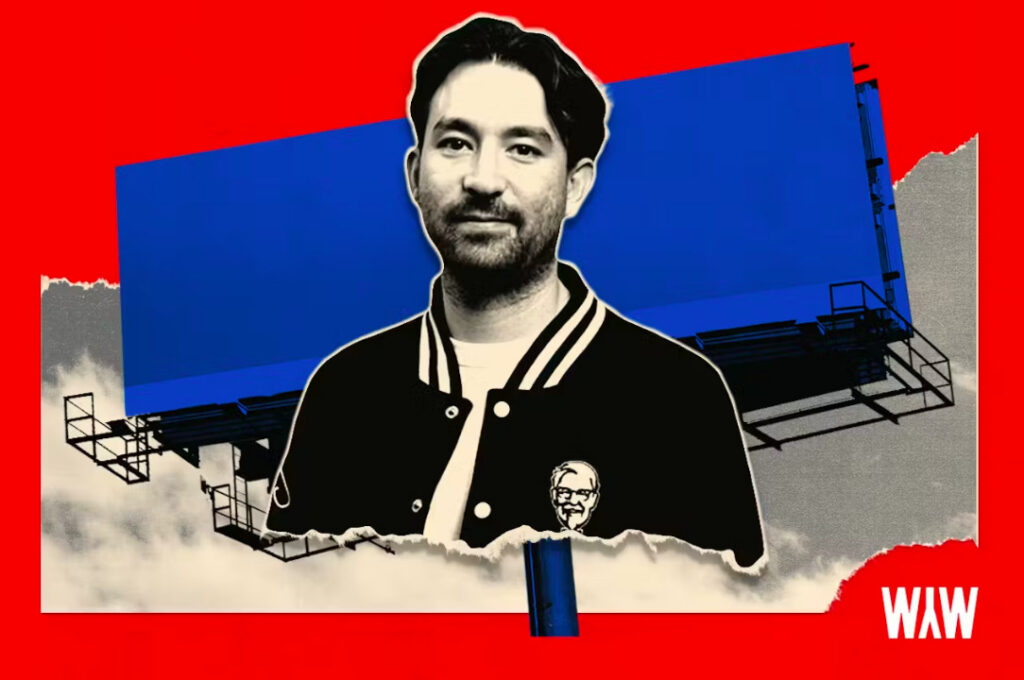
KFC UK & Ireland’s strategy and innovation director tells Tim Healey why bold creative matters, how the brand balances debate with trust, and why being entertaining is part of being distinctive.
You’ve worked across agencies, then moved brand-side at Leon and Tombo before rising through KFC UK and Ireland to become director of strategy and innovation. What were the key career moves that led you here?
I started out in advertising agencies. I was always drawn to the power of creativity: how a great idea can change behavior, can stop you in your tracks and get people talking. My first job was at DLKW in account management.
My time there was a masterclass in relationship building and strategic thinking. I learned a lot around setting the right conditions for creativity to flourish.
Growing up, I was really inspired by campaigns like Levi’s ‘Flat Eric’ – with the Mr Oizo soundtrack – so it was a dream come true to work at BBH for five years. Being part of the agency during a purple patch was a really special experience.
At BBH, I learned about the power of culture. We always set the bar high. There was an obsession with craft and effectiveness.
There were plenty of mantras at BBH, but one that has always stayed with me is this: “Successful campaigns are 80% idea and 80% execution.” I remember thinking… that doesn’t add up. But the point is exactly that: you can’t trade one off against the other. Whether in creativity or innovation, a brilliant idea without brilliant execution will fall flat. And flawless execution can’t rescue a weak idea.
At BBH I worked primarily on the KFC account. That’s where I fell in love with food and retail. It’s also where I fell in love with KFC’s culture; its focus on people, recognition and bold ideas.
Towards the end of my time at BBH, my interest was starting to shift from creativity to creative problem solving. I became increasingly curious about where the briefs were coming from, how strategy was formed, what was driving the commercial priorities, and how you could influence behaviour beyond just the advertising lever.
That curiosity eventually led me to Leon – my first role on the brand side. It was a high-impact year for the restaurant business, as we grew from 30 to 60 sites. At the same time, my family restaurant business, Tombo, was expanding. It was an incredibly exciting period, and one of the steepest learning curves of my career.
I suddenly found myself leading areas I’d never formally trained in: running restaurants, overseeing operations, HR and payroll. It was a huge stretch. But that experience has been fundamental in shaping who I am as a leader. It gave me deep empathy and respect for restaurant operators, an understanding of the pressures they face every day, which is invaluable in my role at KFC.
Today, I’m strategy and innovation director for KFC UK & Ireland. I work across insights, menu innovation and new concepts – defining what’s next for the brand. I’ve been with KFC for six years in a range of marketing roles, and it’s a special place: a distinctive culture, ambitious thinking and genuinely brilliant people.

What can we expect from KFC over the next 12 months?
We’re going to be focusing on two things: our brand platform and innovation. We’ll continue building the ‘Believe’platform. And at the same time, we’re accelerating innovation. Customer tastes are fast-changing, so expect lots of news and excitement in that space. The recent launch of our Hot Honey Drip Burger is just one example of the flavor-led thinking coming through. And there’s more to come.
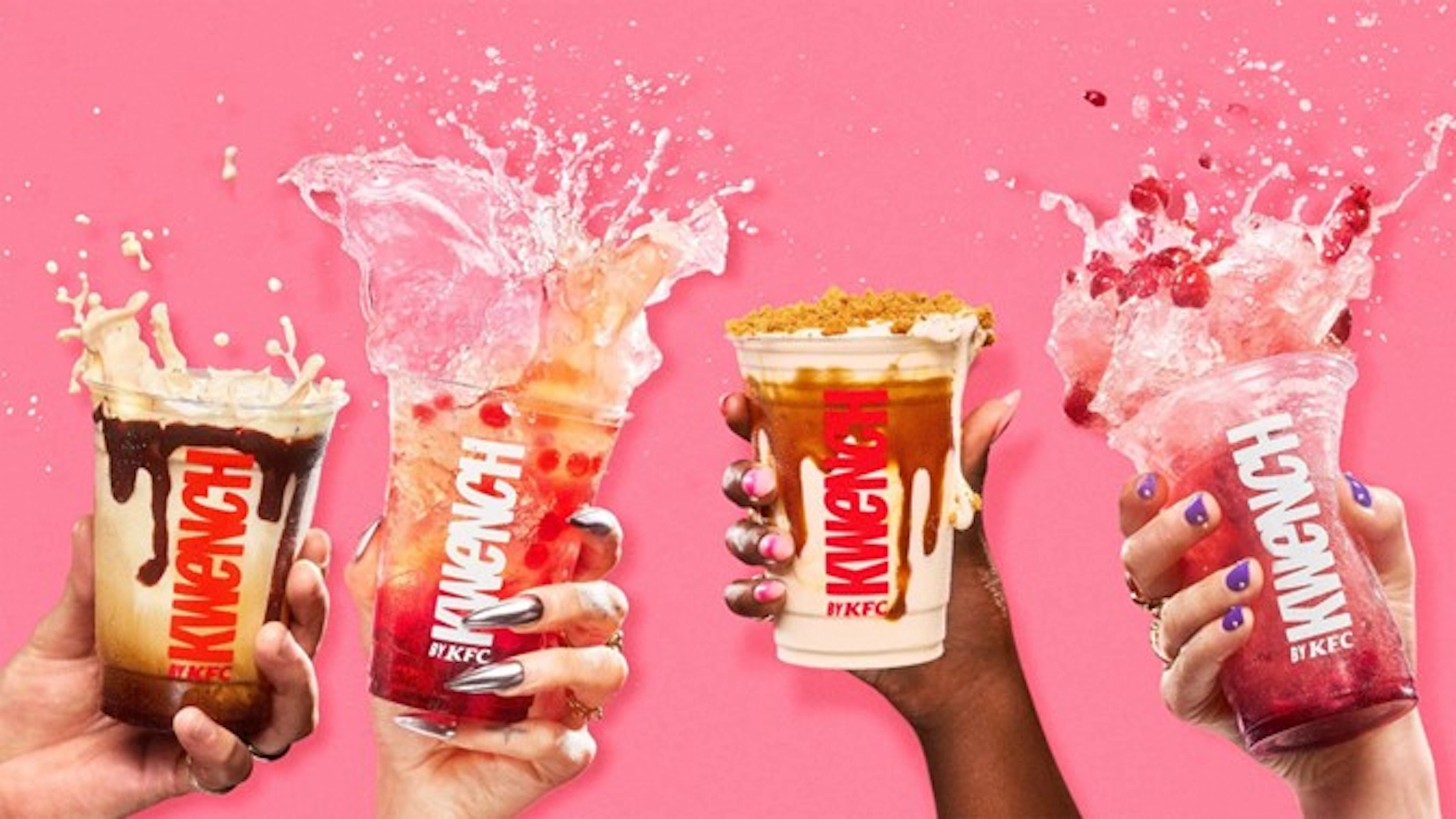
We are also scaling Kwench, our new handcrafted drinks range that includes lemonades, boba drinks, shakes and iced coffee. We’re seeing that drinks options are playing a bigger role in where and when people – especially younger people – are choosing to eat. So that’s a real growth opportunity we’re investing in.
Can you explain a little bit more about your strategy and innovation team and also the larger marketing team at KFC?
We run a focused, high-performing marketing team at KFC, supported by outstanding agency partners like Mother and Mindshare. The function is led by our visionary CMO, Monica Silic.
We’re structured around three core pillars. The first pillar is a team focused on brand and retail, and delivering growth today. The second pillar, the team that I look after, is focused on tomorrow. With insights, strategy, menu innovation, also new concepts. For example, Kwench was incubated within this team, born out of customer trend analysis and developed into a scalable proposition.
The third pillar is all about food and quality and is dedicated to great execution. Alongside those pillars, we also have digital growth and corporate communications. By working closely together, we’ve become one cohesive marketing team, with the strength of our brand flowing through every part of the function.

KFC restaurants are a mixture of KFC run and franchises. How do you find working across both types of restaurant?
We always show up as one brand: KFC. From a customer perspective, there should be no difference between a company-owned restaurant and a franchise restaurant. I believe we do a great job at maintaining that consistency across the UK and Ireland and globally.
The reality is that we operate in partnership with our franchisees. Some run more than 100 restaurants, many have worked with KFC for decades, and some are multi-generational family businesses. They know the brand inside out and often have incredibly deep local customer insight.
When those partnerships are strong, execution is strong. For example, when we piloted Kwench in Manchester, we worked hand in hand with a franchisee – speaking daily, sharing learnings and iterating in real time. That collaboration made the rollout better.
Of course, franchise relationships can bring healthy tension, but at KFC it’s constructive. We’re aligned around the same goal: delivering growth and a consistently great brand experience for our guests.
Want to go deeper? Ask The Drum
I read that in response to the reception of your ‘All Hail Gravy’ advert, you said: “The worst you can do is be boring.” How do you balance generating controversy with long-term trust?
First and foremost, if you don’t stand out, you get ignored – and then nothing else really matters. What we try and do at KFC is create bold creative that gets talked about, provokes debate and gets the brand noticed. But it also has to entertain.
KFC is a brand built on enjoyment. Our food and drinks are fun and social – and our creative should reflect that. Our ‘Believe’ platform recognizes that the world feels confusing right now. But if there’s one thing you can believe in, it’s that we serve great-tasting fried chicken. We communicate that with humor in a way that’s entertaining, culturally relevant and unmistakably KFC.
A lot of Gen Z strategy collapses into chasing formats or trends. How do you avoid this at KFC? How do you keep your distinctive brand codes but still behave like a native when you’re in social media spaces?
One of the biggest learnings has been the importance of bringing younger voices to the table – not just in content creation, but in innovation and product thinking too.
Having younger people in those conversations is crucial. They can spot inauthenticity instantly. If something feels forced, they’ll know. Collaborating with them helps us create experiences and content that feel genuinely credible.
The other key thing is speed. Social moves at pace, and we know culture moves even faster. You can’t always rely on lengthy testing cycles or multiple approval tiers. To connect with younger audiences, you need the confidence to act quickly – to be agile and bold when the moment calls for it.
If you had one piece of advice for mid-weight marketers looking to become marketing leaders, what might that be?
A mentor once said to me: ‘Bring the outside in. The future of your business won’t be found sitting at your desk.” That mindset has stayed with me. Curiosity is one of the most powerful traits you can develop in marketing. It means getting out into culture, understanding people, listening to customers and observing how the category is evolving. As you progress in your career, your role becomes less about execution and more about setting vision and inspiring others – and that vision can only be credible if it’s grounded in the real world.
Could you describe a moment when your instincts and the data pointed in different directions? How did you decide, and what was your takeaway from the experience?
A few years ago, I looked after the KFC Ireland market. When I took that on, we’d had eight years of transaction decline in Ireland. All our hypotheses and instincts were pointing towards the issue being a pricing and value challenge. That we weren’t providing the right offers or the right value for money for those customers.
When we dug into it, doing some deep customer research, what we quite quickly learned was that it wasn’t a pricing or value issue. It was a relevance issue. Those surveyed told us that KFC was perceived of as a ‘distant American brand’. We weren’t connecting with Irish culture and as a result with Irish people.
That made us pivot: we realized we needed to start making things with Ireland, for Ireland. I had grown up in London, so I was also learning about Ireland, and I learned that a chicken fillet roll is a famous and cult classic sandwich in Ireland. KFC are the chicken specialists – and yet we had nothing in this space.
We decided that we should launch our KFC chicken fillet roll and it blew the doors off. One of my proudest moments. And we eventually reversed the declining transactions in Ireland, turning it into growth.
How do you surf the tsunami of rapidly evolving marketing technology?
It’s something we navigate every day. Firstly, we’re fortunate to be part of Yum! Brands, the world’s largest restaurant company. That gives us access to world-class technology, platforms and the level of investment needed to activate meaningfully in those spaces.
Secondly, we lean on brilliant partners. In fast-moving areas like tech and social, we actively seek out experts who can help us stay ahead. For example, our partnership with Uncovered agency has been instrumental in helping us connect with younger audiences. They’ve grown our TikTok following from 100,000 to 1.6 million, but more importantly, they’ve helped us truly understand the platform, from algorithms to culture, and how to show up authentically within it.

What advice might you have for marketing leaders when they get pushback in the boardroom?
Take a moment and really listen to what you’re being told. Don’t rush to fill the silence or defend your thinking. Absorb the feedback, ask questions, and understand what’s behind the lack of a green light – then take it away and do the work.
At KFC, we challenge the topic, not the person. In that spirit, challenge is an invitation to think more openly and arrive at a stronger solution. It doesn’t always mean changing your proposal – sometimes it’s about refining it, strengthening the rationale, or bringing people with you.
What has your career taught you about leading the best teams?
I’ve been lucky enough to work in a range of organizations with very different cultures. One of the things that really stands out at KFC is our recognition culture. Putting such an emphasis on recognition helps us build and maintain great marketing teams. It flows right through the organisation.
We celebrate the small wins, the big wins, major contributions and unsung heroes. ‘Thank you’ are two of the most powerful words in leadership. When recognition is embedded in the everyday, it builds trust, and trust underpins high performance.
What myth about marketing would you most like to bust?
There’s a myth that marketing is “just communications.”
I feel fortunate at KFC. We’re a business that genuinely understands the power of marketing and respects the role it plays. When done properly, marketing is a growth engine, especially when it works in true partnership with the rest of the organization. At its best, marketing can galvanize a business and create energy. It can inspire teams, set strategic direction, shift behavior and deliver tangible commercial results – exactly as our ‘Believe’ platform is doing for our people and performance.

What question would you like me to ask the next senior marketer that I interview?
When was the last time you felt truly out of your comfort zone, and what did you learn from it?
Your question from the last interviewed senior-level marketer is this: what is your favorite brand that most people haven’t heard of, and why do you love it?
I’ve been watching the rise of Poppi in the US closely. It’s a drinks brand that’s managed to disrupt what looked like an almost impenetrable category. What’s impressive is how they built it from the ground up – leveraging influencers, embedding themselves in culture, and thinking differently about distribution, including direct-to-consumer. I’m always drawn to brands that challenge category conventions and genuinely shift the rules of the game. Poppi has done that in drinks.
If there’s one thing you know about marketing, it is?
Marketing is one of those disciplines where the moment you think you’ve cracked it, the rules shift. But at its core, it’s always been about people. It’s about understanding the messiness, the brilliance and the contradictions of human behavior – and turning that understanding into growth. That’s what makes it endlessly fascinating. Our job as marketers is to make sense of that complexity and translate it into work that moves both people and the business.
This interview is brought to you in partnership with Worth Your While – an independent creative agency based in Copenhagen, working globally. Named one of The Drum’s Indie Agency Top 100, WYW exists on the belief that time is humanity’s most valuable resource, and that the only ideas worth making are ones that earn it. You might die tomorrow. Make today worth your while.
This interview has already appeared in The Drum. Discover the best campaigns, industry insights and interviews from world-leading marketers, creatives and more.