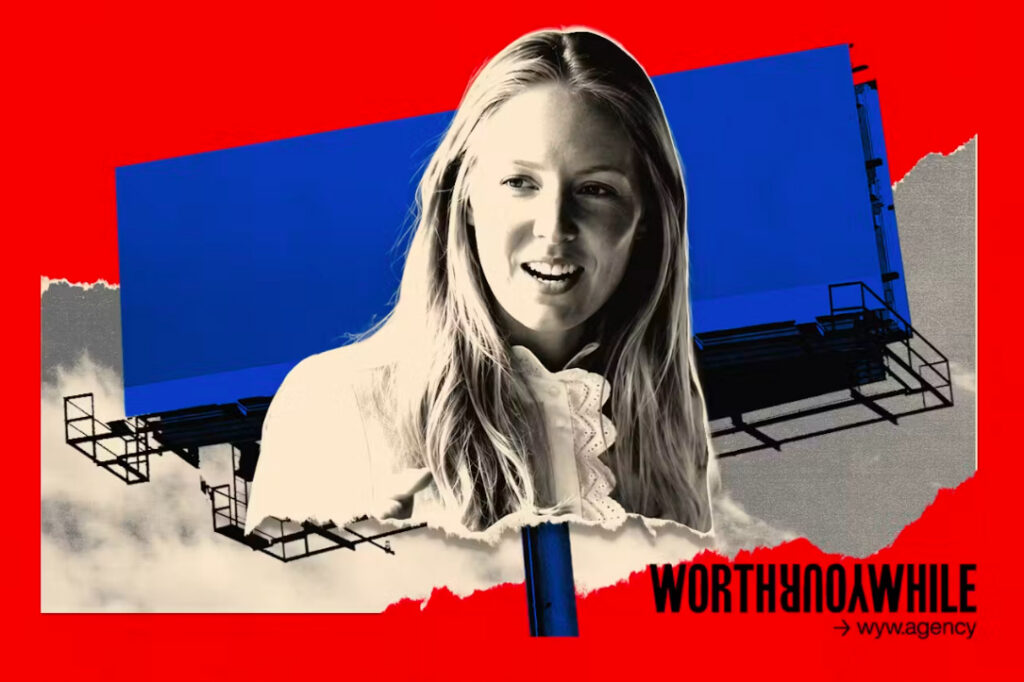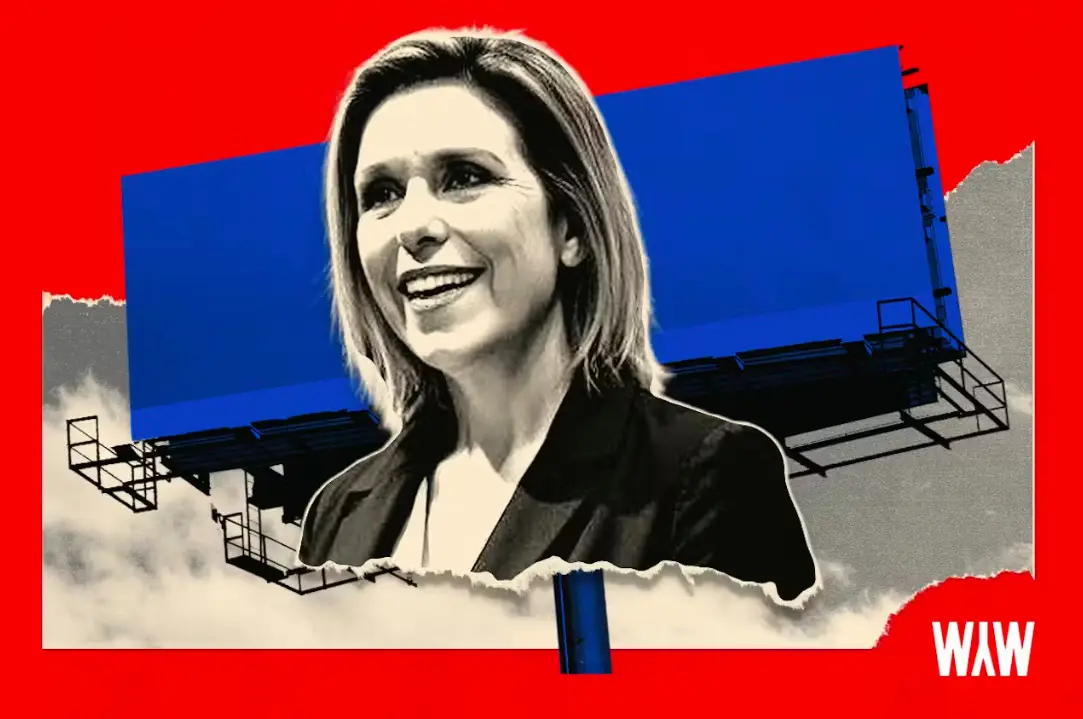
Tim Healey speaks to Network Rail’s marketing chief Faye Scadden about the coming Great British Railways rebrand, behavior change campaigns and why audience testing still beats instinct.
You’ve worked for county councils, the University of Bedfordshire, NHBC and, since 2019, Network Rail. Please walk us through your career to your current role.
It was always my intention to work in marketing. I was also committed to working, not necessarily in the public sector, but in a role where I feel that I’m doing something worthwhile, where I’m making a contribution, not just financially, but to the good of society.
I started off in the charity sector and worked for three years at Leonard Cheshire, a charity for disabled people. Then I made the move to local authorities. I moved up quite rapidly in Buckinghamshire County Council. I was there for about seven years, then made the move to head of communications and marketing at Northamptonshire County Council.
After a brief stint in higher education, I moved to the National House Building Council (NHBC), the non-profit that sets technical standards for construction. Next, I moved to Network Rail. Here, our focus is on making the railway simpler, better and greener. A key part of my role as head of marketing, campaigns and brand is to deliver behavior change campaigns.
What’s the offer at Network Rail?
Network Rail provides the infrastructure of the railway. Our goal is to improve passenger journeys. We’re often confused with train operators, the “TOCs”, or train operating companies, like West Midlands Railway, Avanti and LNER. There are lots of them. We’re about the infrastructure of the railway, including 20,000 miles of track, 30,000 train bridges, tunnels and level crossings, and we manage 19 of the UK’s biggest stations.
We improve the rail tracks and make sure that passenger journeys are as good as they can be. That’s our role. We’re a large organization: around 40,000 people work for Network Rail. It’s a great organization to work for in terms of the culture.
Many people stay in the railway for their whole career, whether that’s with Network Rail, train operators or other related companies, like our suppliers. At Network Rail, among the employees, we have lots of siblings, mothers, fathers, husbands and wives. It is the kind of organization where everybody knows each other, even though we are of a considerable size.
Network Rail is on course to change. A number of different train operators have already been nationalized by the Labour government. The train operating companies that haven’t yet been nationalized will be by the middle of next year. Network Rail, in 18 months, won’t exist. We will become Great British Railways. We will join our train operating colleagues and teams from the Department for Transport, and we will become one of the biggest organizations in the UK, with around 100,000 people, second in size to the NHS.
Digging into what you said about behavior change, what have you found to be the most credible levers for shifting public sentiment?
It’s hard with an organization like Network Rail, where some people have potentially spent their whole career working for the organization, or at least within the railway. This can make change quite challenging for people.
We’re trying to be as open, honest and transparent as we can be, keeping people informed throughout the process. The Railways Bill will have to go through parliament. Decisions will have to be made at a government level.
Even when there is no update, as an organization, we have to keep trying to say something. If you say nothing, there’s a danger that you create a void, and then people will potentially make up their own narrative. As a result, we keep our employees informed as much as possible by sharing papers and updates.
We do this in lots of different ways. We regularly give updates to line managers at online events or by equipping them with toolkits for team meetings. There are lots of working groups involved in the development of Great British Railways, and it’s giving our employees the opportunity to be involved where they want to be involved, to be part of working groups, to have their say and to contribute to the process wherever possible.

Network Rail’s safety communications aim to change behavior.
How do you go about creating safety campaigns that resonate?
It can be hard. What we’re trying to achieve is genuine changes in people’s behavior. We are not trying to influence a purchase decision or shape a frame of mind: it’s a change in behavior. There’s a psychological approach to understanding what motivates people to behave in the way that they do, particularly when those are unsafe behaviors that might need to change a learned behavior, or it might be an attitude. There are all sorts of things that influence people. There are three or four key areas of safety that my team focuses on, working with the whole rail industry. First, we have level crossing safety because, obviously, we manage level crossings.
Trespass is also a huge issue for the railway that impacts not just people’s lives but the performance of the railway. Our passengers get very frustrated when there are delays or cancellations, and sometimes that can be because of trespassers on the railway.
Another area of focus for the rail industry is suicide prevention. Suicide on the railway is a tragedy that causes profound distress to everyone involved, including our staff, and so we manage these campaigns with our rail industry partners. We also work closely with Samaritans. We try to encourage our passengers and the public to intervene if they see someone appearing vulnerable or in emotional distress on the railway. We encourage bystanders to use simple conversation or questions to interrupt potentially suicidal thoughts.
Finally, we have station safety. Slips, trips, falls, escalator issues and intoxication in stations: we try to manage that as well through our campaigns. We spend a lot of time trying to understand, in all of those safety areas, what it is that makes people do those things in the moment.
When it comes to level crossings, what makes people lift up a barrier and go underneath it, or ignore a red flashing light? What makes somebody trespass on the railway when they know that it’s illegal? What makes somebody head to the railway environment when they’re feeling vulnerable? Why are they doing that? And what can we do?
Marketing campaigns are a very small part of how we address these issues. There are lots of very practical things that we do as interventions. But at its core, we do our utmost to better understand why people are behaving the way they are, and then what messages we need to put out that would make them change their behavior, where they need to see these messages and what it will take to make them pay attention and think again.

The Great British Railways (GBR) branding on display for the first time at London Bridge station.
How’s your marketing team structured?
The focus for Network Rail is communications. My team is within a group communications structure. We’re in a national team: there are around 90 of us. I have nine people in my immediate team: the marketing, campaigns and brand team. We sit within group communications.
Communications itself is decentralized, as the management network is decentralized. We have five regions across the UK. Each of those regions has its own communications team. Those communications teams tend to have people who focus on media relations, external affairs, public affairs, internal communications, community communications and community support. These squads don’t tend to have marketing and campaigns professionals, though.
My team is really the only external marketing team that exists within Network Rail. We provide support, help and development opportunities for the national team and for the regions to help them develop and deliver campaigns. They develop and deliver campaigns around local disruption. If there’s going to be a closure of the railway in one of our particular regions, then they will manage those campaigns, and my team will support them as they deliver them.
If you had one piece of advice for mid-weight marketers looking to become marketing leaders, what might that be?
The key thing that I’ve learned over probably the last 10 years is to focus on the outcomes and less on the assets. It’s not so much what you deliver; what is important is the outcome. What is the impact that your initiative is having, and what has it that you have achieved? How did safety incident numbers change as a result of your campaigns, for example? And it is good to remember: whatever we think, whether we like or hate something, at the end of the day, if you’re not the target audience, your opinion really doesn’t matter.

Many employees remain with Network Rail for the duration of their careers.
Could you describe a moment when your instincts and the data pointed in different directions? How did you decide what to do, and what was your takeaway from the experience?
One of the biggest disruption campaigns that my team manages is the campaign that you will have seen, if you travel by rail, many, many times. That’s “check before you travel”. Every bank holiday, we do a lot of infrastructure work across the railway to improve journeys for passengers. We’ve had this “check before you travel” campaign with a particular look and feel for a number of years.
We undertook a huge review of it two years ago, and we were all quite excited, working with our creative agencies. The data and the passenger insights told us that we needed to do something really different. The suggestion was that our regular campaign had turned into “white noise”, and we should do something really creative and innovative and make this campaign look and feel completely different.
Working with our agency partners, we came up with four different concepts, which we absolutely loved and which reinforced our data and insights. Then we did some audience testing. We were excited about the results. But the one that came out as the most preferred in our testing was the one that looked really similar to the one we already had.
It was so disappointing, but at least it showed that the campaign that we had been running for over six years worked. There was a reason why we had been doing it that way. It was safe, it was secure and it was what our passengers understood and had come to accept. The new concepts were really quite humorous or took a different angle for Network Rail, but, no, they didn’t like that.
When it came to the relaunch, it was very much a baby step away from what we had already. It was really interesting because we all thought our passengers would have preferred the new ideas. But actually they told us something completely different: “No thanks, we’re quite happy with what we’ve got.” Once again, that just confirms: if you’re not the target audience, you’re not qualified to give your view. You have to wait until you test with your audience.
How do you surf the tsunami of rapidly evolving marketing technology?
It’s hard. I’m definitely not at the forefront of marketing technology, but I do think at Network Rail, we are getting better. For me, it’s about having the right people in my team who really understand this stuff: team members who understand what’s happening in terms of technology.
AI is something that we’re starting to use far more than we ever have before. We’re big fans of Copilot and other AI technology. It’s providing huge benefits for us in terms of resources and saving us time, allowing us to focus on other things.
We’ve done that by getting in the right kind of people who do understand these things. It is stereotypical, but typically there are younger people who understand AI, so we are making sure that they’re training and helping to develop everybody else’s skills and understanding, challenging us when we’re going back to our preferred and well-tested methods to make sure that we are taking advantage of technology where possible.

“Check before you travel” encourages passengers on Network Rail to be fully informed when travelling around bank holiday weekends.
What advice might you have for senior marketers when they get pushback from the board?
For me, it’s all about data and insights. Absolutely everything that we do in my team, campaign-wise and across group communications and the network, is based on data and insights. Everything that we propose at board level is based on detailed data, behaviours, insights and testing: creative testing and message testing.
Before anything is proposed, we would make sure that we have our ducks in a row and that we understand what the data is telling us.
What myth about marketing would you most like to bust?
Just because something is consistent, it doesn’t mean it’s effective. As a large organization, we challenge ourselves: are we still doing things the way we are because it’s consistent, because it ticks a box? For branding, creative work or messaging, you do need to stop and take account. Sometimes it is better to do something differently and to take a different approach.
Sometimes that can be more powerful than consistency. An example would be that we’re currently looking at how we deliver our safety campaigns with our rail industry partners, and we’ve always done that in a particular kind of way. We’d have a look and feel for a level crossing campaign, a particular look and feel for a trespass campaign, because they tend to target different audiences and have different messages.
As we move towards the changeover to GBR, there’s an opportunity to review: maybe what we need is a consistent look and feel, a visual identity across all of the campaigns, across the whole rail industry. That’s something you’ll be seeing from this April onwards. We’ve got a new visual identity, and that’s going to be launched across all of our safety campaigns.

Trespass is one of the four main areas of safety that Network Rail routinely addresses.
It must be exciting to oversee something of that scale with all of those assets?
Certainly, the GBR rebrand will be huge, and it’s sometimes daunting when you wake up in the middle of the night and you remember something. There are also hundreds of contracts that exist for all of these items as well, and they all have different end dates and different renewal cycles, and we have to capture all of that.
In December 2025, the Department for Transport launched the new GBR logo. We worked with it to manage the launch event with the secretary of state for transport at London Bridge station. It was a huge media opportunity. And my team was responsible for decorating many of our managed stations with the GBR logo and look and feel for a week, just before Christmas.
The Department for Transport is currently leading on the visual identity for Great British Railways, and we’re working very closely with it to establish the brand guidelines. How do you apply the GBR branding to train livery? How do you apply it to uniform? Because they’re all such different things.
What would the logo look like on this new website where our passengers will buy tickets? What is the landing page going to look like? Then there’s all the signage. The working groups are set up, and we’re hoping to have all those brand guidelines finalized by around April, and then the public and passengers will start seeing the Great British Railways branding from around autumn this year.
What question would you like me to ask the next senior marketer when I interview them?
I’d like to understand what people are doing in the AI space. How are you using AI and some of the accompanying new technology that’s being released? Is it making your life easier or not? And how are you managing that?

Network Rail works closely with Samaritans and encourages the public to intervene if they see someone appearing vulnerable or in emotional distress on the railway.
Your question from a senior marketer is: when you look back at what you’ve achieved in your current role, what’s the one thing that you’re most proud of?
In my current role, that would be the team that I’ve built. We’re a huge organization at Network Rail, and that presents many challenges. But I’ve built a really good team. We’re very supportive of each other.
As with all marketing teams, there are times when the work can be quite intensive. It’s an environment of change, because everybody who works at Network Rail knows that we’re on this course where the Network Rail brand will not exist in 18 months’ time. Nobody actually knows, for sure, what’s going to happen to them with regard to their role within the organization in what is a relatively short amount of time.
Equally, the future will be really exciting and provide lots of new opportunities. My team is managing that really, really well. They are staying very motivated and positive, and supporting each other through that. As a result, I think that would be my biggest achievement.
If there’s one thing you know about marketing, it is…?
I’ve been in marketing communications roles for over 26 years, and my observation is that everything always changes: nothing stays the same. As a result, no day will ever be the same when you work in a marketing environment. At times, this can be challenging, but it’s also fantastic. You won’t be doing the same thing every day; you meet different people all the time; you have lots of face-to-face time getting to know other people. So, for me, it’s a great industry to work in.
This interview is brought to you in partnership with Worth Your While – an independent creative agency based in Copenhagen, working globally. Named one of The Drum’s Indie Agency Top 100, WYW exists on the belief that time is humanity’s most valuable resource, and that the only ideas worth making are ones that earn it. You might die tomorrow. Make today worth your while.
This interview has already appeared in The Drum. Discover the best campaigns, industry insights and interviews from world-leading marketers, creatives and more.