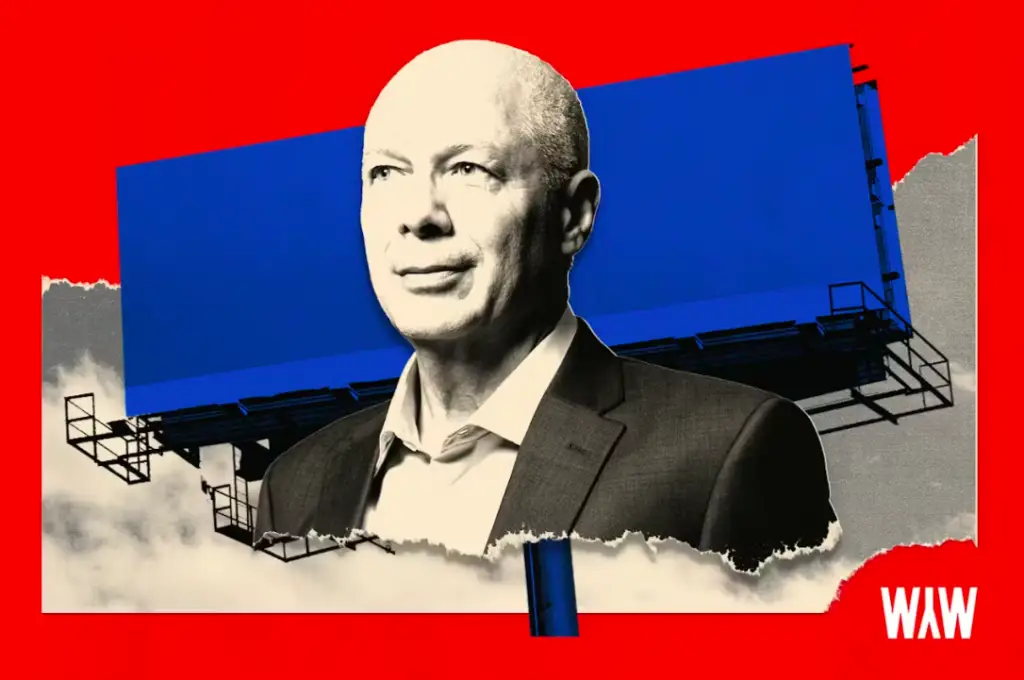
The language AI company’s CMO tells Tim Healey why marketers are missing AI’s biggest opportunity, how experimentation at scale can unlock growth, and why human judgment still matters more than dashboards.
You have worked at Adobe, Brightcove, Acrolinx, Out S ystems and FourKites, and you’ve been at Deep L since 2024 as CMO. Could you please walk us through your career to date?
The first marketing leader role I had was at a company that I started and co-founded myself – a ‘six guys in a garage’ kind of thing. As the head of marketing, we grew the brand, grew the company, and eventually sold it to Adobe.
Adobe turned it into one of their core products within their enterprise business unit. From there I joined another early-stage company called Brightcove – it was the early days of online video and they were pioneering fast video playback. We ended up taking that company public. It grew from 300 customers to 6,000. It was quite a ride.
After a series of CMO jobs in different industries, now I’m immersed in language technology and AI at DeepL. The common thread that I found between all of these businesses is that I enjoy ‘hyper growth’. I love working at companies that are at the stage where things are growing like crazy, the market’s hot, the technology works well and you’ve got happy customers. In these environments, there’s often a need for a marketing lens to bring structure, strategy and a sense of prioritization; to build a team, go global and take the product or service into different markets. For me, that’s the dream job.

LGC: What is the offer at DeepL?
We have our strongest brand awareness in Europe, where the company was founded in 2017 as a translation technology. As an AI-native company, we were using AI before AI was kind of a cool brand term. We’ve built out a suite of technologies for helping companies grow and scale their businesses.
Translation is one of those things that people use us for – especially in the enterprise space. We recently surveyed the UK market and found that 60% agree that AI translation tools have had a positive impact on their international operations. We have over 200,000 customers, mostly in B2B. They’re using a whole host of our technologies like DeepL Write for perfecting and fine-tuning their writing.
We also have DeepL Voice, a real-time voice translation too, which we recently announced will soon integrate with Zoom meetings. Imagine we’re having this call you’re speaking in French, and I only speak English. We make that possible. We offer perfect real-time translation of what’s being said. That technology is incredibly difficult to perfect.
Translating the nuance of spoken language is complex. Just translating text is one thing, but it’s static, and you’re just translating written words, and you have the full context. But when someone’s speaking in a language like Japanese, with a completely different grammatical structure, or you’re using acronyms, or you’re unsure what someone is going to say next… imagine having that Zoom meeting or Microsoft Teams call with the ability to translate in real time. That’s powerful.
DeepL hit a $2bn valuation in 2024. What’s next for you from a marketing perspective?
We have had a clear and single product-led growth strategy. Now we are layering on an enterprise strategy. Over the last 36 months, we have been building out all the enterprise-level go-to-market functions, including sales, customer support, and marketing.
What we found is that people were adopting and using DeepL in pockets within enterprise-size organizations. It was almost under the radar. We would go to large companies and say: “You’ve got 20 people over here using it in Germany, and you’ve got 20 people over here using our solution in Tokyo. You probably have about 10,000 other people that could be using this solution and helping you bring your products and services to market more effectively.”
In the past months, we’ve seen how AI is rapidly reshaping the way marketing teams operate. There is a major shift impacting marketers – AI agents are becoming integral to the new martech stack, supercharging work and reinvigorating core content across channels.
For years, organizations have relied on dozens of disconnected tools. These are costly to integrate and slow to deliver value. AI agents change this by acting as digital co-workers, logging into systems, collecting and enriching data, and automating workflows end-to-end.
The pro-agentic shift is reflected in DeepL’s trends research. We found 80% of leaders report increased AI-driven ROI, with gains in productivity, innovation, and revenue growth. And with 42% planning to expand their AI usage next year, confidence in agentic automation is accelerating.
These trends directly shape our strategy at DeepL. We’re moving beyond translation to deliver practical, workflow-ready AI that integrates into the tools teams already use. Building on our strength in language AI, we’re now enabling businesses to automate intelligently, move faster, and focus on higher-impact work.
How is your marketing team structured?
First, we are ‘flat and fast’. You can’t have deep hierarchy and silos of functions where you just hope they’re all connected. The second guiding principle is: always be challenging. You’ve got to have people that are pushing the envelope on what’s possible.
Every other week, we have someone in the marketing team showcase cool, new things they’ve done using AI. It inspires. There might be someone on the tech side, the campaign side, or on the field marketing side with something to share. The idea behind the exercise is to continually reinforce the spirit of innovation across the team.
We also celebrate the wins. If there’s a campaign that’s successful, typically, it’s not just because of one person. It’s usually an orchestra. And what we try to do is paint the picture that this is a team sport, because inevitably, that’s what’s going to make the team more successful.

Which side are you on: creative or data?
I would say neither. And I’m going to say I am on the side of ‘human’. There’s no such thing as neutral content. You’re either having a positive impact or a negative impact: if you just keep spamming stuff out there, especially with auto-generated content, you’re having a negative impact on your brand.
Your creative work has to be strong and relevant, but most importantly, it has to be ‘human’. The data will prove whether or not your creative was good and achieved the desired impact. A group of marketers can all sit in a room and say: “Oh, that’s brilliant. I love that idea.” Suddenly, you have talked yourself into something that you think is fantastic. Next, you realize that it didn’t land with your audience.
We need to flip the script on a lot of common marketing measurements. Take email marketing. You might say: “We had an 8% click-through rate and we boosted it to 10%”. Sure, that shows positive incremental change. But in reality, you’ve gone from 92% of people ignoring your message to 90%. Is that really success? If you just have a data-only mindset, there’s a danger that you’re going to talk yourself into incrementalism.
What are the biggest misconceptions marketing teams have about AI right now?
Underestimating the impact of AI. Good marketers see AI as an opportunity to improve the way in which they do their job. Our team are using AI in a way that increases their capacity. There might be a misconception that it’s going to take jobs away, but I would argue that it is more likely to change jobs.
Where people are missing the opportunity with AI is the potential for experimentation and connecting with your customers at a massive scale. Many are still thinking of AI in terms of individual interactions.
Some of the fascinating thinking around this topic that I’ve seen for marketing is to think of it as a swarm, rather than a single point in time, or a single AI agent or topic. Rather than these single use-cases, why not say: “Help me write this blog post but for 20 different unique personas that have specific roles and are working within a specific industry”? All of a sudden, you’re talking about completely exploding the potential there.
How does investing in multilingual customer experience impact a brand’s global reputation?
At DeepL, we have a simple expression: words matter. First month on this job, we had a press tour and while we were in Tokyo, a journalist who worked for a very reputable paper came up to me and sa id: “I want to thank you.” We were a bit taken aback.
He went on to say: “In my previous job, there was a hot story that broke. It was related to a very senior executive at JP Morgan Chase. Getting the story right was critical. One of my co-workers used Google Translate, and they got the story wrong. I was using DeepL and I got it right.” T he specific language and the accuracy of DeepL translation had totally changed the trajectory of his career.
Not every single translation might have a career impact, but to companies, whether it’s their customer service and support communication, their e-commerce site, their contracts, sales proposals or all of the content, words do matter. Accuracy and precision have been our focus since day one.
To use another simple example: the words for water-resistant and waterproof in Dutch are very similar, just a couple of letters difference. Getting that wrong could create a major problem for that product line. If someone is buying a jacket thinking it’s waterproof, and it’s not, your returns and negative reviews go through the roof. Again: words matter.

What would you say to those who suggest the advancement of AI is plateauing?
I don’t believe it is. Not at all. There’s this parallel growth of the computing power to make things happen and the innovations happening around AI, especially with agentic AI. We’re moving swiftly on from giving AI ‘fun’ tasks. Now we’re getting into multi-modal, generative AI. The world of agentic AI is giving us the ability to get work done and to have that AI either work with you or do work on your behalf. That is fascinating to me.
Also, the way we communicate and interact with technology is evolving. Rather than logging into Marketo and HubSpot to do a series of tasks, you will tell your computer to go do a series of tasks on your behalf. That’s where we’re headed.
What myth about marketing would you most like to bust?
Perhaps this is my own personal myth-busting? If you had asked me seven years ago, what do CMOs have to focus on, I would have said build brand and drive demand. If you had asked me that three years ago, I would have said it’s all about the funnel. I think now the pendulum has swung back the other way. Technology has allowed us to spin up new products at speed – you can code a product and create a website in hours. But the reality is that the brand will drive the success of the business.

What advice would you give your younger self if you could go back in time?
I would like to have done a stint with either an agency or a B2C brand. At DeepL, we’ve got a fascinating mix. A lot of people came into the company early on with that very strong consumer background, and now we’re kind of harmonizing that with a lot of people that are joining us with that strong enterprise software-as-a-service background.
It’s a great blend, because you’re getting team members with those different perspectives around scale and experimentation but also weaving that in with marketing best practice, focusing on segments, specific personas and buying teams. It is quite magical.
What question would you like me to ask the next senior marketer that I interview?
Every good CMO is thinking about AI. My question would be: what are you doing? How are you getting your team to think about this? I think the one thing that every CMO is feeling right now is that the rate of change is certainly unlike anything that any of us have experienced in the history of business. We’ve had the mobile revolution and the SaaS revolution, the internet revolution, but the rate of change here, and the rate of things going from garbage to great or garbage to good, it’s happening very, very fast.
Now a question for you from the last senior marketer I spoke to, which is: when you are not leading a marketing team, what do you do to unwind?
We recently moved to the Blue Ridge Mountains in Virginia. If you’re familiar with the John Denver song, the mention of the Blue Ridge Mountains paints a certain picture. It is gorgeous here. When we used to live in the Chicago area in the Midwest of the United States it was completely flat. Not a mountain in sight. Running there is kind of a chore, rather than being enjoyable. I have found that being here in the mountains, when I trail run to unwind, it is fantastic.
Marketers are typically creative, and their heads are always spinning with ideas or analyzing spreadsheets in their mind. Trail running requires such extreme focus and if you don’t pay attention to exactly what’s going on, you’re gonna end up on your face. It’s not just the exercise or the beautiful environment, it’s the mental dexterity and discipline to not think about work.
It’s probably one of the hardest skills for most digital natives to develop: being in the moment, and not being distracted by your phone or your watch. For me trail running is just the thing for unwinding.
I think we owe it to ourselves, and we owe it to our careers in the companies where we work, to be thinking like this: if I don’t turn off for some time, how am I going to be creative? How am I going to come up with that next great idea? What is the alternative? Always on? If you are not careful, that quickly becomes ‘always numb’.
If there’s one thing you know about marketing, it is…
Move fast and don’t be afraid to fail. Fear of failure crushes the marketing team’s spirits. It crushes innovation. There’s not a person reading this interview that is going to go through their career without some of those moments.
The question is: what do you do when you experience that as a marketing leader? You want to create an environment where people feel like they can be successful. Even if things ‘go south’ and don’t work out, you learn from it and keep going.
You might die tomorrow so make it worth your while. Worth Your While is an independent creative agency helping brands do spectacular stuff people like to talk about. wyw.agency.
This interview has already appeared in The Drum. Discover the best campaigns, industry insights and interviews from world-leading marketers, creatives and more.