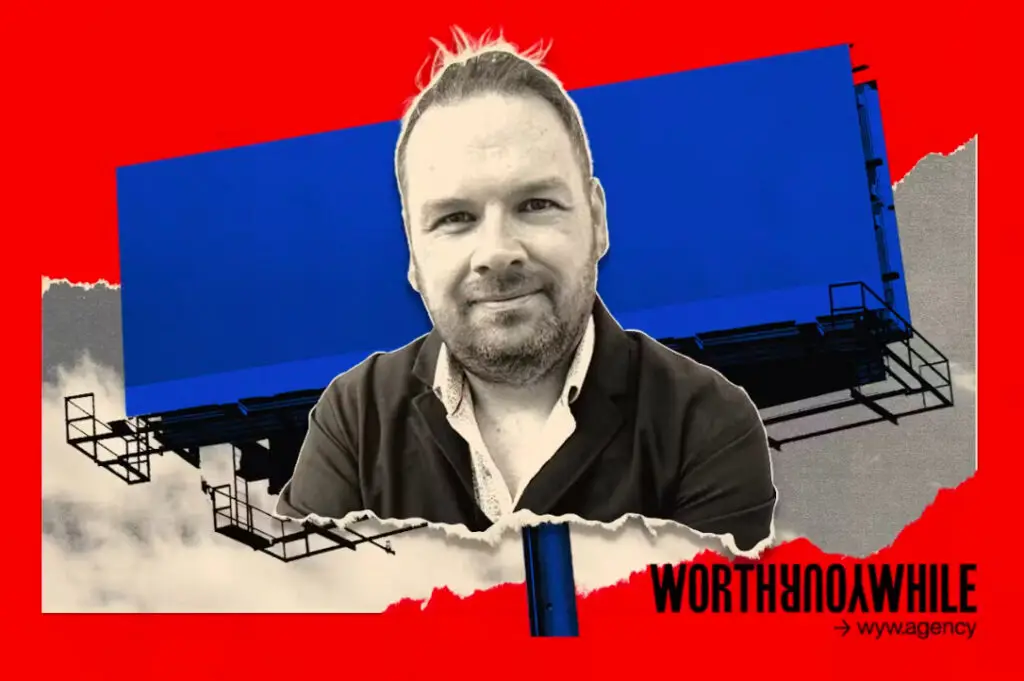
The refurbished-tech marketplace’s head of European marketing tells Tim Healey how it is building consumer trust, why sustainability won’t do all the selling and where AI crosses the line.
You started out wanting to be a writer. How did you end up in marketing – and at Back Market?
Spotty 18–year–old boy goes to university to become a writer, gets a couple of jobs at uni, working for Vice magazine and Red Bull, then realizes he quite likes marketing.
I worked out of university for various media agencies, starting in the UK, and then moving into international facing roles. I liked the creativity, I liked the variance of work, I liked the scale of it. I spent eight years working for Apple’s marketing agency. I like the speed of working in tech.
While I was at Apple, I was keen to explore client–side opportunities, and the Back Market job came up. Back Market is a sustainable brand with a human tone of voice that you can be playful with. You’re not boxed in with how you develop the business. Crucially, at its core, it’s ultimately looking to do good. That compelled me to take the jump, and go client side, and I’ve been here for the last three and a half years.
What did working on Apple’s marketing across EMEA actually involve?
Media Arts Lab tackles anything that Apple runs from a marketing perspective in the brand space. I was part of the OMD network.
We looked after Apple’s marketing campaigns across the EMEA region: it could be launching the iPhone 8, it could be working on an awareness and affection building campaign in France. It was totally varied based on what the different territories looked to execute.
What’s the offer at Back Market?
Our ambition is to make tech more affordable, more accessible, and more sustainable. Tech is obviously quite an expensive thing to purchase, and it can be quite prohibitively priced. I never could have afforded the MacBook Pro that I’m working on today, but refurbished tech makes that possible.
Back Market breaks down these barriers, it looks to provide you with a saving, and a device that’s had far less environmental impact. Our goals are to ensure that you can have a greater selection of devices for your own professional use, personal use, or blend of the two.
What’s coming up for Back Market over the next 12 months?
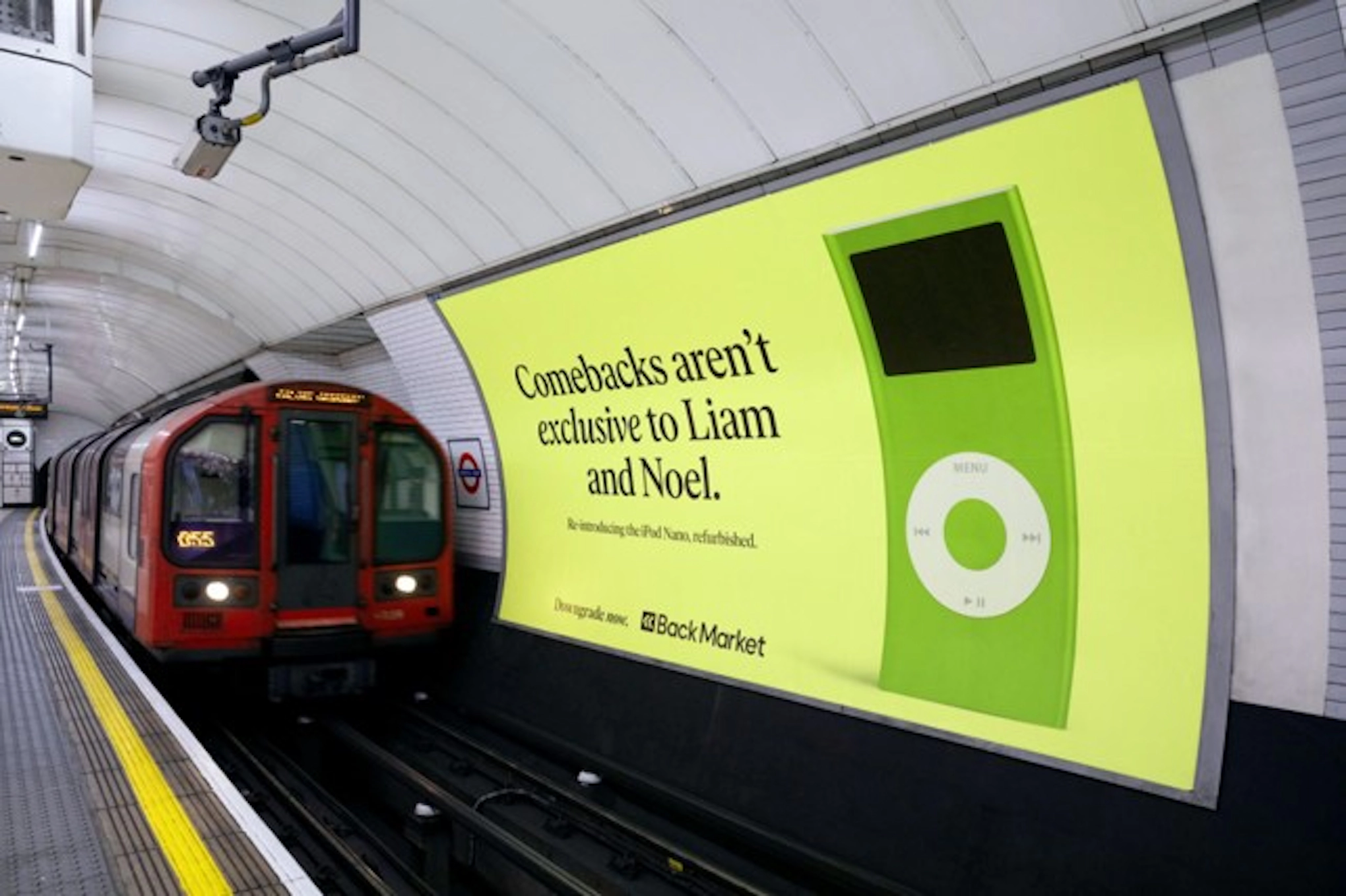
Continue growing of the Back Market brand and continue growing the refurbished category. What we have is a real ‘full funnel’ play. In spite of all of our different regions in which we operate being at different levels of maturity, it’s pretty consistent in growing the brand and growing the category is super important for us.
We’ve got a documentary, ‘Silly Little Plastic Cat’, that’s been entered in the Tribeca X Film Awards. It’s a short film exploring the plastic Garfield phones that have been washing up in Brittany over the last three decades. It’s a cute but informative look at the circular economy. What happens to things after people consider them rubbish, and how they can be reused and turned into something beautiful.
How do you move consumers past ‘the reflexive distrust of refurbished’? What’s the single most persuasive argument you’ve found that works?
In the UK, the biggest driver for people to buy refurbished is the price. Devices on Back Market can be up to 50% cheaper than the same device bought new, but that doesn’t really counteract the barrier. People have a distrust because you walk down a UK high street, and the gold shop will be selling tech – Galaxy Smart Phones, iPads – there’s a perception of refurbished products simply being sold as secondhand.
All the products we sell on Back Market are tested, checked, repaired, and resold by professionals. Everything comes with a warranty. It comes with a returns guarantee. Part of our mission is the education piece around this. This way we can shift people from distrust into buying refurbished.
Reinforcing refurbished’s quality perception helps ensur e people have peace of mind – a mental safety net – that you don’t get from other used goods shops or platforms.
At the moment there’s confusion around the difference between secondhand and refurbished. Our job is to explain the difference.
You’re asking people to change buying behavior in a category that they think they already understand. What’s your theory on how categories shift at scale?
The way that we consider it from a refurbished tech perspective specifically is looking at the refurbished or the secondhand car market. Cars used to be predominantly bought new – this has massively changed.
We’ve got this analogy that people are now buying second–hand cars because they’ve realized they are reliable. You don’t need to renew your car every five years, like you do with your tech devices. When it comes to getting a flat tire in a car, or one of your lights goes out, you don’t change the whole car, you just change the broken part that needs to be repaired, and that’s how we want tech to go.
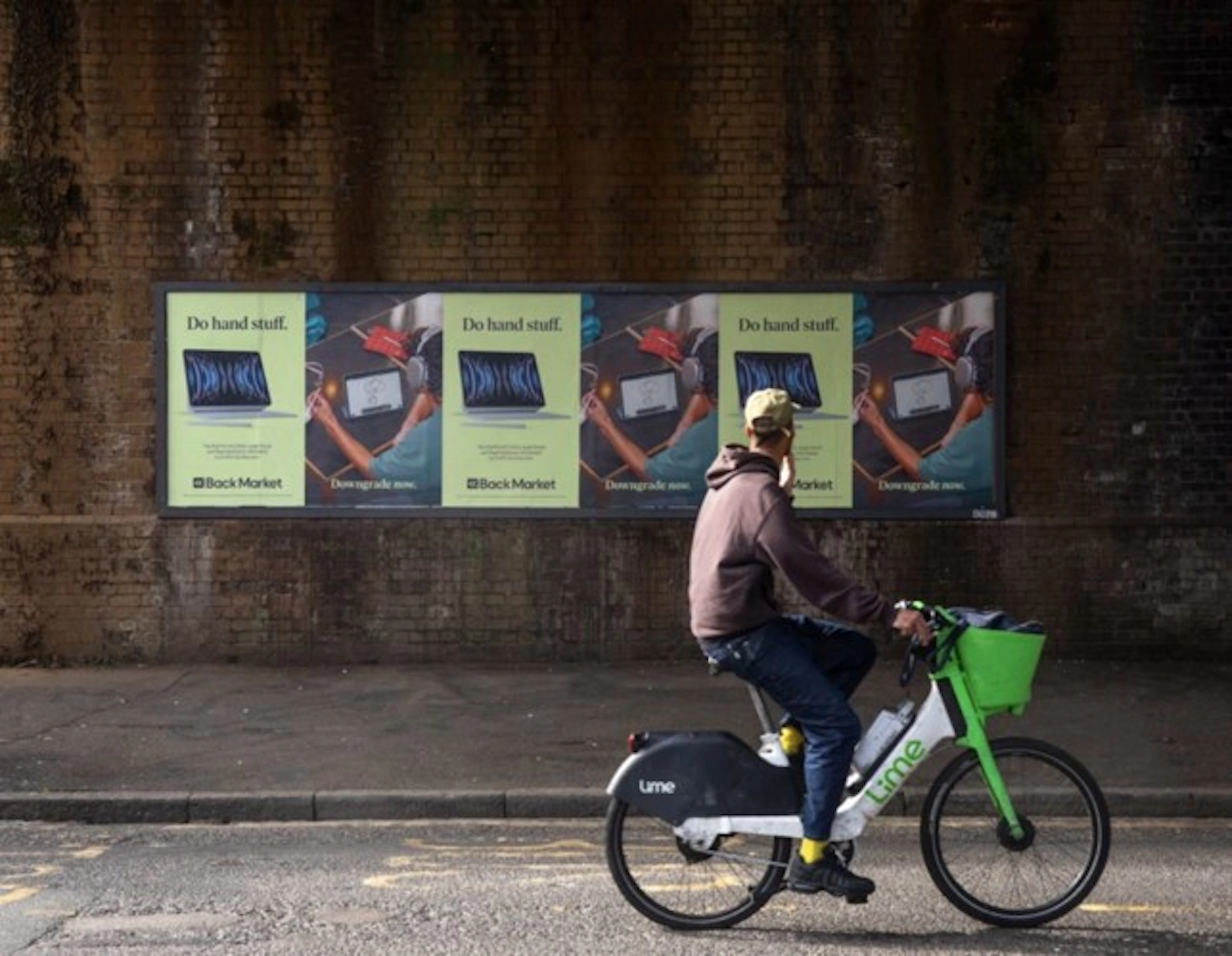
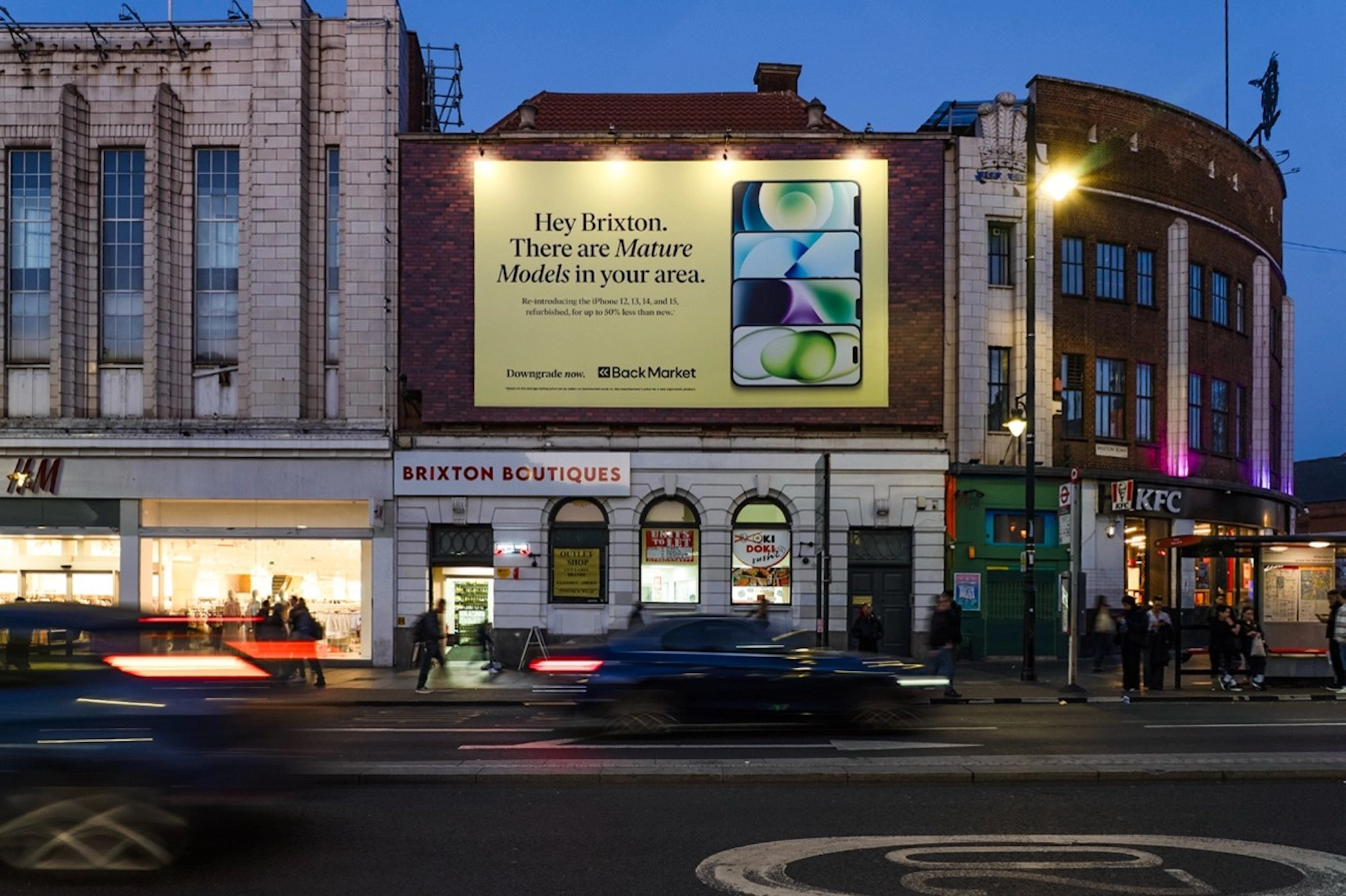
We want people to break this norm of buying new. A repair should be the first thing you should consider. When things break, fix them. Next, when people look to buy a new device, they need to understand it doesn’t always need to be the very latest edition that you need. Instead of getting the iPhone 17 Pro, it could be that a refurbed iPhone 15 is perfect for your needs (and a lot cheaper).
We’re looking to drive that change by having people understand that the additional megapixels that you’re getting, the speed of web–browsing – neither actually have much of an impact on your daily life. The older models are still just as good for your everyday use, and we think that’s a compelling point to start enticing people to buy refurbished rather than new.
Apple, Samsung, and Amazon all offer their own refurbished programs now, so how do you position Back Market against those that direct competition from those manufacturers?
The thing that sets us apart from players in that space is that refurbishment is Back Market’s business. We don’t operate in anything outside of that as of yet. Apple has got multiple touch points: new devices, TV shows, the App Store, its music platform etc. We focus solely on refurbished tech. It has served us well to this point as a category expert and leader. We don’t have any plans to divert away from that.
Is there an AI x human sweet spot?
It depends on what you’re looking to gain from it. Personally, I’m still learning how to leverage AI in my day to day and then considering what else I could be applying it to. I try and own more of the work that I’m giving than AI. I wouldn’t give it full projects to look after, I would still like to keep on top of everything and anything that we circulate internally or externally.
Based on what we’re doing at the moment, and what I would feel comfortable with the team doing, is probably a ratio of 80–90% human to 1 0–20% AI. That will be leveraging AI for, for the most part, reporting, and soundboarding on like best ways to interpret audience data – and not for pitching creative concepts. That is still best done with a human brain.
AI slop – going out with six fingered humans – on our creative concepts would make us look like idiots and would have a negative effect on our goal to further build trust with consumers. We’ve just got to be very cautious of how we use it. I believe most marketers are taking a similar approach and being protective of their output and brands – basically using AI wisely.
Could you tell us about a customer research discovery you’ve made that you found surprising.
Every year we do audience research in each of our markets. We ask the same questions, and we benchmark the insights that we get. Questions include: what will prompt you to buy refurbished tech?
While price is the biggest driver of the list of everything that we have, we actually found that sustainability was in the top three for the UK. From a Back Market perspective sustainability is really important to our mission, this motivates a lot of our employees.
When it comes to actually getting someone to buy something for the sustainability factor, it’s normally the cherry on the cake. The fact that it’s sustainable is ‘a bonus’ but not a key influencer.
For sustainability to be the third biggest driver for people buying refurbished tech opened doors to different marketing campaigns. We are able to articulate our messages to a far bigger portion of the British public.
What marketing achievement in your career are you most proud of?
I would say what we are achieving currently at Back Market. The UK market has gone from being an outlier and new addition to the Back Market roster to being an integral part of the business within three years. It gives me a lot of hope and ambition for what we can continue to do as a company.
Could you tell us about a challenge you’re facing right now, and your advice for other marketers who might be facing that challenge?
The constant need for growth, often on flat budgets, is tricky. It’s a great challenge to have, it gives you an opportunity to get creative, it gives you an opportunity to really leverage your learnings – but it’s not easy. I’ve had roles before where there’s a lot more leniency with purse strings. And yet, we need to dominate a very competitive landscape, especially when you’re the underdog.
The advice that I would give to other marketers in a similar situation is to consider how marketing is contributing within the wider business network and then be mindful of that with your decisions. When it comes to putting your proposals and recommendations forward, try to appreciate where it’s going to land or impact on other departments.
Tailor your proposal, your recommendations and your articulations around why you think that’s the right thing around their needs and concerns. See marketing as a part of a cog within a bigger operating system. Make sure your initiatives clearly show how you are doing the greater business good – rather than just saying: ‘this is me as a standalone marketer or ma r ket, this is what I need’.
Drawing on your leadership expertise, what has your career taught you that helps make a great team?
Make sure your team reflects a variety of experience: in taste, in style and in skill set. If everyone’s thinking the same, the work can become wallpaper. Everyone needs clear understanding of KPIs and the objectives. People work towards these differently, because they’ve all got their own motivators. They’ve all got their own experience. They’ve got their own ways of understanding it and that has improved the quality thresholds of work.
I’ve been in teams where they’ve been quite small and quite similar to myself in terms of personalities and taste – and that’s been fine for short term but longer term it wasn’t really pushing the brand anywhere. The best teams that I have been part of have had that variety. It’s an undervalued filter when building a team.
Diversity is important: that way you’re not in an echo chamber of like–minded marketers.
How do you talk about impact without it becoming a marketing cliche that actually turns customers away?
We have an internal weekly report. We’ll go through performance of each of our markets, and at the end we have an overview o f carbon emissions saved through the refurbished process of that week, which in itself is great. We do it every week, so we can benchmark. Though sometimes this can be difficult to comprehend. When looking at the amount of carbon saved: is one ton good? Do you want 1000 tons? We know purchasing refurbished tech from Back Market produces up to 92% less carbon emissions compared to manufacturing new devices. And we need more people to know this.
We’ve found it easier to draw parallels with tangible concepts. If we’re talking about the weight of e–waste, you would put it in terms of a double–decker bus for example. A campaign that we found has really landed well was our campaign around Earth Month last year, where we got a series of photos taken by tourists in the same location, a set amount of years apart, and in the background, or in the foreground, you could clearly see the impact that climate change was having.
One of the examples was a couple who had taken a photo in the Alps, in front of a glacier. We connected with them, we found out what phones they used. We did the same with a desert. We did the same with a lake. If that had just been a text ad that maybe wouldn’t have landed, but choosing this route conveyed it in a way that felt relatable and got people’s attention.
Despite it being Earth Month when we ran the campaign, we also learned that we don’t need to run the campaign that month – especially as it is tricky to get cut–through (everyone changes their brand to green that month) – but also we don’t need to jump on a bandwagon. We are delivering a sustainable solution so we can talk about it whenever we wish.
We can own our own narrative, we can own our time frame by doing it at a time when no other brand is going to be talking about that, and that’s part of the thinking for the back end of this year, in 2027. Our hope is that it then adds an element of credibility and impact. You’re not just seen as another brand, you’re seen as a credible sustainability perspective.
We’re trying to stand out, we’re trying to grow awareness, but also we’re trying to land a message that a lot of the time can be seen through a bit of distrust or debate.

What question would you like me to ask the next senior marketer when I interview them?
What is the first ad you remember actually liking growing up?
My mind always goes to ‘you’ve been Tangoed’ and campaigns like that like that. It was the first time that I actually remember seeing an ad that I enjoyed in the commercial breaks on TV – so I’d love to know what resonated with other marketers.
Why do you think marketing as a career has negative perceptions around it?
I was at a SXSW panel recently with Finn Taylor, from ‘Finn versus the internet’. H e mentioned – semi tongue in cheek perhaps – he wouldn’t want to work with brands because ‘marketing’s horseshit, and anyone involved in this should quit immediately.’ There was a nervous laugh in the room.
There is an element of distrust for sure: there’s this perception that you would ‘sell your nan,’ if it would make a brand more money or get you a Cannes nomination. Personally I haven ’t experienced thi s, so I think that’s a little bit of a stereotype.
We’re not trying to force people to buy things or consume. There’s certainly a bit of a backlash at the moment against overconsumption, which I’m here for. There’s also a perception that some marketers spend a lot of money and don’t really do anything, and that marketing is a job for the sake of having a job.
I actually believe people work in marketing because it’s something they have a genuine passion and belief about, in terms of what they work on. I t’s some of the more creative work that you see, and is multidisciplinary as well. There aren’t many other jobs or categories that you could work in where you could work with an artist, a skateboarder, a musician, a tech bro, and a financial advisor. But from a marketing perspective, they can all be linked.
Why do people not like marketers? Because they’re constantly selling, and a lot of the time it just feels like it’s pushing more slop out into the world, whereas my personal take on it is a little different.
If there’s one thing you know about marketing, it is?
I’m only as smart as the team around me. Marketing is such a multifaceted beast that it’s impossible to know it all. W hen you’re more senior in the marketing team, you’re responsible for a lot of output from a lot of different departments. There’s no way that you can be an email expert, SEO expert, brand expert, design expert, etc. You need to lean into the skill sets of those around you: don’t try and do it all. M ore often than not they’re totally competent and better than you are.
This interview is brought to you in partnership with Worth Your While — an independent This interview is brought to you in partnership with Worth Your While — an independent creative agency based in Copenhagen, working globally. Named one of The Drum’s Indie Agency Top 100, WYW exists on the belief that time is humanity’s most valuable resource, and that the only ideas worth making are ones that earn it. You might die tomorrow. Make today worth your while. https://wyw.agency/
This interview has already appeared in The Drum. Discover the best campaigns, industry insights and interviews from world-leading marketers, creatives and more.