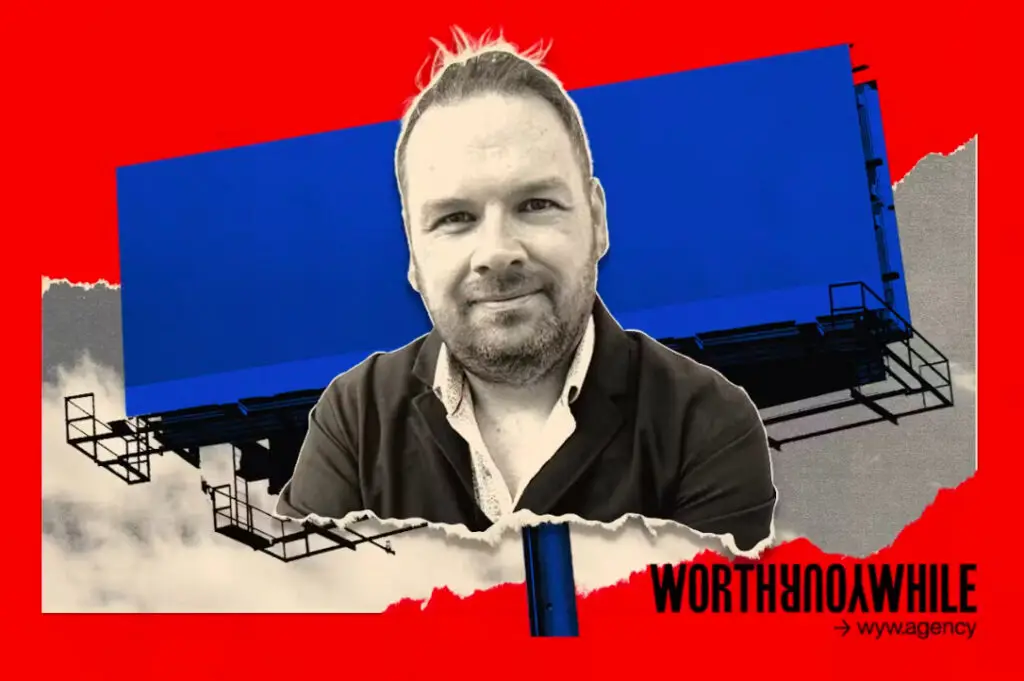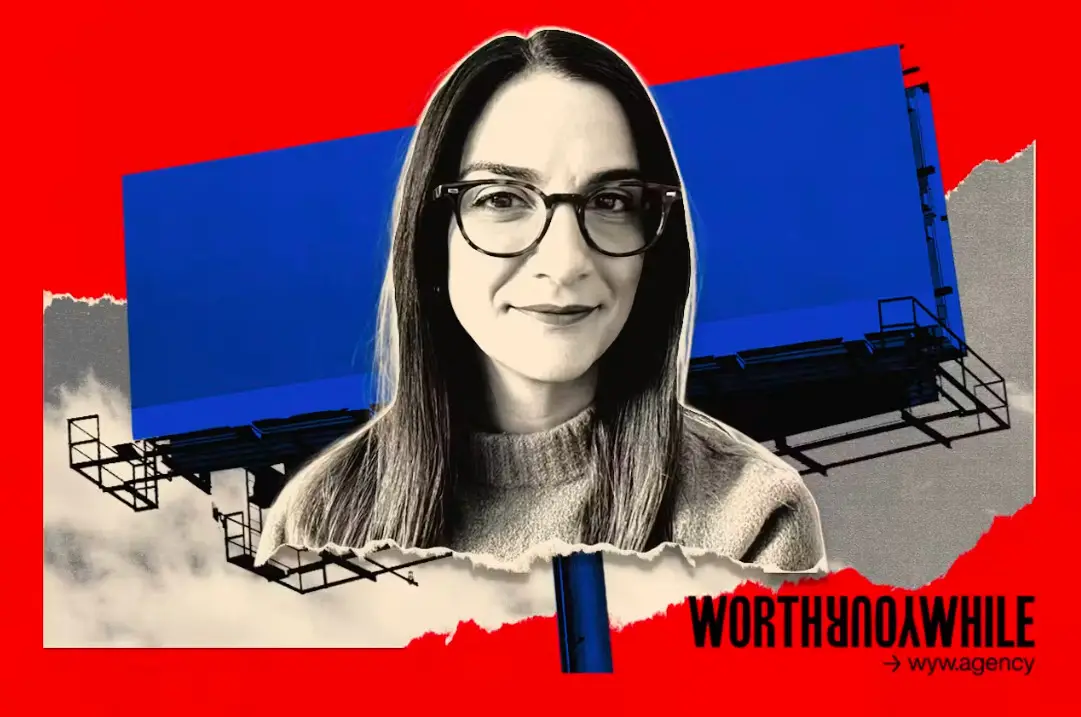
The EMEA B2B marketing lead talks to Tim Healey about promoting ChatGPT as it evolves faster than traditional planning cycles, why cautious AI buyers shouldn’t be met with more hype and what marketers must protect as technology accelerates.
You took a pretty unconventional route into tech and marketing. How did it lead you to OpenAI?
I’ve had quite an unconventional path. I studied architecture – choosing that because it was academic, which pleased my parents, and creative, which pleased me.
I quickly realised that I didn’t want to be an architect. As I finished the first part of my BA degree, I was working part-time in a Whistles concession. The manager happened to be leaving, and I said, “Oh, I can do it. I’ll be the manager of the store.” They decided that they would give me that job. I learnt a huge amount about leading small teams.
Next, I decided there was a connection between my architecture degree and selling houses, and I applied for a role as an estate agent working at Foxtons. It was a huge learning curve.
I soon realised this was not my long-term career goal, and took a temporary job at a recruitment agency in Wimbledon. We were working with a company called PayPal. I got to know the team there.
PayPal were hiring for a role, and the more time I spent on sourcing someone for this role, the more it appealed. Even though I didn’t fit the job specifications, I emailed an application to my boss at the recruitment agency, who sat 20 feet from me. She laughed upon receipt, but was quite impressed and passed it on to PayPal. Then I got offered the job, and that was really my break into tech.
At PayPal, we had a new CMO start. I told him that I really wanted to get into marketing. I didn’t really know what marketing was at that time, but he gave me an opportunity. I loved it.
I stayed at PayPal, for 6 years before moving to Facebook where I spent 11 brilliant years in various marketing and leadership roles until Snap got in touch. They really sold me on their vision for augmented reality, and how that overlay with the real world could be the future. I led their EMEA marketing.
Next I was invited to take up the CMO role at Veed, a business backed by Sequoia. I spent two years helping them build from 12 million ARR to over 50 million ARR. It was like going back to university and doing a master’s degree in marketing.
I was very lucky to get the call from OpenAI. When it came, I knew that it was an opportunity that I wouldn’t turn down.
What’s the offer at OpenAI?
Ultimately, OpenAI is a research and deployment company. We build frontier AI technology and make it actually useful to our customers in several ways.
There’s ChatGPT, which is obviously the most familiar interface, there’s our API, which other businesses use to create their own experiences for their customers, and then Codex, which is our developer tool.
Most people by now know ChatGPT is somewhere they can ask a question, maybe explore an idea, write or create something. A couple of weeks ago, we launched ChatGPT Work, which really represents the next shift in what we’re doing. It’s a new agent in ChatGPT that can bring together context from all of your apps, files, and tools.
The way I’ve been explaining it to my peers is that we’re moving from a world where you’ve got chatbots that are incredibly useful and valuable to a world where you’ve got these tools that can actually help you get meaningful work done.
The launch of ChatGPT Work is super significant for us: I would encourage people to explore that. Really start thinking about AI beyond its chatbot capabilities, beyond something that can write lots of blog articles – instead move into that mental model of thinking about it as an intelligence layer across everything you do: what could that actually mean for your business. It ’s a way to get meaningful work and tasks done.

You’ve built brand marketing inside companies the world knows as ‘consumer brands’ – like Facebook, Snap, and now OpenAI. What’s the difficulty of selling to businesses when everyone already carries a strong feeling about the brand?
There’s an obvious advantage: you ’re not starting from zero. I talk to colleagues in other businesses who are really trying to gain brand recognition – we’re not starting from that point. People know the brand and they’ve got an emotional response to it. They probably use the product in their personal lives. That familiarity can open the door into B2B conversations, but it also creates a constraint: everyone arrives with a mental model.
People are familiar with chatbots. But they are quite different to the agentic world. The way I think about it is that we don’t fight an existing feeling. Instead, we try and use it as a doorway and permission to tell a broader story.
The consumer brand gives us this huge benefit of reach, relevance and awareness. The starting point is often through consumer use cases. We use that to help people get more familiar, comfortable and fluent with the tools.
The business credibility comes from proof: showing that we understand the work, the challenges our customers are facing, and that the products that we’re developing and shipping create real value.
The interesting marketing challenge is to hold both truths at once: to retain the humanity, the cultural relevance, the doorway in through the mass consumer product that we have and then work on the business side to build depth, specificity, confidence and the trust that complex business decisions require.
You’ve had time on the shop floor at Whistles and experience selling property at Foxtons. What did selling to someone in person teach you that still informs how you market?
Both of the jobs to different degrees taught me that selling and ultimately marketing, which is part of that process, starts with understanding the person and not just presenting the product – be that a beautiful property in Wimbledon or a lovely dress for a wedding.
At Whistles, somebody might be shopping for an outfit for their daughter’s wedding or another special occasion: my job was to understand the things they might feel self-conscious about, the things that made them feel special, their safe zone, where they were willing to experiment, where their lines were. This way you support them through the purchase decision. It wasn’t really about the outfit. It was about how they were going to feel on that day.
At Foxtons, purchasing a property is a much more significant decision. One of the things I learned there is that people, particularly first-time buyers, have a list of things they want in their property. They want to be really close to the Tube, two bedrooms, garden, period property, but with a completely unrealistic budget. My job was to understand what the hard lines were – what were the things that were non-negotiable, where there was some flexibility – and then to work with them to present things that demonstrated the compromises in a meaningful way, and then move them through that decision-making process.
People don’t make decisions purely based on rational things. There’s an emotional motivator to all of them. I always try and understand that first and then create conversations and ways of working – whether it’s internal stakeholders or trying to create stuff for our customers – that really lean into the human psychology and motivators of their decision-making. Both roles were great boot camps in understanding people.

Open AI: the product changes faster than any marketing plan. How do you market something that is evolving at light-speed?
Acceptance is important. The velocity is not going to change. Our product is going to continue to move faster than traditional marketing planning cycles. You need to build strong foundations across two things or at two levels. The narrative has to be strong and anchored in opportunities.
We focus on deep customer understanding and the outcome that the technology makes possible, rather than a static list of features. Anything that we’re launching from a product perspective can feed into those outcomes and help tell a continuous story that we build on.
As a result of the fast pace of technology evolution, marketing operations need consistent systems and containers for going to market. This way, when unexpected advances are announced, you have ways of getting them to market quickly without reinventing the wheel each time. That might be as simple as having a system of webinars that occur at a regular frequency or different types of content and wrappers for social media.
When we’re thinking about a product launch, the first thing we do is look at ways to deploy it to our existing systems that we’ve built with our audiences in mind to meet them where they are and then look at what the gaps are and what might we want to do on top of that. If it’s a really big launch, where can we get creative?
Those are the two things that are important to me: consistent storytelling and everything being grounded in customer value, so you can feed products into existing systems versus selling features. This grounded approach lets you absorb an incredibly fast velocity of products.
I get a sense that over the last couple of years, some may have gone ‘a little beserk ’ applying AI to everything – a position that they are now reviewing. Are you finding that people are coming to their AI decisions with a slightly more mature sense of what it’s about and what its capabilities are?
We certainly have lots of conversations about where AI is best used and where human judgment still remains really important. The one thing that we’re all really passionate about is helping encourage businesses and individuals to think about AI as a force multiplier, not a replacement for anything.
I’ve got a pretty small, lean marketing team with great ambitions. We’re using AI to multiply the impact that we can have, and it makes us more efficient. It terms of ‘going beserk’, I think people were testing AI for different things, and a lot of writing was happening with AI. Now people are re-considering: is that the most efficient, best way to use AI? Probably not. It’s a very helpful writing tool. It can review things for you. But writing from scratch and relying entirely on AI to do your writing? No.
What we’re really interested in, and what we’re working with a lot of people on, are the ways that you can start to think about AI as an intelligence layer across everything you do.
Personally, as a marketeer, I used to spend a very large portion of my time in different tools and systems. One system for our CRM, one system for sending emails, one system for how we did reporting, Slack, email and more. Finding stuff and getting that intelligence into one place takes a huge amount of time. Now with AI and with our technology, J spend less time switching between systems because ChatGPT Work helps bring relevant information together in one place.
I use the technology to present things to me in a meaningful way and help me be more efficient with the work I do. It helps my team who are in different countries. We’re working with global stakeholders. It helps us all have shared context on projects on shared skills for the way we do things. When you’re trying to move very quickly, it is incredibly helpful.
At Cannes this year, someone said that the main currency marketers have traded on for many years has been deliverables: making things. Now the gap from ideas to execution has become smaller, the two things that are of paramount importance are making decisions and what is important for the customer. These could be summarized as ‘taste ’. AI doesn’t have taste.
At OpenAI, when we’re working with a business, we’ll start with one workflow, one pain point that has significantly outsized impact. Repetitive tasks, things that people are spending time on that they don’t necessarily want to be doing.
To give you a concrete example. Let’s take Philips, one of our customers. One challenge they are tackling is how do you help clinicians spend less time on admin and more time with patients? We’re moving beyond productivity and looking at these real outcomes. What are the things that companies want to spend more time doing to drive value for their customers? That ’s where we see the benefit of introducing AI.
Enterprise buyers want what AI promises and are nervous of it in equal measure. When you’re introducing AI to enterprise businesses, how do you square the fact that everyone wants the efficiency but equally they have concerns.
The first thing is to recognize is that the caution is rational. We all know that AI can create a tremendous amount of value, but there are legitimate questions that we are answering about security, privacy, compliance, governance and how work will change. These are big topics, and we try and make sure that we’re not dismissing any of these concerns and not answering them with more hype.
We try to deeply understand their businesses and how they’re making decisions and what those specific concerns are, what the motivators are, and being able to respond to those questions in ways that are meaningful to them. When an enterprise business is considering working with us, they are making a judgment about who will be the best partner today, and for the next decade. Recognizing that the conversation has these two parts to it is also really important.
We do our best to present a super clear vision for the future. We try and bring people along with how we make decisions. Maybe some readers follow Sam Altman on X or some of our leadership team on other platforms. There ’s a lot of transparency around how we’re thinking about things.
We’re only going to win over cautious buyers by recognizing the things that are driving that caution and making sure that we are able to answer all of those questions in a meaningful way.
How important is creative risk taking when marketing AI?
It’s important when marketing anything, if you want the work to be remembered. If we don’t take risks there ’s a risk of ending up in a sea of sameness. I try to create space and psychological safety for people, in the teams that I lead, to take risks in a safe environment.
We budget an amount for innovation. We test in a way that is big enough to understand if something’s working, but also small enough that if it goes ‘pear-shaped’we move on to the next thing. Risk taking without being reckless. It ’s important to understand the risk-reward ratio of any decision and at the same time to support your team as they experiment.

Could you tell us about a marketing challenge you’re facing right now, and what your advice might be to other marketers facing that challenge?
Keeping up with the pace of change is a challenge. Even though I work in one of the leading AI labs in the world, whether you’re using one tool or you’re experimenting with many tools, there are inordinate amounts of information across every platform that you might be on: reviews, thought-leaders articles, LinkedIn posts; ‘if you’re not doing this, you’re sleeping ’ – lots of debates about how, where and why you should use X or Y tool.
My advice would be prioritize using the tools themselves to help you stay on top of the technology. I talked to you earlier about how I have all of the systems and tools that I use connected to my ChatGPT account, and I have trained it with different newsletters that I really like, voices that I follow, topics that I’m particularly interested in, and I get a daily synthesis of key information and things that I might want to double click into.
For me this reduces that feeling of not being on top of things. I do this in two ways. One is an external perspective: I want industry news so that if something really piques my attention, I can go and click and actually read the full newsletter or watch the video. Likewise, internally, I ’m sure you can imagine the amount of information that flows through our business. There is just so much information. Everything’s changing very quickly. I use our technology to help me stay abreast of that.
I built an AI function that combs my emails, combs my calendar, combs my Slack messages. It makes sure I don’t forget to respond to things. It gives me action lists of things I need to do. Shows me where things might be going slightly wonky on projects the team are working on that might need my attention. Tells me what I need to prep for meetings or interviews that I’m doing.
I do the same in my personal life. I’ve got two kids at two different schools. School communications is something that somebody needs to go and solve because there’s emails, WhatsApp groups, PDFs, all sorts of things. Again, I use the technology to synthesize and tell me who needs to go to school dressed as a tomato today, so that we don’t mess up all of those things. I think any parent will relate to that.
Your question from the last senior marketer I interviewed: when budgets tighten, what should marketers protect at all costs?
I would always try and protect the things that compound. Customer understanding is crucial for any successful business. Investing there will always be a net positive, and it compounds over time. The more deeply you understand your customers, the better. I think it’s one of the most important moats any business can have.
The team is also super-important: the quality of the people making the decisions. The tempting thing to do is to think about short term what brings ROI and that’s going to drive you to continue bottom of funnel activities. When all of these in-market buyers dry up, and you haven’t spent time creating demand and future opportunities you ’re in trouble.
Wrapped around all of that, think about the things that are your unique IP as a business and a brand. Consider how your brand is showing up with your partners in real life, with the folks that you work with, with influencers and creators, there’s a compounding impact to all of that.
Every single interaction builds on the last, and that drives long term value. When people are being squeezed, it is important to look really hard at the mechanics of the work and look at the things that are recurring requests, internal reporting, things that are duplicated in production process, various requests that you’re channeling.
Consider what you can automate so that you protect human judgment and customer value above everything else. You have to make tradeoffs, of course, but don’t cut the foundations that you will need when growth returns.
What question would you like me to ask the next senior marketer when I interview them?
What is one belief about marketing that you have genuinely changed your mind about in the past two years – and what’s changed it? Things are moving too fast for any rules to remain ‘right ’ forever. I’m really curious how people are dismantling old playbooks and thinking about new ways of doing things in meaningful ways.
If there’s one thing you know about marketing, it is?
People change slowly, even when technology changes fast. The tools, channels, playbooks, surfaces will change. They’ll continue to be rewritten over time. They’ve changed drastically throughout my career.
The job is still to understand what people care about, earn their trust and make the next action that you want them to take feel relevant and easy. To me, that’s why the craft of marketing stays so interesting after all these years, the surface has changed consistently but the human questions beneath them endure.
That ’s why things like Mark Ritson’s MiniMBA are really valuable because they focus on the things that don’t change and people get obsessed with the next new thing. But actually, those things are only interesting if they’re driving some meaningful value or change in human behavior. I would obsess about people, not technology.
This interview is brought to you in partnership with Worth Your While – an independent creative agency based in Copenhagen, working globally. Named one of The Drum’s Indie Agency Top 100, WYW exists on the belief that time is humanity’s most valuable resource, and that the only ideas worth making are ones that earn it. You might die tomorrow. Make today worth your while. https://wyw.agency/
This interview has already appeared in The Drum. Discover the best campaigns, industry insights and interviews from world-leading marketers, creatives and more.