This week I’ve been to Paris, the scene of some continuing shocking civil unrest, much of it starting with school students with a number of grievances and quickly spreading to other communities and locations. By chance, one of the reasons for my visit was to see a really good friend I grew up with, and who has been covering the street excitement as a journalist. Just before I went, I was on Monocle radio (again), discussing this with the brilliant Emma Nelson and Marie Leconte, experienced journalists both. In both these conversations, accepted wisdom of how these riots come about and how they spread reared its ugly head. I don’t condone the violence and the disruption but I do see things slightly differently So here’s what we know from a HERD perspective.
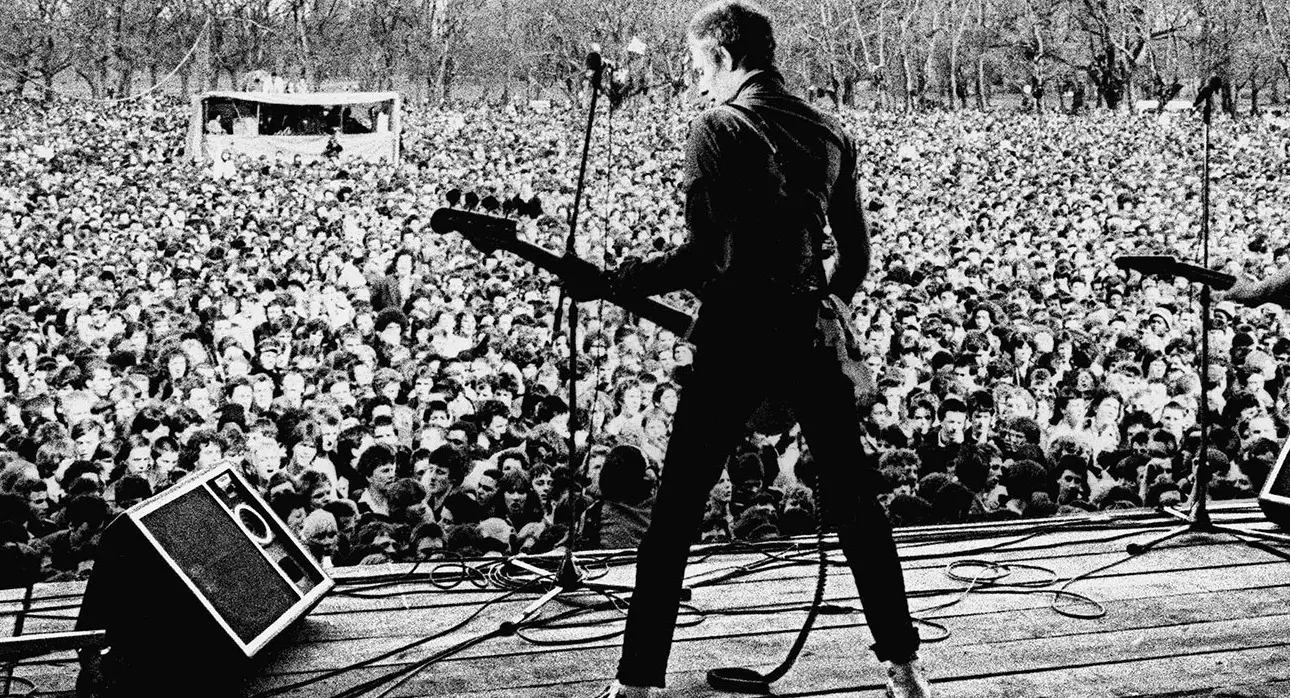
First, nobody riots on their own, despite what my teenage hero, Joe Strummer once wanted. A riot of one is just a bloke making a scene. Riots are by definition a social phenomenon: rioting is something we do together. The isolated rioter is a fish out of water, and they can often feel like it. I still recall the story of Nicolas Robinson, a 23-year-old student from the unrest in August 2011: he had no criminal record but found himself with a case of water from a Lidl in Brixton while the looting went on around him. When the police confronted him, he simply threw the water away. The crowd that had made it seem ok to pinch something from the shop had vanished like a pantomime genie returning to its bottle. All that was left was one young man and a case of Lidl water. He still got six months.
The same pull works in the other direction on people nobody would have picked as rioters. Chelsea Ives was 18, a promising athlete and a youth ambassador for her borough in the run-up to the 2012 Olympics. By chance, her mother spotted her on the news, throwing bricks at a police car in Enfield, and rang the police. The court heard that she had boasted of having the best day ever. Not a hardened criminal, either: a teenager in a crowd where the thing to do was what everyone else was doing.
Second, riots and civil unrest spread (just as the authorities fear) through social means. And that social means is fundamentally copying, or social learning as we call it more politely in behavioural science. People copy what other people are doing around them are doing. This is not how we normally think about rioting and rioters. A lot of the coverage and discussion of the Paris riots refers to agitators, people who want to create chaos: Mélenchon and the far left. Bad actors, in other words. And all too often we talk freely of some kind of moral weakness in rioters. How could they be so easily led? So criminal? Or we follow the Victorian fear of the mob, Le Bon’s crowd, and imagine some devilish transformation of individuals as they are subsumed into a larger and more violent creature. (These are the same sort of models of spread we discussed a few weeks ago, when thinking about how cults recruit their members).
There is a plethora of academic work which points to a simpler and more understandable explanation, effectively the core HERD mechanic: people do what other people are doing, period. We join in with what others are doing. We are the joiners.
The first is Mark Granovetter’s 1978 threshold model. Think of a crowd as a group of individuals each with their own influence-threshhold: the number of others who must already be rioting before they, as an individual, will join in. Let’s say few have a threshold of zero. These are the headbangers. They will start it on their own (Joe Strummer, we need you now). Most have higher threshholds, or more resistance to the influence of those around them. What Granovetter’s model suggest is that what matters is not how angry the individuals that make up a riot are on average. What determines whether a crowd riots is how those thresholds are spread. His own example is a crowd of a hundred whose thresholds run neatly from zero to ninety-nine. The spread is like a cute domino-derby. The zero-threshhold always goes first (we all have a friend like this). This tips the one, which tips the two, and within moments everybody is in. Take out the person with a threshold of one and replace them with a second person with a threshold of two, and the whole thing stops after a single rioter. Two crowds with almost identical attitudes, and two utterly different nights. How a crowd’s sensitivity to influence is distributed is important to shaping its behaviour.
I recently reread a super smart study which I believe deserves a lot more attention than it has enjoyed, not least because one of its authors is a famous TV scientist. In 2013 a team at UCL (Toby Davies, Hannah Fry, Alan Wilson and Steven Bishop) published a mathematical model of the 2011 London riots in Scientific Reports. It has three moving parts. First. Who joins in is treated like an epidemic: people become active rioters according to how much disorder is going on near them, with deprivation raising the odds (as other studies suggest, including the met police’s own data). Where they go is a question of attraction: retail centres pull, weighed against distance and the presence of police. And whether they get caught depends on how many police there are relative to how many rioters. The density. What is important here is the assumption – remember Chelsea and Nicholas – that there is no special breed of rioter in the model, no ringleader and no moral failing. The mathematical model assumes these are just ordinary young people, exposed to what the people around them are doing, and a shop. And out of that comes the general pattern of how the disorder actually spread across the city. I’ll have what she’s having, I’ll nick what she’s nicking and so on.
The question journalists often ask is what should we do about it? One of the first instincts of any authority, be they ministers or police inspectors, English or French, is to make a show of force. To flood the space with armed officers. That’ll show ‘em, shout the tabloid newspapers and online pundits. The strong arm of the law. And there is some truth to this. In the simulations, something like 10,000 officers was enough to choke off the disorder. The base case used roughly what the Met had on the streets for each of the first three nights, that is half of the 10000. By the Tuesday it had 16,000 out, and the riots faded. The point is not that anyone should have known. The point is that the thing which broke the spread was not a better class of rioter or a sterner sermon. It was changing what the next person could see.
Another team, Stephen Reicher, John Drury and Clifford Stott, would put a different spin on the same species of argument. They have spent years arguing that “contagion” cannot be as simple and automatic. We do not copy just anyone. Rioters in 2011 were often selective about targets and about whom they joined, which suggests that identity matters, and the UCL model, to be fair, gives identity no role. I think they are right, and it is not a problem for HERD but a refinement of it. People do what other people are doing, period, but which other people? The ones we see as us. Like us. With us. The UCL rioters look like cool-headed calculators weighing cost against reward (indeed, they are very explicit of the rational nature of the decision making in the model). But the reward they are weighing is how many others are already doing it. It’s how many of us.
So when we look at Paris, the useful questions are not who is agitating or how anyone could be so criminal. They are who has the lowest threshold, who can see whom, and who counts as us. The first school students who started it are the zeroes or maybe the ones. Everyone else is a ladder. Including the trade unionists, the Banlieux and even the maillots Jaunes who found themselves playing along. The uncomfortable answer to “how could they?” is that it is quite easy if enough people ahead of you already have.
Joe Strummer wanted a riot of his own. Nobody gets one. The only riot you can have on your own is the one in your head, and that doesn’t make the news.
Watch
For the way that you analyse the people involved in spreading behaviour. Are you looking at average influence or susceptibility, average exposure or average perceptions? Are you making it easy for those who are most susceptible to be influenced by their peers or are you just thinking plain old average? Are you trying to understand the networks and the lines of sight in which participants live?
Listen
To the way you and your team describe the people who you want to spread the behaviour you are backing. What words are you using? Are you baking in moral judgements (agitator or laggard)? Are you playing down or ridiculing those that are involved in passing something along?
Reflect
Where in your organisation does change move up a ladder of thresholds? Who are the zeroes, and who can the next person see? How can you use this as a lens for spreading things or, equally in stopping things spreading?
References
Davies, T.P., Fry, H.M., Wilson, A.G. and Bishop, S.R. (2013). A mathematical model of the London riots and their policing. Scientific Reports, 3, 1303.
Drury, J., Stott, C., Ball, R., Reicher, S., Neville, F., Bell, L. and Ryan, C. (2020). A social identity model of riot diffusion: from injustice to empowerment in the 2011 London riots. European Journal of Social Psychology.
Granovetter, M. (1978). Threshold models of collective behavior. American Journal of Sociology, 83(6), 1420 to 1443.
Le Bon, G. (1895). The Crowd: A Study of the Popular Mind.
Press coverage of Chelsea Ives and Nicolas Robinson: NPR, 11 August 2011; TheJournal.ie, 11 August 2011; Duncan Lewis Legal News, 11 November 20