If like me, you’re a regular user of the great fleet of big red London buses that cruise our streets, you may have noticed something new happening on board in recent months: a small change in the way we, the passengers, are behaving. It’s not huge but like the things we pull focus on here HERDspotting, we think it’s noteworthy.
As the bus pulls up to the stop, I’m hearing more and more people thank the driver as they get off. Thank you, driver. Thanks. Cheers, mate. Ta. The driver nods and smiles, closes the door and pulls away.
If you’re not from London, you may not appreciate what a thing it is. London is different. In South Wales, people thank the cabby and the bus driver thanks, Drive…Just as they may well applaud the pilot when he lands (literally on the job description, says the grumpy Londoner in seat 7D). In Scotland, Northern England and rural areas across the great central belt of this island, people say hello when they get on the bus and goodbye when they get off. It’s really only central London where we don’t – miserable buggers that we are.
A study of greetings customs in German-speaking Switzerland supports this perception of an urban:rural divide. In the city, we don’t say hello or goodbye. Outside, we do. Or, at least (because of the methodology) we think that’s how it works.
Let’s be honest, not everyone is doing this – we are still a city whose public default setting is predominantly what my friend Julie calls “Subway Face” (the mode of transport, not the sandwich chain). Don’t look at me, don’t catch my eye, don’t talk and whatever you do, don’t speak to me.
But there is a noticeable change.
In the city.
Our old friend Stanley Milgram (yes, he of the conformity psychology experiments that involved torturing people) described the “stimulus overload” that many people experience in the urban jungle, where they live cheek by jowl with what are effectively strangers.
For a species who has evolved for small groups roaming across the wide open savannah, being crowded into a metal box to travel with millions of others on a daily basis, is not easy. No other primates could deal with it: we may be super-social but there are limits to the number of people we can interact each day. And we often overwhelm ourselves.
Another explanation which lands particularly well for London is how buses have been designed. In London they are almost always single crew (the driver is on their own); the staff are hidden at the front, in plexiglass boxes to separate (and protect) them from passengers.
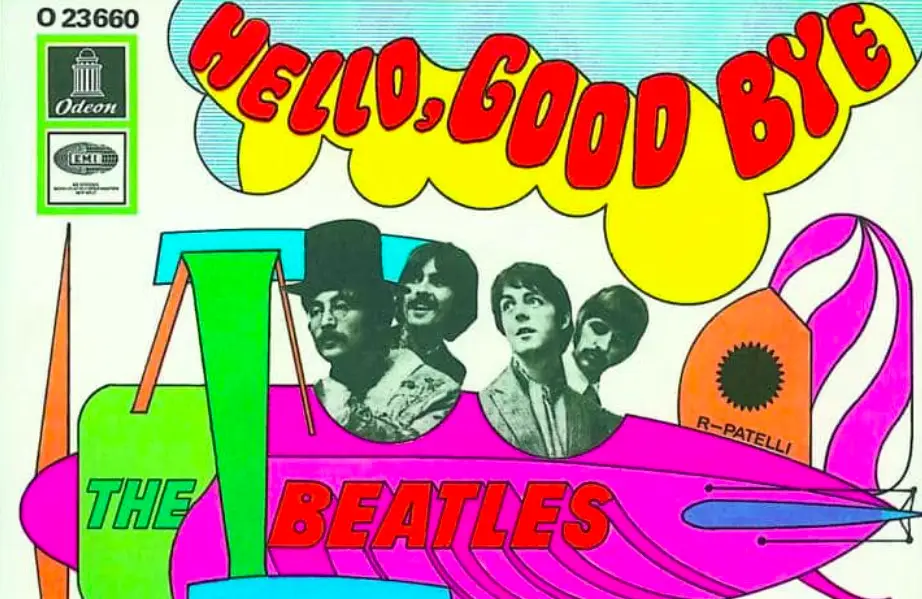
Hello Goodbye – why now?
So what to make of this rising tide of hello, goodbye on London’s buses? Why is it happening?
Whenever I wrangle a behaviour like this, I often find myself asking where I have seen something like this before: what does this behaviour in this situation with these kinds of people remind me of? In this case the answer is something I learned in my very first French lesson. “Bonjour Monsieur. Bonjour Madame” we chanted back in Preston Park Junior School. When you enter a room or a function or even the local cafe.
Forget to mumble that little spell as you enter the village bread shop, your nose full of the bewitching aroma of fresh baguette, and it’s not that you’ll be treated badly or refused service. But the atmosphere will be different. Cooler, more formal. Less trusting.
It shapes what happens next between you and others in that space. And the space and the attendants to that space won’t forget so that next time, you’ll feel something is off.
But Bonjour Monsieur is not so much a greeting to the shopkeeper but to everyone in the shop. In provincial French towns and villages, where the customers are regulars, the whole shop will respond to you paltry little incantation: they will “bonjour Monsieur” you back. You learn to close the exchange on the way out in the same way: repeating the same words, to the same response.
These are both examples of the same small thing. Simple verbal exchanges that make our social lives work better together. Short hacks to ease interactions with potential rivals and threats in human form. What Ernst Goffman (yes, our favourite sociologist this year and most other years, too) called access or threshold rituals.
Something that uses the familiar call and response mechanism: you say hello, and I say goodbye. A small mundane spell of a thing we do together- even if the bus driver merely smiles and nods and closes the door, rather than shouting Bonjour (or Bonne Journee) down the street after you, from the boulangerie. It still does its job1.
What’s interesting about both these little rituals is that they are phatic – they are not transmitting information from one party to another. They are about relationships. Think of them more like gestures – a thing you do in the space between you and other people to make things go easier.
They contain no invocation of gods, deities or supernatural powers, yet they work real magic. They make everyone involved feel a little more connected, a little safer.
Say bonjour to an empty shop and the relationship between you and the baker and things will still flow more smoothly; you show you know how things work and they see that you know. What comes after is easier, friendlier, warmer.. Do the same in a full shop and something bigger and more important happens. They see you do it and for a moment they see the bus as a place of safety and communality. They see your gesture as a sign that you see it, too and you are safe, and you, too are “one of us”. Over time and with repetition – as with all rituals – social bonds and social capital get built. Even by this simplest of rituals.
A bus in our capital contains, by contrast, a temporary, accidental collision of strangers who will probably never meet again. Yet a single shout of “thanks, driver” as someone leaves the bus can frame how that temporary group sees itself and the space it occupies, however so fleetingly. Everyone in earshot has just witnessed a small act of recognition; for a moment, they become part of a group rather than a random collection of strangers – mere shards of humanity.
The ritual needs witnesses as well as participants to work here, too – just I highlighted in last week’s post on the way we (recognise a) change in the occupant of number 10. Rituals thrive on witnesses.
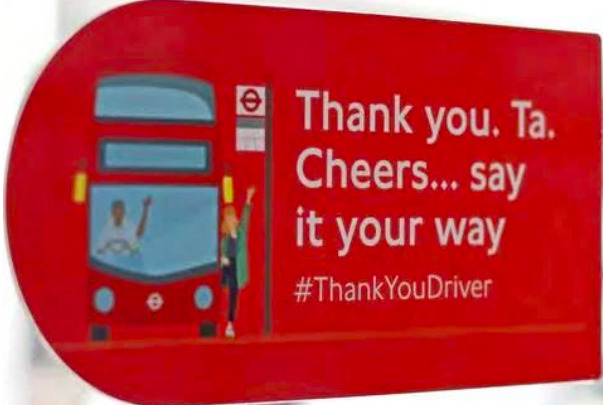
And the social impact is clear: it creates a different atmosphere others on the bus; for passengers (Transport For London wants them to feel safe using buses, whenever and wherever) but also – and perhaps more importantly – there’s an impact on the drivers who now operate alone, at all hours, in London’s dark streets, trapped in a little glass box. Research has shown, being thanked likes this really helps with their physical and mental health, as they do their essential work, ferrying us around.
It’s a key plank of Transport For London’s plans to keep us moving which is why they’ve invested so heavily in “hello London”, the campaign created by Neighbourly labs. All too often transport is thought of only as a logistics business – about the hardware and how you move it around. But this is one of those occasions when even a little thought about the human element can make a huge difference.
Hello Goodbye (for Mr Nick Coates)
HERDspotting tips
Watch the next time you cross a public threshold – when you board a bus, step into a lift or walk into a shop – who acknowledges your presence? How it makes you feel when no-one does? And when they finally do?
Listen for the regional accent of the ritual in Britain. Cheers, drive or a nod and a grin. Or even a haughty stare.. The data shows this is learned not instinctive. And cities can unlearn hello, goodbye given good and enough examples.
Reflect on a moment when you’ve greeted or thanked someone whose job is invisible to most – the street cleaner or the postie. What does their reaction suggest about the next encounter you will have with them? And how does it make you feel?
References
Rash, Felicity. “Linguistic Politeness and Greeting Rituals in German-speaking Switzerland,” Linguistik online (2004)
YouGov. “Are Londoners the Rudest People in Britain?” (November 2022)
Confederation of Passenger Transport. Bus and coach driver gratitude survey — 2,000 passengers, 1,158 drivers (2022)
University of Sussex, Transport for London and Neighbourly Lab. Hammersmith bus-driver greeting pilot (2023)
Milgram, Stanley. “The Experience of Living in Cities,” Science, 167:3924 (1970)
Goffman, Erving. Relations in Public: Micro studies of the Public Order (Basic Books, 1971)
1 To be honest, in London no-one is going to carol out “thank you for travelling on the 390
with us today; we never forget you have a choice. Safe onward journey” – to each and every
passenger.