The Pernod Ricard India CMO tells Tim Healey why global brands need consistent meaning but culturally intelligent expression, how legacy brands can stay relevant without nostalgia and why restraint can be a form of bravery.
You’ve worked across Unilever, Reckitt, PepsiCo and Pernod Ricard, where you are now CMO in India. How did that journey shape the way you think about brands?
If I trace my relationship with brands back to its origins, it begins in a noisy, colorful family home in Calcutta in the 1980s, where everyone was a storyteller.
Books, movies and music weren’t hobbies – they were the heartbeat of our home. My mum would be strumming the guitar, my dad playing ABBA, my uncle blasting Boney M, and my brother and cousins queuing up whatever was topping the charts. It was chaotic, loud and joyful which, in hindsight, is not a bad training ground for a career in marketing.
What I didn’t realize then but understand now is that I was growing up in an environment where stories, context and emotion were constantly intertwined. And in many ways, that’s exactly what brands are. Stories wrapped in context and delivered with emotion.
In the 1990s, post-liberalization India opened up and global brands suddenly burst into our homes. Advertising became bigger, bolder and more cinematic. What fascinated me wasn’t just the creativity – it was the effect these brand stories had on people, how they shaped aspiration, identity and behavior. That curiosity pulled me into marketing.
I started my career at Unilever, working on personal care brands including Lakmé in India. Unilever instills one fundamental discipline very early – consumer centricity. The belief that if you truly understand people, everything else becomes clearer.
I then spent eight and a half years at Reckitt, across local, regional and global roles. Reckitt added another layer – commercial sharpness. It taught me that brand building isn’t just storytelling; it’s also about owning your brand as a business end-to-end.
In 2020, right in the middle of Covid, I moved to PepsiCo. Pepsi brought a completely different energy. It taught me how to keep brands at the leading edge of culture, constantly evolving with the world around you. Because culture is where people live their lives, in the music they listen to, the conversations they have, the things they share and care about. And if brands want to remain meaningful, they can’t observe culture from the sidelines. They have to participate in it.
Three and a half years later I received a call asking if I would be interested in helping steer Absolut Vodka back into its iconicity. Working on Absolut was one of the most defining chapters of my career. The task was to rediscover the brand’s extraordinary creative heritage – from Warhol to Haring and reimagine it so it felt culturally alive again.
In many ways it was about solving a classic brand challenge: how do you honor a legendary past without becoming constrained by it? When you get that balance right, something interesting happens. The brand doesn’t feel nostalgic. It feels timeless.
Earlier this year I returned to India as CMO for Pernod Ricard India, where the group has entrusted me with the responsibility of steering one of its largest businesses, most strategic market and key growth engine.
When I look back on the journey across Unilever, Reckitt, PepsiCo and Pernod Ricard, each chapter has added a layer of nuance to how I think about brands: consumer understanding, commercial rigor and cultural relevance.
It’s been a 20-year journey across some extraordinary organizations and iconic brands. And the one belief that has only strengthened over time is this – brands succeed when they combine human truth, cultural context and commercial discipline. When those three come together, brands don’t just grow – they endure.

What is the offer at Pernod Ricard?
Advertisement
One of the ideas that sits at the heart of Pernod Ricard is conviviality – the belief that life becomes richer when people come together, share experiences and connect with each other. That’s why we often describe ourselves as creators of conviviality.
Drinks have always played a unique role in bringing people together around a dinner table, at celebrations, or in shared cultural moments. And that makes our category quite special, because we don’t just sell products, we participate in moments that matter to people.
What’s interesting is that every brand in our portfolio expresses that spirit of conviviality in its own way, unlocking human connection across different occasions, spaces and cultures. But conviviality isn’t just a concept for us, it’s something very lived. Our brands sit naturally inside culture, which allows us to create the conditions for those moments of connection to happen.
For example, when I worked on Absolut, the idea we leaned into was the desire to mix, not just mixing drinks, but mixing people, perspectives, ideas and identities. Because often the most interesting human moments happen when different worlds collide and something new emerges. And that’s really the role our brands play.
They don’t just sit on a shelf; they become part of the rituals and cultural moments where people come together.
You’ve worked on several legacy brands. What has that taught you about keeping iconic brands relevant?
A lot of my career has involved working on iconic legacy brands, and what I’ve learned is that the real challenge is rarely reinvention. It’s reimagination.
One of the earliest examples of this for me was at Unilever, working on the iconic Indian beauty brand Lakmé. The brand dates back to the 1950s and was created at the request of India’s first prime minister so that Indian women could have world-class, home-grown beauty products. So, it wasn’t just a brand, it was part of the identity of a newly independent India.
By the mid-2000s when I was working on it, the beauty category had become intensely competitive. L’Oréal was setting the pace, with strong performance claims, global glamour and the famous line “because you’re worth it.” There was pressure internally to emulate that playbook.
But when we went back into Lakmé’s history, something became clear: its power wasn’t global gloss, it was emotional intimacy. Lakmé had grown up with Indian women. It was present at weddings, festivals, first jobs, first lipstick moments, the first kajal you ever used. There was a relationship there that competitors couldn’t replicate.
So, the work wasn’t about chasing L’Oréal’s story. It was about clarifying Lakme’s emotional advantage.
And that’s when I learned an important lesson about legacy brands. Reinvention isn’t disruption, it’s disciplined stewardship. The task isn’t to replace what made the brand meaningful, but to rediscover it and make it feel contemporary again.
Absolut is one of the most recognizable brands in the world. But recognizable doesn’t always mean relevant. At the heart of its success were two powerful assets: the iconic bottle silhouette and the “Absolut X” creative construct. Those weren’t just design choices; they were distinctive brand assets that built memory structures at scale.
But somewhere along the way, in the race to stay contemporary, the brand had started experimenting in ways that diluted those very assets. That’s often the tension with legacy brands. The pressure is always to reinvent. The harder decision is often restraint.
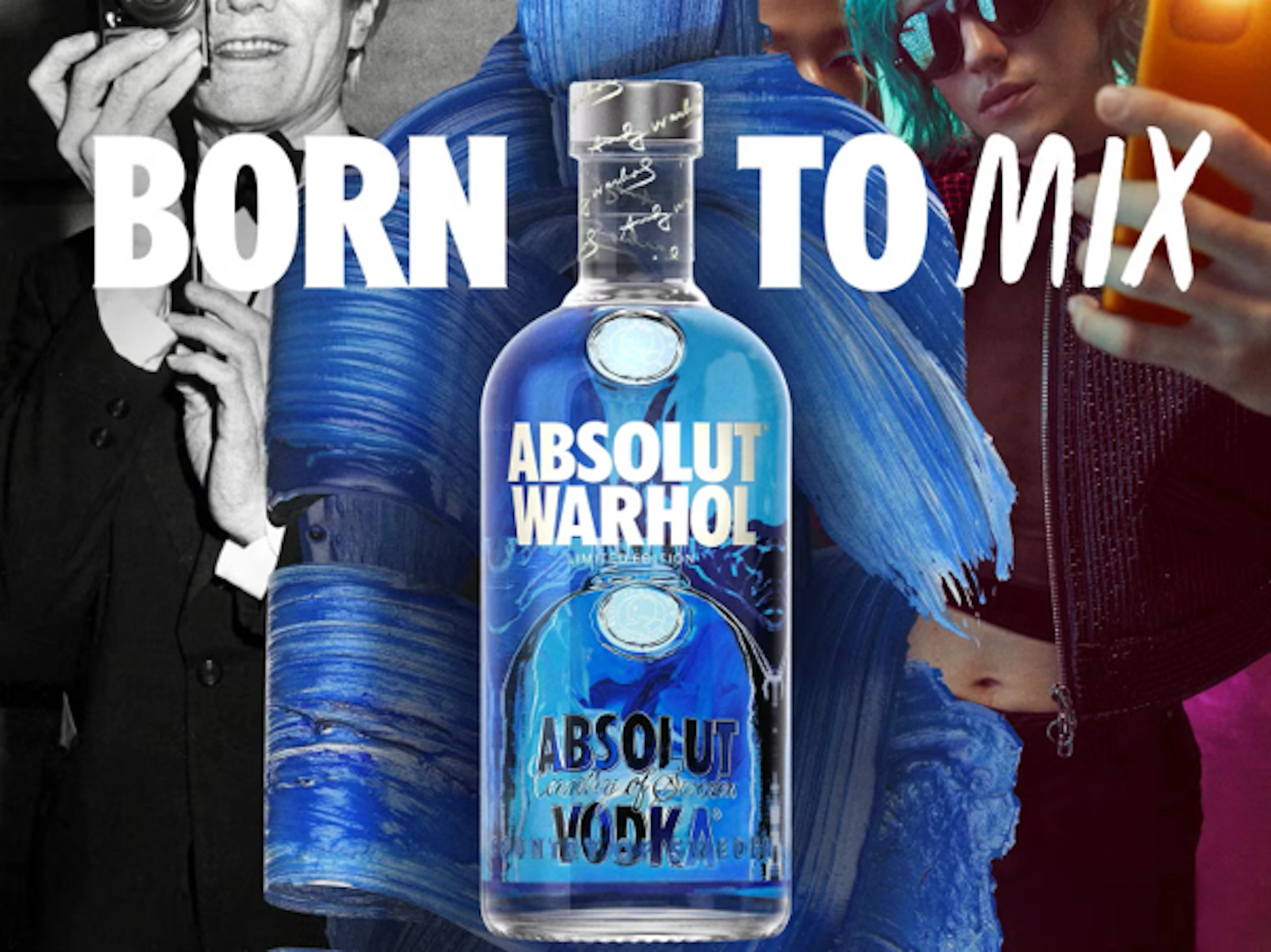
When I joined Absolut, my ambition was simple: bring back the brand’s iconicity. So we went back into the archives, amplified the bottle silhouette again, reinterpreted the “Absolut X” construct for the 2020s, and reignited the artist collaborations that had originally put Absolut at the centre of cultural conversation. Importantly, this wasn’t nostalgia. It was about re-expressing the brand’s DNA in a way that felt culturally alive again.
That led to campaigns like Absolut Warhol, Absolut Haring and most recently Absolut Tabasco. And it reinforced something important for me: A brand’s roots aren’t sentimental, they’re strategic. When you protect them with conviction, they don’t hold a brand back. They compound.
What’s coming up for you with Pernod Ricard in 2026-2027?
India is one of the most fascinating markets in the world to build brands today. The combination of demographic momentum, rising affluence and the ongoing premiumization of consumption creates a tremendous opportunity for our category. Every year, we see millions of new consumers entering the space, and with relatively low penetration, there is still significant headroom for growth.
Add to that the broader economic momentum across the country and the increasing aspiration for premium experiences, and you begin to see the scale of the opportunity ahead.
At the same time, India is also a highly regulated market, and that requires a great deal of discipline in how brands operate and engage with consumers. For marketers, it means thinking much more holistically about brand building. It’s not just about advertising, it’s about getting the fundamentals right: the product, the portfolio, pricing, packaging, experiences and how the brand shows up culturally.
In many ways, it pushes us back to the essence of the craft. You have to build demand by creating brands that people genuinely want to be part of. And we’re doing this in an extremely competitive market, with both global players like Diageo as well as a large number of strong domestic brands competing for consumer attention. The real challenge and the real opportunity is this: how do you build powerful brands in a market that demands both creativity and responsibility?
For me personally, that’s what makes the role so stimulating. Even after two decades in marketing, I find myself learning something new about the craft every day. Because marketing, ultimately, is much bigger than advertising. It’s about creating brands that resonate with people, with culture and with the moment we’re living in.
You’ve worked across markets with very different cultural codes. How do you decide what must remain globally the same or globally invariant versus what should be radically local?
One of the funny things about working across markets is that every market believes it’s completely unique and of course in some ways they are. But what I’ve found over time is that human truths are surprisingly universal. Ambition, belonging, pride, identity, those sentiments travel across borders. What changes is how those emotions are expressed culturally.
Where global brands often go wrong is that they try to export execution instead of intent. The creative expression may need to flex across markets, but the meaning of the brand must remain consistent. If you’re clear about the human tension your brand is addressing, then you can adapt the expression without diluting the core. That’s where cultural fluency really matters – not as decoration, but as respect.
So, whether someone is experiencing Absolut in New York or in Delhi, the brand should stand for the same idea. The meaning should travel. What can change is how the brand shows up locally – the cultural cues, the collaborations, the way the brand participates in people’s lives. Because when the core meaning of a brand is clear, its distinctive assets and cultural expressions can travel even when the execution changes. And that’s really the balance global brands must strike – consistent meaning with culturally intelligent expression.
Could you describe a moment when your instincts and the data pointed in different directions? How did you decide and what was your takeaway from the experience?
I’ve always believed that instinct and data aren’t opposites – they’re signals. If my instinct is pointing in one direction but the data is telling a different story, the first thing I ask myself is: why did I believe this in the first place? What is the underlying observation or consumer insight that led me there?
Often, instinct is simply pattern recognition built over years of experience. But it still needs to be tested. So I’ll go back and interrogate the data more deeply. Are we asking the right questions? Are we looking at the right signals? Sometimes the issue isn’t that instinct is wrong, it’s that the data isn’t yet capturing the behavior we’re sensing.
But if, after that exploration, the evidence still points clearly in another direction, then you must have the humility to accept that your instinct might be wrong. For me, the real discipline is not choosing instinct or data, it’s using both to sharpen the question.
That’s also where experimentation becomes important. I’m a big believer in pilots and controlled tests. They allow you to validate an instinct without making a huge bet upfront. And those experiments are incredibly valuable whether they succeed or fail. If something works, you want to understand why it works. And if it doesn’t, you want to understand why it didn’t.
Because ultimately, data helps you understand what is happening, but instinct often helps you sense what might happen next. And great marketing usually sits somewhere in that intersection.
How do you decide which marketing technologies are worth adopting, and which are just noise?
Marketing has always evolved with technology; the difference today is the speed of the change. The way I look at it is this – everyone is surfing the same wave. The tools are evolving so quickly that no one really has a permanent advantage. The real differentiator isn’t the technology, it’s the mindset with which you approach it.
For me, that starts with an obsession with learning. Marketers today must stay endlessly curious about what’s emerging, what’s changing and what might actually matter. But the other discipline which is often overlooked is the ability to let go. Let go of outdated habits, old assumptions, and sometimes even metrics we’ve become overly attached to. Because technology changes the tools, but the real job of marketing is still about judgment. And judgment is really where instinct and evidence come together.
And one thing I’ve become much more comfortable with over time is not needing to have all the answers upfront. Five years ago, I probably felt I had to understand everything before moving forward. Today I’m far more comfortable operating in ambiguity – experimenting, learning and figuring things out along the way with my teams. Because when the environment is evolving this quickly, the goal isn’t certainty. It’s adaptability.

What myth about marketing would you most like to bust?
The myth I would most like to bust is this idea that if marketing doesn’t move the numbers immediately, it isn’t working.
We live in an era where everyone wants marketing to behave like a light switch – something you turn on and the results appear instantly. But the reality is that marketing compounds. It builds memory, meaning and mental availability over time. And the most powerful effects of marketing are often invisible in the short term, but undeniable in the long term. What sometimes happens is that we reduce marketing to dashboards, tactics and quarterly results. And in doing that we start confusing activity with impact.
But the real job of marketing is not just to generate immediate responses; it’s to earn a place in people’s minds and lives. And that doesn’t happen overnight. It happens through consistency, through building distinctive assets, and through reinforcing the meaning of the brand again and again. In many ways, that’s exactly why legacy brands endure; their meaning has had time to compound. So if marketing feels slow sometimes, it’s often because it’s doing exactly what it’s supposed to do. Because strong brands aren’t built in quarters. They’re built in years.
What question would you like me to ask the next senior marketer that I interview?
I often observe in our industry a strong pull toward creative impact and fame – the big, bold idea that grabs attention. But in my experience, the most effective work usually begins with something far less glamorous: a very clear problem to solve. That tension between fame and effectiveness is something marketers constantly navigate.
So, the question I’d be curious to hear their perspective on is simply this: How do you approach that balance between creative impact and commercial effectiveness in your work?
Your question from the last senior-level marketer I interviewed is: what keeps you awake at night? What are the challenges that you keep coming back to that you can’t solve?
I’m in a relatively new role, and what probably keeps me awake at night is navigating the complexity of the Indian market while ensuring our brands remain relevant for a new generation of consumers.
India is an incredibly dynamic market, but it also requires a lot of discipline in how you operate. That means constantly asking myself: what sits at the core of the brand? What are the root strengths? What made the brand meaningful to consumers in the first place? And how do we preserve that while making it feel relevant for a new generation?
I often talk about restraint in marketing. Because bravery in marketing is often associated with doing something new – launching something big, making noise, reinventing things. But I think restraint is a form of bravery.
It’s very easy to add things. It’s much harder to protect what already works, especially when there’s constant pressure to change. Some of the bravest decisions I’ve made in my career haven’t been about launching something new. They’ve been about saying no to ideas that were exciting but wrong for the brand.
Because in the end, brand leadership isn’t just about creating the next thing. It’s about protecting what made the brand matter in the first place.

If there’s one thing you know about marketing, it is….
The consumer is not always right but the consumer is always the starting point.
Consumers can tell you their frustrations, their needs, the tensions in their lives. They can tell you what works and what doesn’t. But they can’t always tell you what’s possible next. That’s where the marketer’s role begins.
Great marketers see what everyone else sees but imagine what others haven’t yet imagined.
If you had asked consumers in the early 2000s what the next version of a phone should look like, I doubt anyone would have described the iPhone. That leap required imagination. So the craft of marketing really sits at the intersection of two things: deep human understanding and bold imagination.
You start with human truth. But the real magic happens when you take that understanding and turn it into something people didn’t yet know they wanted. And that, for me, is the real magic of marketing – turning human understanding into possibility.
This interview is brought to you in partnership with Worth Your While — an independent creative agency based in Copenhagen, working globally. Named one of The Drum’s Indie Agency Top 100, WYW exists on the belief that time is humanity’s most valuable resource, and that the only ideas worth making are ones that earn it. You might die tomorrow. Make today worth your while.
This interview has already appeared in The Drum. Discover the best campaigns, industry insights and interviews from world-leading marketers, creatives and more.