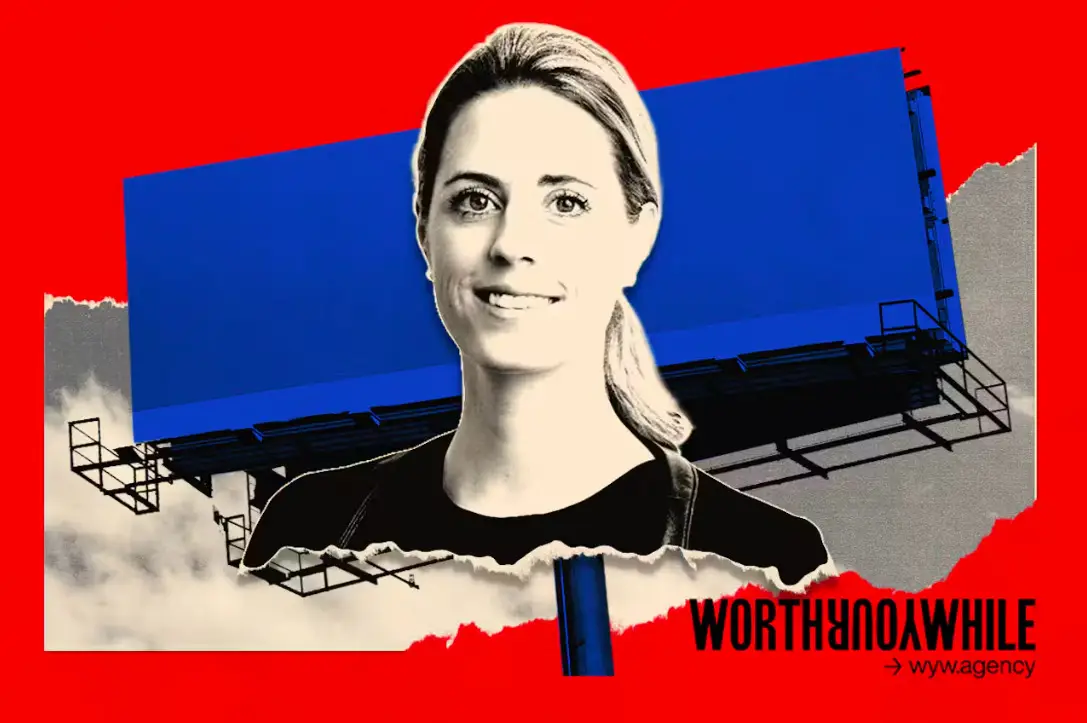
The investment bank’s global marketing communications director tells Tim Healey how keeping promises builds credibility across industries, why personal relationships matter in high-stakes deals and how a turbulent Wall Street debut brought a new audience of investors and analysts.
You started out as an auditor. How did you find your way to global marketing at Lincoln International?
My entrepreneurial spirit was there from the beginning: I always knew I would go into business; I just didn’t know yet what form it would take. I soon dragged my twin sister and best friend into my entrepreneurial schemes: we washed cars, sold lollipops to our school friends, with a small markup, of course and, most successfully, launched a handmade jewelry line.
I began my career as an auditor. I loved the client work, but I wanted more room for creativity than the role allowed.
I put on a backpack, booked a one-way ticket and set off without knowing exactly what would come next but safe in the knowledge that, if it all went wrong, I could always come home.
I arrived in the UK ready to work, just as the Global Financial Crisis hit. Nobody needed a junior accountant, so again I had to get creative. On a whim, I applied for the marketing assistant role at the Royal Yachting Association in Hamble.
I worked on the London Boat Shows, interviewed Olympic sailors and created children’s books on boating.
Eventually, life drew me home to Perth and the door to property marketing was opened. This is where I would focus the next 15-years of my career.
A matter of the heart took me to Sydney, as did the opportunity to join one of the most prominent Australian and global developers, Lendlease. The highlight was Barangaroo, a top ten global urban redevelopment project, that proved to be the ultimate training ground. As our pipeline grew internationally, the opportunity came to move from Sydney to London and lead marketing for our European integrated projects.
A year ago, an opportunity to lead the European marketing arm of global investment bank, Lincoln International, came up. It has been a great year, with my role expanding to lead global marketing across Europe, the Middle East, India and the US. I can confirm I am much better suited on this side of the banking equation!
For the uninitiated, what does Lincoln International do?
Lincoln’s vision is to be the best investment banking advisory firm for global private capital markets. We provide mergers and acquisitions, capital solutions and private funds advisory. We are also a leading provider of valuation services and transaction opinions to investment funds and financial institutions. Lincoln has a globally interconnected team across 30+ offices in 14 countries.
What’s coming up for you and your marketing team over the next year?
In May this year, we listed on the New York Stock Exchange (NYSE: LCLN) and priced the top of our range, right as the Iran war escalated and markets were about as volatile as they get. Going public in that window came down to two things: trust from investors in our investment thesis and communicating the resilience of our business despite a highly uncertain macro backdrop. It’s rare for an investment bank to go public, doing it during a geopolitical shock like that made it even more challenging.
Looking ahead, two things are front of mind.
We now have a whole new set of stakeholders, investors and analysts. Communicating with them is a very different proposition. We have evolved from serving our clients to maintaining trust with those who invest in us.
Second, Lincoln has grown both organically and through acquisitions, including MarshBerry. A strategic focus for the marketing team is continuing to broaden our customer base and services while formally integrating our distinct businesses. We are also growing and enhancing our geographic reach globally with the same ambition as our leading market position in the US, where we are headquartered.

You’ve built your career on marketing places people visit, and then moved into investment banking, where the product is advice and trust. How have you found the adjustment?
It’s been wonderful. One thing my career has taught me is that if you are presented with an opportunity to learn or develop, take it! You must walk in understanding it will be a process of relearning and if I’m honest, you may even be humbled, but it’s worth it.
The core marketing principles are the same: focus on partnerships, stakeholders, and what your audience and clients want. But changing industry is always a steep learning curve: you have to be willing to learn, make mistakes and figure out what works. Timeframes are long and the capital investments are large, whether this be an office building, a penthouse or private equity appointing an advisor to sell their business, the foundations are similar.
If you are starting a new career in a new industry, in a new city, you need to put your ego aside. The only way to success is through listening and learning, and that is not always easy.
How do you build trust when you walk into a business – in a new city, in a new country and a new industry?
You need to earn it. In every conversation, and every phone call, you must be completely committed. Say what you plan to do and then make sure you deliver it. You must consistently show up. You can’t rely on a reputation that doesn’t exist. Much like reputations of the brands we work on, we build our reputation one day at a time. My advice to anyone beginning their career is to work out where you can add value and learn to speak the language of the board or the audience that makes the decisions.
One thing that has been genuinely valuable in my career is creating and maintaining a strong network. Think less about what you can get out and more about what you can put in. Much of my success has come through focusing on how I can help the people and businesses around me.
Mergers and acquisitions advisory is won on relationships and track record, typically more than on by any campaign. So, where, in your opinion, where does marketing genuinely change the outcome for a business like that?
Winning an advisory mandate comes down to insight, reputation and trust. If you’re buying or selling a business, you need to know that the person representing you has got right expertise and that you can trust them to deliver.
Marketing’s role is to bring that subject matter expertise to life and make sure our audiences are aware of our established track record so that when a client is choosing an advisor, it is clear we are the right partner for them.
Want to go deeper? Ask The Drum
How does marketing change the outcome if the business is based on relationships and track record?
Our bankers are focused on doing deals, it is our job to understand the value and tell that story. The biggest opportunity is to make sure the deals, the insights and the expertise our teams deliver is showcased.
What travels from marketing a place to marketing something that perhaps is a bit more esoteric, as you were just explaining?
There are more similarities than differences. You’ve got a product or service and two things you need to nail are your positioning and clarifying the benefit to your target audience. Why does it matter? Everyone is time poor and competing for authority and access. Why should someone give it to you and are you clear on what is the benefit for them?
This skill is finely tuned when you work across multiple assets or services with different audiences.
I’ve always worked for business and brands that have long, high value customer journeys. My job is to understand what each of these audience needs are, what the link is between them and then deliver something compelling.
I have had the opportunity to work on some of the highest value projects in the world, including global M&A pipelines and the record breaking One Sydney Harbour, a collaboration with Renzo Piano, Daniel Goldberg and Lendlease. To date this is still one of the most successful, residential developments in Australia’s history, breaking the most expensive property record at the time with over $3 billion AUD in sales and a $140M penthouse.
Taking those apartments to market was fascinating. COVID hit as just as we were about to launch, so our usual approach, which included selling offshore was flipped on its head. We focused on the exclusive nature of the building and stayed off market, utilizing the relationships and good-will we had built over many years of developing apartments and provided a personalized high touch experience. It’s a similar market to Private Equity, with discerning buyers and sellers. Money is
less of a constraint, trust and clarity are the defining features.

How important to you is creative risk taking in marketing?
It’s a balance, especially in B2B businesses. We need consistency and creativity. What needs to be front of mind is what problem we are solving and who it is we are serving?
Market research in the mid-market investment banking space tells us our audiences see little differentiation between our offers. That’s the question I keep putting to the team: How are we going to cut through, what are we doing differently?
In your marketing career, could you tell us about a customer research discovery you made that you found surprising?
Customer research isn’t always at the forefront of the environments I’ve worked in, and it should be. The best example I’ve seen was in property: before starting a major integrated project, we would run a process to create a place book, built around a place brand and guiding set of principles. This meant understanding the location, the surrounding neighborhoods, the potential and constraints of a site, the customer mix, demographic and target audience in order to define our guardrails used across the project’s lifecycle. That place book informed everything, the architecture brief, our planning submissions, how we brought the place to life through retail mix and activation. The place was built around that insight and delivered years later.
On the surface, that step can look unnecessary. But visit a development years later that skipped it, built primarily for profit and you can feel the difference. Ask people to tell you about a place that lights them up and that they keep going back to. The answer to this question will tell you everything you need to know about the type of place you want to create.
If you’re responsible for shaping whole areas of a city and you get it wrong, that’s not a two-or-five-year problem, it lasts for generations. Get it right and you leave a legacy.
What surprised me most was how consistent the answer was across completely different audience segments. From downsizers, young families and ultra-high-net-worth buyers, to workplaces, retailers and business owners what every one of them wanted, at the core, was to belong or to be part of something that allowed them to grow and perform. It was less about the finishes and the square meters, and more about the moments that matter and that is the insight that makes the difference.
In your opinion, is there an AI times human sweet spot, and if so, where is it?
I absolutely think so. AI gives us the ability to spend more of our time on meaningful work, rather than routine tasks. Used the right way, AI enables you to scale faster, target more effectively and test campaigns in ways that weren’t possible before. But like any new way of working, alongside the technology and the capability-building, we have to take our teams on the journey with us, changing workflows across the business is as much opportunity as the tool itself.
Our team is already using it to facilitate some of the repetitive work, involved in deal announcements, for example, making sure content aligns with our tone of voice and brand guidelines. We are at the beginning of our journey but are clear on the use cases and the possibilities.
I do feel there is a misunderstanding that AI can replace whole parts of the marketing team. So far that is not that case, and I don’t believe it will be. AI should allow us to do more strategic work, not less. There always must be a human sitting behind marketing decisions, or things get generic very quickly. One of our key points of differentiation at Lincoln is our insight on where the market is going, not just where it has been, and that’s exactly what needs a human element.
Could you tell us about a challenge you’re facing right now, and what your advice to other marketers might be who might be facing that challenge.
We’ve got a rapidly growing business, I work across three time zones and the challenge is scaling our team’s value without scaling the resources at the same rate.
I’ve faced a downside of this scenario in a previous role as well. Due to broader macroeconomic factors, I was tasked to outsource a team of eleven down to three and build up the resources externally.
In both cases, it is one of the challenges most marketing leaders are tasked with, do more with less. The approach that worked for me is recognizing not everything needs to sit with marketing or our team. Assess what infrastructure already exists. Look at the technology stack, what are iterative tasks that you can build workflows with that AI can support or solve, or which agencies are available to support you to scale your team during key periods. The right people, whether internally or externally, become your superpower.
Drawing on your leadership expertise, what has your career taught you that helps you to make a great team?
Diversity of experience matters and so does hiring people who are genuinely passionate. As a leader you need to have incredible clarity about what you’re working towards, what good looks like and bringing along everyone on the journey.
I’ve always been clear about what good looks like and ensuring we are measuring ourselves against that. There is also an individual layer that often gets lost – understanding what motivates each person not just the organizational goal. If you sit down and you say, “okay Tim, what lights you up? Why do you want to be here?”
Understanding the motivation for that person allows you to amplify their contribution because you understand why and how they’re motivated.
What question would you like me to ask the next senior marketer when I interview them?
It would be one of these:
Tell me about a mistake that you’ve made that has been your greatest lesson OR how do you maintain curiosity amongst the day to day?
We often talk about our successes, but I’m also interested in mistakes and what people learn from them. I am also fascinated by how leaders stay curious – I am curious about everything.
Your question from the last senior marketer I interviewed is this: how are you?
I’m well. It’s been a big first year, new firm, industry, a relatively new city and the chance to lead globally, all at once. Most people will pretend that was easy. The truth is anything worth doing well takes a lot of effort and this year asked for that of me.
That said, it was a full-circle moment for me: I started my career in finance and to stand on the floor of the New York Stock Exchange was a genuinely wonderful moment, even if it took a lot to get there. Not all careers need to be linear; my thoughts are the best ones allow for some adventure and lots of curiosity.
If there is one thing you know about marketing, it is.
Marketing is an engine for growth and a fundamental part of business. I believe in many environments marketing is overlooked and undervalued. We need to be sensible about how we spend and clear about how marketing integrates into the business. But businesses without it will suffer, and those that use it well, with a genuine seat at the table will grow and compound far beyond those that don’t.
This interview is brought to you in partnership with Worth Your While – an independent creative agency based in Copenhagen, working globally. Named one of The Drum’s Indie Agency Top 100, WYW exists on the belief that time is humanity’s most valuable resource, and that the only ideas worth making are ones that earn it. You might die tomorrow. Make today worth your while. https://wyw.agency/
This interview has already appeared in The Drum. Discover the best campaigns, industry insights and interviews from world-leading marketers, creatives and more.