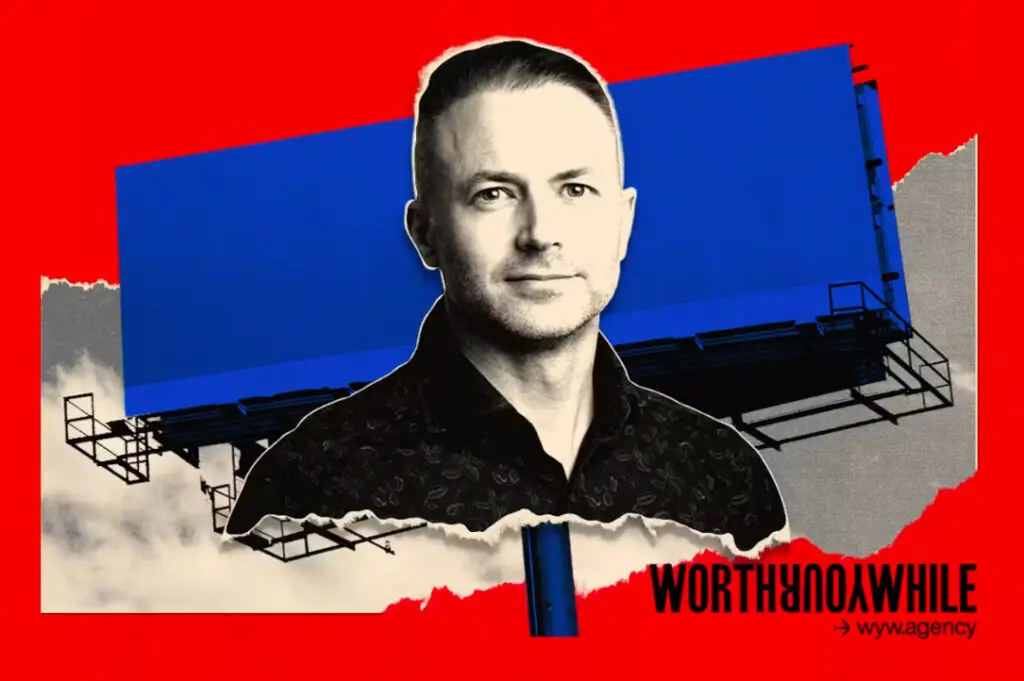
The Unilever marketer tells Tim Healey how football’s overlooked fourth official became a branding opportunity, why product relevance matters in major cultural partnerships and how creator-led marketing has challenged his old assumptions about creative control.
You studied biochemistry before building a career in FMCG marketing. How did that journey lead you to Rexona?
I studied biochemistry at university and quickly realized I was probably not cut out to be a scientist or an academic.
Procter and Gamble came to my university and the idea that I could be paid to design products, think about pricing and packaging greatly appealed. Up to that point, I hadn’t realized what an FMCG marketer was. I thought that marketing meant you needed to be good at art and be able to come up with adverts. P&G didn’t hire me. Unilever did.
I joined Unilever on their graduate scheme. That’s where I had my foundational marketing training. Having worked in food, I went to work at L’Oreal Paris, and I worked in hair care. I moved from Pot Noodle and Peperami to Masstige – a haircare brand for older women.
Not being an older woman, I had to hone my marketing skills, rather than just imagine I was the typical customer.
I worked at PepsiCo for a few years changing categories. I worked in beverages on Tropicana, and Naked Juice.
I was working with Pepsi on international assignment opportunities, and I had a call to rejoin Unilever and work in ice cream on a global ice cream brand based out of Rome in Italy. Based in Rome, I was working on Cornetto initially and then became regional lead for ice cream in Southeast Asia and Australia and New Zealand.
I moved onto the global team, and led the Magnum brand for seven years, and that was a phenomenal time. We doubled the size of the brand and became a €2bn turnover brand.
I led the development of the Bonbons, little Magnum bites, which I’m very proud of because that was a completely new avenue for the brand. When the bitesize Magnums came out, they blew the doors off the category.
These last 18 months, I’ve been working on Rexona. It is my dream job. Rexona is a brand that has been in my consciousness since I was a kid. I used the product, and I felt that it was in need of a refresh and to be re-energized.
What is the offer at Rexona, please, for the benefit of our readers?
Rexona (known as ‘Sure’ in the UK) invented the anti-perspirant category. It’s the number one brand in the world, and it’s the brand’s line is “it won’t let you down”. We’ve added the word ‘ever’ so it reads: ‘It won’t ever let you down,’ and that’s a promise of genuine product superiority.
We’re confident in the superior sweat protection our patented technology delivers. As an FMCG marketer, that’s quite rare. That promise of ‘it won’t ever let you down’ is also a promise of what you’re looking for in personal care products, which is confidence and control. You want to smell good – that’s quite important to most people – and you don’t want the discomfort and the kind of shame of sweat patches.
It’s really different to ice cream. You don’t need ice cream. You probably need some pleasure and some indulgence, but it doesn’t have to be delivered by an ice cream. Some people might argue with me, but I think generally most people would agree that you need to wear deodorant. When you’re dealing with a need, it’s about making sure that you can meet that need and maybe even exceed the expectations that consumer has against that need. And that’s something that we’re really focused on with Rexona.
What’s coming up for your marketing team over the next 12 months?
We’ve just come out of the Fifa Men’s World Cup, where Unilever Personal Care was a tournament sponsor. We are still crunching through the data, but early signs are really positive. We had around a 6% share of all tournament engagement which was a strong result for our first tournament.
We’re humble and we’re learning what worked well and what didn’t work so well. We tried a lot of things. We took a lot of chances and a few risks. We’re seeing now which ones really paid off, which ones we will do differently and which we will not repeat.
One of them was the fourth official holding up the substitute boards to tell you how much added time there will be, or if they’re substituting a player, they hold up a board which displays the numbers of the players on there.
The big idea for us was not just to have the logo and brand name there, but actually to say we’re supporting the fourth official – the often overlooked official who doesn’t get supported by anyone. It’s a high-pressure job: and it’s a bit of a thankless task. To be able to say, “We won’t let you down. We’ve got you in that in that moment” was really nice.
When high pressure strikes and you need confidence and control over your sweat, that’s where Rexona comes in and to be contextually relevant – in the armpit of the official’s uniform, we also added the branding of Rexona, Sure (UK) or Degree (US), depending on the match. To be really contextually relevant we put the brand name where the sweat would be. We also offered Rexona products to all the fourth officials to use as well during the games.
We’re building on this into next year, working on a really exciting launch for Rexona for our core business for both men and women. What we’re finding is there’s a lot of people who need a stronger product and currently are not using the appropriate level of anti-perspirant protection. That’s a great opportunity for us because we have that. We can deliver 72-hour protection from sweat. We will be refocusing on that, so that we can drive that superiority message harder and in a more distinctive way.
We also have the Women’s World Cup next year, which is exciting. In New York, we had a baton handing over ceremony with Ronaldo – who was our partner in Brazil – metaphorically handing over the baton to Marta, who is Brazilian female legend in the women’s game as if to say: “The men’s championship is now over and now we focus on the women’s game.”
It’s going to be hosted in Brazil, so we’re really excited about that. Football is a great fit for Rexona because the brand speaks to both male and female audiences, and we can connect with them through both the men’s and women’s games.
The women’s game presents a really nice opportunity for us as a brand. It’s a different environment. I don’t know if you if you’ve been to many women’s football matches, but actually 54% of the audience are male. It’s more men than women watching the women’s game.

What was the big difference you noticed when you crossed from desire (Magnum) to dependability (Rexona)?
I think there’s not such a big difference because you need to use a deodorant. Deodorant is a planned and repeated purchase, people think about it far less than they would do for an indulgence like an ice cream, and they buy it more regularly. There’s far more jeopardy if it doesn’t work than there would be with an ice cream.
You still really need to drive home desirability. You still need to land that functional superiority. The ice cream world is less about function and more about emotion.
Rexona is embedded in football – The World Cup, nearly a decade with Manchester City. For a deodorant, what convinces you that football moves the business and isn’t just all about the fame?
When thinking about football, there are more obvious product consumption moments for brands like soft drinks brands, potato chips, crisps, that kind of thing, beer brands, etc. You’re not applying a deodorant at the game.
There’s a couple of things that make the connection. We talk about Rexona science performance and control. The science is the reason to believe. Through our product, the science puts you in control of your sweat and odor. Great football is about performance and control.
Performance also maps over winning teams, champion players, doing your best and sweating for something. Control is very literal. In football, we control the ball, we control the game. We also control our own destinies.
Rexona also has the distinctive brand asset of the dry tick on the runner’s back. We would get our ambassadors to do the grey T-shirt challenge: put Rexona under your arm, do your football training drills and see if it holds up.
Football is such a big part of culture, and all our brands are talking about wanting to shape culture. If you’re a brand that really wants to be in culture, the Men’s World Cup is the biggest cultural moment of every four-year cycle. Then nationally and locally, football is part of culture on a daily basis. For us to be in it as a performance science brand makes sense.
You read molecular biology before marketing ever came along. Does the scientist in you still agree with the marketer?
I love going to talk to research and development. Those teams are so far ahead of anything that I studied, but I could keep up with the basics of the science. I also understand enough to know that our product is good and solves the problem.
The other thing that scientific training gives you is that comfort with data: being able to know your way around statistics and statistics modelling. That is really helpful as a marketer, which I always think is a balance of science and art.

How important is creative risk taking when marketing?
It’s massively important, you’ve got to take risks. You’ve got to get comfortable taking risks, and that doesn’t mean doing reckless things. Risk and recklessness are two different things. Data, fact and certainty will only take you so far. If you wait on something to be certain, it probably means it’s already been done. That’s the only way to be certain if something’s going to work or not is to actually do it.
My idea is to feel like I shoot from the hip, I use my gut feeling, what I’m always trying to do is feed my gut. You need to use data, facts and hunches. The data points could just be talking to somebody. I heard this and is that showing up at scale now in another place, and then you need to feed your gut with that, which then allows you to take the calculated risks. Otherwise, if you don’t, you don’t innovate, and if you don’t innovate, you die.
In your opinion, is there an AI x human sweet spot, and if so, where is it?
I am playing around with this stuff now. I feel like I’m just scratching the surface, but I use Unilever’s enterprise tools for my work that’s kind of confidential with compliance integrated and that helps me a lot. I’ve also got some agents who we’re constantly feeding data and information to. We set them up to be critical and cynical and challenging. This allows us to progress with speed.
Is there a risk that AI will be used for creativity? Leaps of imagination and creative risk-taking feels inherently human to me. I could be wrong, but I think AI enables quick input and feedback to help you understand the level of risk that you’re taking – but coming up with the creative idea is still a human skill. I think AI will only increase the value of human creativity.
Could you tell us about some customer research that surprised you?
I was working on Magnum, and we had decided that Magnum represented lifestyle choices, and we thought we had a great creative idea, showing the concept of pleasure in a five-star hotel. It bombed in testing.
We took a step back and realized we have a delicious product – let’s just show that. Chocolate melting over an ice cream or a bite being taken out of a really indulgent ice cream and that scored off the charts.
All the metaphors we had come up with were redundant. Instead, we literally just showed the product. It was quite a revelation, but actually it makes complete sense. If you just think of your own behavior: if you’re just scrolling through your phone, why would you stop on some brand’s view of something that’s adjacent to the product as opposed to the brand telling you something about the product?
When a brand shows you the product, if you’re not interested in that, you can just scroll by. But if you are interested in it, it stops you. You click on it and find out more. It’s completely different to how we looked at it. It really stuck with me.
The other thing as well is the importance of creators. The media skew has completely changed from being 95% about the TV commercial to being 95% about how this big idea is going to live in social, how we will give this idea to some creators, and then they will make our content.
That would have been crazy to me 10 years ago, maybe even five years ago. The idea that we would cede control. We keep the big idea. We keep the broad brand guardrails. But if you’re really, really clear on what your brand is, then you can task a creator to make something authentic. Then you do that at scale with thousands of creators. Some of it won’t work – that’s OK. A lot of it will, and you’ll have a groundswell of interest in the brand message. It’s like old-fashioned word of mouth done digitally. This approach has torn up the old orthodoxies that were in my head.

Drawing on your leadership expertise, what has your career taught you that helps to make a great a great team?
It’s really important that everybody understands the purpose of the team. What’s the goal? What is it that we’re trying to achieve? What are the values that we will live by as a team?
Your goal should not be: grow our market share and increase our penetration next year. Your goal should be something that feels visionary: something really big that you can build towards.
You must clarify the values we’re going to live by as a team, fostering trust. Trust that you will do what you say you’re going to do; having the ability to do the thing you’ve been asked to do; holding the information that you’ve been given, that you don’t then go and share. Once you have that within the team, and you’re really living those values, and you have that honesty between each other – that’s when things really start to go fast.
I try to create teams where there’s no competition. My view is that I’ve seen in the past opportunities missed and things done in a way that could have been done a lot better if the other person in the team had supported rather than competed. Collaboration is crucial in high performing teams.
Finally, as a leader, you’ve got to be comfortable with discomfort. You’ve got to be comfortable enough to sit and say to the person: this isn’t good enough – and this is why. What do you think about that? This is what you need to do to make things better.’ In a great team, members will take that information on and grow and improve.
Being super-clear around your purpose, your values, trust, honesty and then being able to have clarity in the moment, instantly to one another – get all of that right and you’ve got a high performing team.
Your question from the last senior marketer I interviewed is: who’s going to win the league next season?
For me, I would hope that it would be Manchester City or Chelsea. I think it’s going to be a really interesting season.
What question would you like me to ask the next senior marketer when I interview them?
What keeps you awake at night?
If there’s one thing you know about marketing, it is…
You’re never done. Curiosity is a superpower, and that’s what will keep fueling. Always be curious, think what why why why why why okay what now why why why. That’s the fuel of the fire; beware of anyone that claims something is dead.
WYW exists on the belief that time is humanity’s most valuable resource, and that the only ideas worth making are ones that earn it. You might die tomorrow. Make today worth your while. https://wyw.agency/