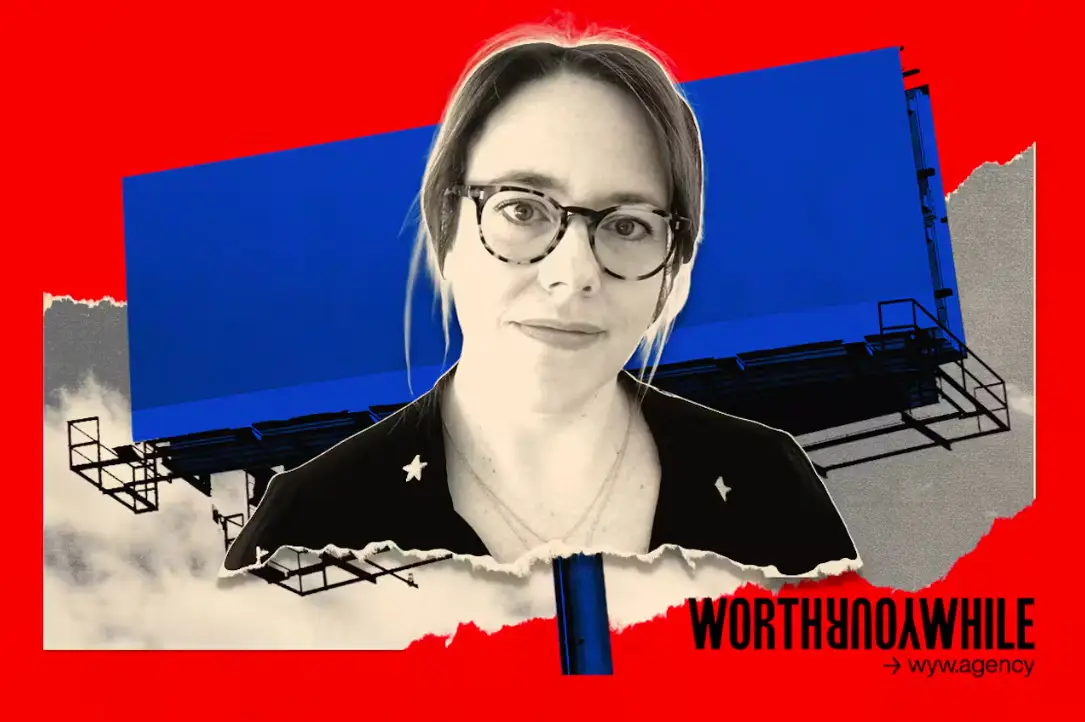
The campaigns and communications director tells Tim Healey why children’s publishing demands constant audience renewal and how that shapes her approach to growth.
You have worked at Dorling Kindersley (DK), HarperCollins, Penguin, Random House, and now you are at Walker Books. Can you whiz through the stepping stones that have led to your current role?
I never set out to work in marketing. I have always loved books. I was always a big reader. And no matter what it was, I devoured it. I read everything as a kid, including loads of non-fiction. I would get weirdly obsessed with books about planes, for example – and then I would read all of the fiction that you can imagine. Throughout my life, books have always been an escape.
At university I studied Italian. An online career quiz suggested publishing. I started doing unpaid work experience (because that’s what you do to get into publishing). I fell into a job at DK. Initially, I provided support for the marketing and PR team. I found it really interesting.
Even though my primary interest was the books themselves, I was doing all these things that were entirely about readers. I very quickly realized how much I loved the marketing side of the industry. It was bringing together the creative vision, the understanding of audiences, the organizational aspects and the need to make smart decisions, as you had to be driven by data.
I worked with the marketing director, then the sales and marketing director, and ultimately moved into the marketing team. Being around 20 years ago, it was a time when the marketing industry was changing. It was moving away from direct mail and physical out-of-home advertising, into the kind of marketing where you understand more about the person that you’re talking to.
I was attracted to the data side of it all. The fact that at every iteration you understood more about your audiences. There was a psychological element. Figuring out how to find the trigger that is going to engage the right reader for each book was fascinating.
I worked on a wide range: from James Bond to gardening via first aid manuals and parenting books. At that time, I was still obsessed with books – rather than realizing that I really enjoyed the marketing of the books.
I always knew that children’s books was where I wanted to be most. When marketing to children – and this isn’t just in publishing – no matter how far ahead you think you are, children are already 10 steps ahead of you.
Whichever media channel you’re on, they are already somewhere else. Whatever angle you use this year, you can’t use it next year. It is evolve or die – literally. If your sales are static, they’re actually growing – because a section of your readers have aged out. The idea of working in somewhere where you would do the same thing year after year bores me.
I moved from DK into kids publishing at HarperCollins. I worked on some of the biggest books that have ever existed in the children’s industry. Including David Baddiel, Derek Landy, Veronica Roth and brands like Paddington Bear and The Tiger Who Came to Tea. I was approached by the marketing director at Penguin Random House Children’s Books. It was just after Penguin and Random House merged. Their team had grown and they needed more senior, experienced leadership.
They invited me to work on my favorite ever children’s book brand: Percy Jackson, written by Rick Riordan. It was only really once I had been made a marketing director that I started to realize that I really loved the function of marketing.
My boss at the time, brand director Alex Moyet, told me to go for the Marketing Academy Scholarship. Initially I pushed back – I felt that I was just far too busy. We had just been sent home – it was the beginning of the Covid pandemic. Until I did that course, I had slightly misunderstood my own motivation. I thought I primarily loved books and that I had learned to be good at marketing. The course helped me reframe that.
The Marketing Academy is about turning smart marketers into marketing leaders. I had done training before, but nothing like this. The focus was entirely about who you want to be as a leader and who you are as a marketer.
Through that process of connecting with mentors, the executive coaching, and the amount of time connecting with other marketing leaders who are at a similar stage of their career, I realized that actually, ‘the books’ were the nice-to-have.
My love story was with marketing: understanding how you connect a product or a brand with a person and you make their lives better for it. Books and stories make people’s lives better. Marketing books is like the ultimate story – bringing those two things together.
This revelation came at the perfect time for me. I was no longer going to be working on campaigns myself with a team my size. I now needed to create environments that ensured that the team around me is delivering their best work. I had won awards; I had marketed every kind of book. Now I lead teams who do it better than me all day, every day.
There’s a trick to getting the best from your teams: you have to let go of the fact that you think that there’s a right way of doing something. There are tons of right ways of doing it. As a marketing leader, it is all about how you create an environment where everyone around you is also figuring out the best way to achieve your goals. If you are forcing your own methodology on your team, then you are literally creating “the coloring-in department”.

Is your home full of bookshelves? Do you have ‘a one book in, one book out policy’ or are you just acquiring?
I just acquire. I’m a book lover through and through; it’s absolutely not ‘one-in-one-out,’ though we might get to that point. I know lots of people have that approach to books, but I just couldn’t! I do rearrange things fairly periodically, because I’ve got a lot of piles of books – though they can look great too.
You have spent your entire career in publishing and the last decade in children’s. You know, that’s a rare depth in a sector that’s changed enormously, from physical retail to TikTok discovery to the audiobook boom. What’s held constant about marketing children’s books and what’s had to be completely reinvented?
The constant is that children love stories. You might find kids who don’t love reading or don’t love books, but they all love stories. Our marketing needs to tap into that love and imagination – focusing on the emotion and the result of what you’re delivering, rather than the method with which you’re delivering it.
The other constant is change. You can be standing in a queue with an 11-year-old who has never loved anything more in their life than the author that they’re meeting. They could be screaming and crying. They could be falling all over themselves. They want every single piece of the freebies that you’re handing out… but in two years’ time – that same child wouldn’t look at this book twice.
When engaged, kids are the most passionate fans. And then they move on. There’s not even consistent nostalgia about what they used to love.
So the whole concept of building mental availability for your audience is really transient?
One of Penguin Random House’s biggest brands is the Diary of a Wimpy Kid books. Every year, they sell millions of copies globally, the new books and the original that started it all. It is easy to forget that those millions of copies are not ever sold to the same set of kids – because every year you gather some at the bottom who grow into the books and you lose a bunch at the top who grow out of them.
As a business, we have to gather more at the bottom than you’re losing at the top. How are you pulling in the seven-year-old who hadn’t heard of it last year – because you’re losing a lot of 11-year-olds who are over it.
These constant changes force you to be the best at what you’re doing: there’s no opportunity to be lazy. The second you’re even a little lazy about it, the second you just do what you did last time – you’ll have lost it.

Children’s publishing sits at an unusual intersection. The buyer and the reader are often two different people. How do you build campaigns that win over both a parent or a teacher, while also creating excitement in the child?
You focus on the child. Children’s publishing is, to a reasonable level, ‘recession-proof.’ Books have a low price point; they’re seen as ‘a little luxury’. If your child comes to you and says: ‘I want this book’, you’re more than likely buying the book because, even if you’re not a reader yourself, you know the value of encouraging reading and how important that is for the young person in your care.
The reasonable price point helps for it not to be seen as a big barrier. In the first week of Covid lockdown, we sold thousands of Peppa Pig books in just a few days because all the nurseries closed, and everyone realized they were going to have to go home and look after their children and still try to work.
The dual audience (children and parents/carers) is kind of baked in. Not to say there isn’t different messaging. We are always trying to connect kids with the story and with the adventure. With parents, the messaging is more about the value of reading.
The decline in reading for pleasure is a challenge for us as an industry, because the fewer kids read now, and inevitably this means that fewer adults will go on to read. We have changed our publishing strategy: there are a lot more graphic novels.
What’s the offer at Walker Books?
Walker is such an interesting publisher – started by one man, Sebastian Walker, nearly 50 years ago. He was looking to break away from the traditional publishing model. He viewed the whole market as it stood then as an opportunity and he was perfectly positioned to be able to maximize on that.
The mission at Walker Books is incredibly child-centered and, for me, they’re unique in that.
To quote Sebastian Walker himself, “All that counts is that a child says at the end of the book ‘Again!’”

How’s your marketing team structured?
My role is campaigns and communications director – so I’ve gone from leading brand and marketing in partnership with a PR & comms director, to leading a completely integrated marketing & PR team. I think this is absolutely vital. How we market, how we reach readers, is constantly changing – and the distinction between traditional Marketing and traditional PR is getting less and less. Each element definitely deserves its own expertise – and I have some wonderful experts in the team at Walker – but to really support and drive the growth of a business, they need to be integrated at their heart.
How do you surf the tsunami of rapidly evolving marketing technology?
The function of marketing is to deliver growth for the business. There is no one more interested in making advancements with technology than a marketing director. We are always trying to unlock better ways of working for our teams and better ways for their function to deliver into the business.
My strategy is to lean into curiosity, but I balance that with really thinking about what this piece of tech can actually improve about the way my team is functioning within the business – being rigorous about what the actual value is versus the tech being ‘a nice to have’.
Recently, there was a lot of conversation about AI powering segmentation and defining personas, but in the end I couldn’t get the level of clarity I needed to make an informed decision about it all. Publishing is not an industry with a huge tech budget.
A lot of people look at AI and think about the ‘human time’ that can be replaced. How do you insert that time-saving mechanic into a process that already exists? I believe that a better approach is to skip all the way over to the end and think about the outcome that you’re after, and then consider how AI can support the outcome rather than try to replace a human delivery. And at heart, I believe there are things that AI simply can’t deliver the same way an expert marketer or publicist can. So the key is looking at which parts of your day are taking up time needlessly, which tasks are taking up team time that don’t improve their skill or the delivery of the function to the business. And start there.
What myth about marketing would you most like to bust?
The myth I would like to bust is that ‘marketing is the coloring-in department’. Marketing should be about growth. I believe that your marketing strategy should be your business strategy with consumer understanding overlaid over it.
If that’s the kind of if that’s the approach that you’re taking, that means that marketing operates in very different ways than it has historically. It is not a case of: “give me the product and I will advertise it.” Instead, it is all about how marketing and consumer-first thinking can make the product better. Marketing can make various different interconnections across the business work more efficiently. Marketing can be the glue that moves the business forward and helps to optimize operations. Marketing is an engine that supports growth.
That is why the definition of a CMO is changing, why curiosity is so important, and also why change resilience is vital, because all of these things are true. I have to dispel the myth around being ‘the coloring-in department’, not always across the business, but internally with my own teams too. Marketing teams can really feel it when bigger creative conversations are being had – decisions are being made – and their input isn’t invited from the start.
As marketers, we know more about the audience than any other part of the business and we can bring that expertise to any part of the business. Providing that information to the business is how you deliver growth, make the product and brand better and the business stronger.

Could you describe a moment when your instincts and data pointed in different directions? How did you decide and what was your takeaway from the experience?
A few years ago, I was looking at how we delivered our social media. The model we were using was fairly traditional and was focused on announcements – community engagement and management was kept pretty light-touch. Our stats were healthy, growing steadily, in line with the market. So there was a data argument against fixing what wasn’t broken!
But I could see something behind that. People were starting to use our comment sections as a customer service channel, and as a brand we had an opportunity to be part of that conversation rather than just posting at it. My instinct said we needed to invest far more heavily in community management. Significantly more than we were at the time.
And I was also looking more broadly across the children’s landscape to see if other brands were taking note of this. Take someone like Lego – they turn fans into co-creators, submitting and voting on new sets; they’re central to the future of the brand. This was a model I aspired to.
Every internal data point said the opposite of what I wanted to do. I backed the instinct anyway, built the team around community-first thinking, and it paid off. The lesson for me here is that data tells you what is going on, but it can’t always tell you what action you need to take.
What question would you like me to ask the next senior marketer that I interview?
How prepared do you think your team is for change? And if you don’t think that they are 100% ready, what are you doing about it?
Your question from a senior marketer: what would you be doing if not marketing?
Baking! From a career perspective, I can’t really imagine doing anything else. I love marketing. I love the skill of it. I love the value that it can bring to a business. I love watching the impact that marketing has – whether that is on individual team members or how we grow as a team. I see how that focus drives business growth.
If I wasn’t in marketing, I would probably go in a completely different direction: I would run a dog shelter – something very tangible and practical.
If there’s one thing you know about marketing, it is?
That marketing has the power to make businesses stronger, to grow them and make them better. But if you’re going to do that, you have to do it by really leaning into the what the marketing function can deliver. You do that by understanding your audiences better than anyone else, and you accept the fact that it is a constant job.
You don’t just understand your audience once and you’re done. Audiences evolve. If you are living with segmentation that’s seven years old or working the exact same ways that you worked three years ago. You are devaluing how your business runs. Marketing has the power to drive business growth.
This interview is brought to you in partnership with Worth Your While, an independent creative agency based in Copenhagen, working globally. Named one of The Drum’s Indie Agency Top 100, WYW exists on the belief that time is humanity’s most valuable resource and that the only ideas worth making are ones that earn it. You might die tomorrow. Make today worth your while. https://wyw.agency/
This interview has already appeared in The Drum. Discover the best campaigns, industry insights and interviews from world-leading marketers, creatives and more.