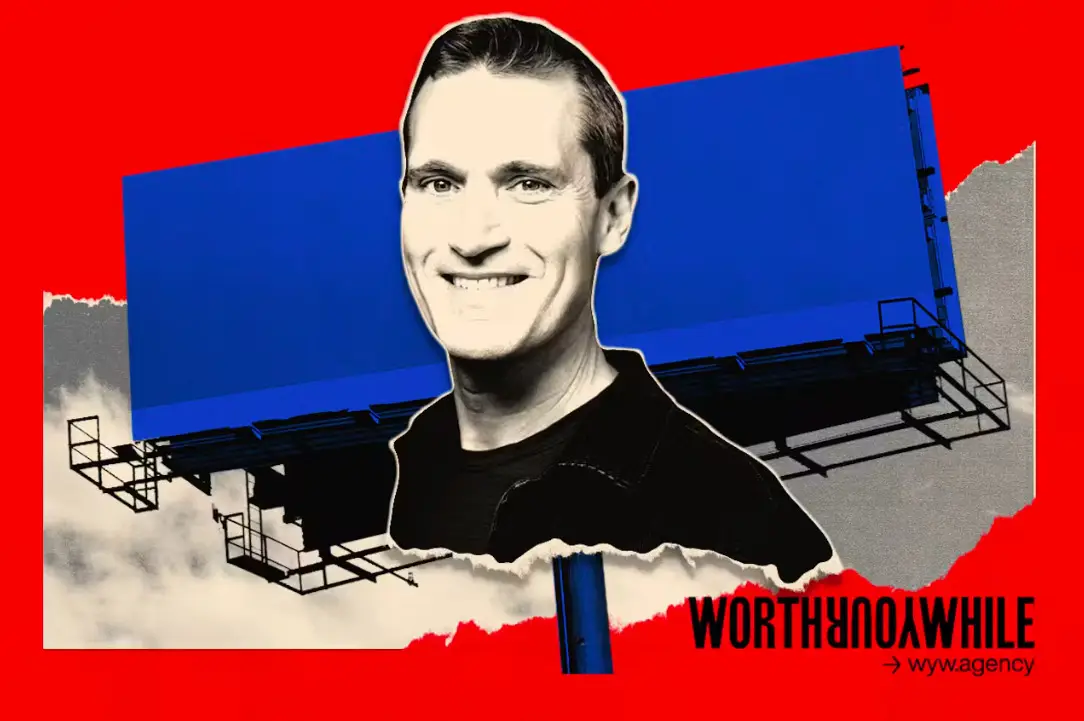
The job platform’s marketing director tells Tim Healey why football and F1 offer new ways to reach passionate communities, the challenge of marketing a service people can’t see or touch and why AI still needs a human in charge.
You began your career in PR. How did you find your way to Indeed?
It’s a somewhat squiggly career, which ultimately makes for a better set of life experiences. I fell into PR when I finished university, starting in healthcare PR and became an unexpectedly young dad. We decided to move abroad to bring up our young child. I saw a job in Switzerland, so moved there to work for Logitech.
After four years with them, I was presented with the options: do I stay in comms, or do I stay with Logitech? I ended up choosing to stay with Logitech, which meant I moved into product marketing and later became a marketing director. It was a pivotal move away from comms into a broader set of responsibilities.
I loved being a product manager. It was super interesting to make physical things that sit on shelves and help to ensure they were sold. For the last 20 years, I have been a marketing director across a mix of consumer tech and professional services. And now I am marketing director at Indeed.
What’s the offer at Indeed?
Indeed’s mission is to help people get jobs. It’s very straightforward. It’s on our T-shirts. It’s on the walls in the office. What that means in reality is that we are a global leader in job matching and hiring. We have a vast number of job seekers – over 685 million job seeker profiles – who trust us to help them make one of the most important decisions in their li ves: finding the right job opportunity. A nd millions of companies who look to Indeed every day to help them to find the people that they need. We sit in the middle, facilitating that interaction between employers and job seekers.
Every minute, 3 1 people get hired on Indeed. If you watch Formula One, a very fast pit stop in Formula One takes less than two seconds, and in less than that time, someone will get hired on Indeed all day, every day, all year round.

What’s coming up for you and your marketing team in the next 12 months?
We are moving much more thoughtfully into fandom and how we show up in culture while engaging more deeply with these passion-based communities. W e’ve been in this space for about a decade with a sponsorship we have with Eintracht Frankfurt. They play in the Bundesliga in Germany – the top tier of German football.
In the last six months, we have signed longer-term relationships with Oracle Red Bull Racing in Formula One. Extended the Eintracht Frankfurt relationship, moved to a front of shirt sponsorship for FC Utrecht to play in the top tier in the Netherlands in football, and also signed a multi-year front of shirt and principal partner relationship with Brentford Football Club, a UK Premier League team.
With these partnerships we are placing Indeed alongside some of the most high-performing teams in the world to show that whether you’re building a championship-winning racing team or a world-class business, success depends entirely on the talent you hire.
As you have suggested, you learned your trade marketing things people hold – a Logitech mouse, bags, fitness watches – and then you moved to a job platform. What changed when there’s no product in a box to point at?
You have to work much harder to differentiate when people can’t see and touch something. You have to invest more at the top of the funnel to raise the profile of the brand because you don’t have the same physical presence that you do if you’re selling mice and keyboards and people are going to walk into PC World or Tesco and see your products on a shelf in that category: it is a different approach.
We also run a two-sided marketplace, one of the challenges in a marketplace is being balanced between both job seekers and employers. Whilst a majority of our traffic is from job seekers, the part that comes from employers is also incredibly important because without them, there are no jobs on the platform.
Balancing the B2B and B2C side of our customer base is certainly different from being more of a consumer brand. Continuing to stay relevant and visible at the top of the funnel is crucial for us.
Remaining front of mind, creating mental awareness and having good models of measurement in place around those metrics is key. We need to get job seekers to the platform. We can’t rely on getting products on the shelf in Tesco. We’re a direct-to-consumer brand in that sense.
I’m fortunate to be in an organization that has got a deep belief in marketing and has marketing built into its business model.
How do you build one brand that speaks honestly to both job seekers and employers?
Our basic belief is that if we do what’s right by the job seeker, then it will also be what’s best for the employer. We give companies the option to sponsor and boost their listed jobs in order to be more visible with job seekers.
On the Indeed homepage, a lot of the content consists of job ads that companies have paid to put in front of job seekers. That commercial model gives us a signal of where employers have hiring needs, while allowing us to balance those needs with what is most relevant to job seekers.
When marketing, we have different approaches for job seekers and employers. With employers this is a deeper engagement across a company, especially with larger organizations where there might be many people working with us. That is likely to be a mix of digital and in-person activities. With jobseekers almost everything we do will be digital and scaled, so that even where we are personalizing material it will be as part of a bigger digital program. The two worlds overlap, of course. Employers might also be job seekers, particularly for smaller businesses, so it ’s important we have a consistent overall tone of voice across all our channels and audiences.

A job search can be a more anxious and personal experience. There’s lots of things to balance: money, a sense of self-worth and identity. So how do you market at that without ever sounding glib?
We think about that very carefully and spend a lot of time understanding our audience and considering how to do that in the right way across different demographics, as their needs are varied.
People in their 50s may have begun their career in a pre-digital world. People entering the workforce today are searching for jobs in radically different ways, but are digital natives, and increasingly, for the youngest workers, AI natives. Showing up for each of those groups in the right way is also something that we think about.
We want to be empathetic and recognize that starting to look for a job is one of the most important decisions that people are going to make. It can also be incredibly frustrating.
There are also moments when humor might be appropriate because the job search process can at times feel slightly absurd. We’ve run campaigns that lean into the absurdity of looking for jobs, in a way that’s culturally relevant. They have worked well.
This is nuanced by territory: the ways in which people in the UK are hesitant to talk about salary could be quite different from the way that you show up culturally with exactly the same topic in America or Germany, where people are going to have different types of conversations during the interview process.
Starting with the insights and the research helps us to do work that resonates. Social media is where we can jump on things on a daily basis. If there are memes popping up around salary transparency, frustrations about work, we make sure that we’re in those conversations in a way that feels authentic.
AI’s rewriting both ends of the recruitment process from the CVs people submit to the way employees sift through them. What does that do to how Indeed needs to present itself?
We need to recognize that it’s happening. We are also part of the solution here in using AI to make it easier for job seekers to apply and also making it easier for employers to be really clear about what they need while also helping them find the right candidates, faster.
If you’re applying for a role, we can notify you of what might be missing on your CV, and check that you’ve got the right qualifications. A role might ask for a particular medical qualification, an HGV license, or to be fluent in Portuguese, for example. If your CV doesn’t show that, AI can flag it so you can make a more informed decision about whether to apply. And if you do have the relevant skills or experience but they aren’t clearly reflected in your CV, AI can help you make sure your CV accurately represents them.
For employers, we can surface CVs and applications for you that help you find the right candidates that are most closely matched with what you’ve specified. We can also use AI agents to ask some follow-up questions of those job seekers. We can also contact those people and schedule interviews for them. That means using AI to reduce fri ction in the hiring process so that the recruiter can spend more time on the thing that they’re naturally most interested in – applying human judgment.
How important is creative risk taking when marketing at Indeed?
The fandom strategy is a good example of where we’ve done something that may be perceived as a risk but will help us to get more attention. Being the only recruitment brand that’s involved as a Premier League sponsor, we will see some meaningful cut through in the coming months because we’re doing something that is unexpected in a world that previously has had more B2B services.
Sponsoring a Premier League club is a multi-year meaningful investment and is a very carefully considered calculated risk. We spent a long time ensuring this is the right thing to do and considering what some of the tradeoffs might be.
As a brand on social media, you’re trying to react and contribute to culture while it’s happening in the moment and most of the time that works well. We’ve got much better at being more comfortable with the ways in which social media is different from traditi onal brand advertising, so that we can do well with both. The sign -off process for social media is different from what it would be for a big TV campaign or a sponsorship investment, because we need to be able to move quickly to be impactful on social media, while maintaining the same standards across our brand.
I’m sure every brand that’s doing well on social media has grappled with that and has taken calculated risks that work for them as a brand.
Is there, in your opinion, an AI x human sweet spot in marketing? And if so, where is it?
AI can be an efficiency superpower, helping to reduce the time it takes for a lot of more routine work or allowing us to generate more outputs in the same amount of time. AI-powered apps allow us to spin up display campaigns and create 100 variations in almost real time. A few years ag o, that would have seemed like creative nirvana. B ut you still need to make sure that they are on brand and right for you. That review should be done by a human. They br ing empathy and creativity while AI can help take care of more mundane tasks and massively increase the volume of potential creative iterations. This is where humans really add value.
My basic view is that if you’re on the hook for it when it goes wrong, you need to put yourself in the process when it comes time to say: “do we do it or do we not do it?”
Part of the way I think about leadership is that you should be accountable for something, and if you’re accountable for it, you should also be making a decision no matter what happens. You can’t delegate that decision to AI and then say: “it went wrong and it wasn’t my fault.”

Is Indeed seeing the impact of AI in the job market at the moment?
With over 685 million Job Seeker Profiles, 3.5+ million employers, 20 million jobs across 60 countries, and over 1.3 billion ratings and reviews, we have a front-row seat to the global economy and labor market shifts as they happen. Our team of economists publish their insights on this through the Indeed Hiring Lab.
Our most recent Hiring Lab report from August 2026 showed that t he number of postings with “AI” in the job title has risen sharply in the UK and other countries – almost tripling in the UK since 2022. AI in job titles is now more prevalent outside tech than in tech. The share of job postings in the UK that mention AI in the description continues to rise rapidly, now at 9.4% of all postings. So we definitely see this in terms of the skills that employers are looking for.
At the same time, we don’t have any evidence of widespread disruption. Instead, increasingly people are expected to use AI as part of their work. This is about trans formation, not job replacement.
Just as some years ago, you might list out specific software packages that you were competent with in your CV – “I know how to use Microsoft PowerPoint” – it would seem bizarre now for somebody to list that as a specific skill because it’s just table stakes. It’s expected that you can get on just fine with the Microsoft suite and with the Apple suite, w ork with Google Cloud and have knowledge of a CRM system.
For over two decades, our AI matching engine has powered billions of connections between job seekers and employers. As a technology company with AI at its core, we’re seeing that technology evolve faster than ever. When I speak with counterparts in fast food or FMCG, for example – to come back to what we were talking about earlier, physical things on a shelf – AI doesn’t have the same transformative effect on their core business because people still need to buy cans of beans.

Could you tell us about a challenge that you’re facing right now in marketing, and what your advice might be to other marketers facing that challenge?
With the changes that we see with technology, there is definitely a time challenge, a productivity challenge, and a motivation challenge because some of these changes are anxiety inducing.
People are asking themselves questions about the future of their own work. They’re perhaps not asking themselves more broadly philosophically about ‘the future of work. ’ They are asking themselves: ‘I’m expected to use three or four different AI agents, and am I always on the back foot by comparison with my coworker who appears to have cracked the use of AI more than me?’
How and where AI fits into the workplace is a challenge. The advice to give to other people is to check in with yourself and check in with others. Fit your own oxygen mask before helping other people: in other words, make sure that you’re okay before you check to see if other people are okay. And at the same time, companies can help by having clear expectations and by making time for people to share and celebrate successes.
Drawing on your leadership expertise, what has your career taught you that helps to make a great team?
Hire people who are better than you. Marketing teams are so interesting because they’re almost always collections of specialists. We work alongside sales teams that are almost always collections of generalists. In big marketing groups, you’ve got people who are brilliant at SEO, event management, brand campaigns, programmatic advertising, sponsorship, data analytics, measurement, comms – the list goes on and on and on.
As a person who has been entrusted with overseeing those teams, inevitably I can’t do most of the jobs that people in my team can do very well. I do the best I can, knowing that I don’t actually know how to do some of those jobs. I hire people who a re going to be brilliant at those jobs, who can also grow into other roles, and then try as much as possible for them not to realize that I’m bluffing!

What question would you like me to ask the next senior marketer that I interview?
I would probably want to ask the next person, as I would do most of the time when I meet people: “how are you?”
Your question from the last senior march I interviewed is this: how much time have you spent engaging in the channels that your consumers are engaging in?
There are things that I see on our social channels that don’t work for me, but I’m not the target audience for that activity. Learning to trust the people who are brilliant at creating the stuff that goes out on social media is essential. I scroll through our own channels and embrace the fact that I am in my 50s. Therefore, stuff that’s designed for people from different generations is not meant for me – and that’s absolutely okay.
Our media team and our social team have got me covered in other channels where I might naturally show up. I am always listening and watching – observing how brands show up on different media channels. Watching the 2026 football World Cup, I spent at least half the time looking at the advertising hoardings. Which brands were there? How were they showing up? We’re currently thinking about what we do pitch side at Brentford FC – so I want to see the best brands in the world do with their digital hoarding space.
If there’s one thing you know about marketing, it is.
The balance of head and heart – which is why it is such a great discipline to work in.
This interview is brought to you in partnership with Worth Your While – an independent creative agency based in Copenhagen, working globally. Named one of The Drum’s Indie Agency Top 100, WYW exists on the belief that time is humanity’s most valuable resource, and that the only ideas worth making are ones that earn it. You might die tomorrow. Make today worth your while. https://wyw.agency/