A man walks into an A&E department. He has a bleeding thumb wrapped in a tea towel: his limb looks supersized, like a mitten or an oven-glove. A kitchen accident, could’ve happened to anyone. Ten minutes later a woman arrives on an ambulance trolley, clutching her chest. She is wheeled straight through the double doors to where the real medicine magic happens. The man with the thumb watches her go. Neither he or anyone else in the waiting room complains. We all know, without debate, that this is how it should work. The urgent and most dangerous cases go first.
This is triage. The word comes from the French ‘trier’, to sort, has long been used in the grading of things – of foodstuffs, for example, before it was ever applied to people. The medical application is normally credited to Dominique-Jean Larrey, surgeon-in-chief to Napoleon’s army, who in the 1780s began treating the wounded in order of need rather than rank. A general with a nasty graze had to wait until a private with a shattered leg was treated. Larrey’s approach brought some clarity to the wounded on the battlefields of Europe. Previously, chaos reigned over the mutilated bodies.
What Larrey did proved hugely important for the military but it has significance for the rest of us, particularly those of us who work to create change, whether that is inside organisations, outside them with customers and other stakeholders or even with NGOs and policy makers who are trying to change the behaviour of the population at large.
Larrey didn’t reach immediately for his medical equipment: he looked first, and sorted the cased in front of him into 3 or so piles: those who would live without immediate treatment, those who would die whatever he did and those whose fate depended on his getting stuck in, here and now. Triage is not a treatment, it comes before treatment. It is simple the discipline of cataloguing cases based on urgency so that practical prioritisation can happen.
Most of us in these non-medical contexts skip this step. The brief arrives already carrying its answer: we need a campaign, we need a loyalty scheme, a programme of engagement, etc. It’s the equivalent of the doctor who gives everyone antibiotics. Sore throat, tired, cough – antibiotics. It feels like something is being done, the patient leaves with something in their hand. But is the “antibiotics” approach to problem solving is fairly unlikely to get better.
A better approach is to sort the cases before you start solving them. Sorting them into recognisable types of thing. This is part and parcel of what we see in the ER room: by knowing what kind of thing is being presented, you can take view on urgency as well as guide in the specialists behind the swinging door (who can then apply the appropriate kind of solution to each, when the time comes.
But you need to have a frame for sorting. The brilliant Eddie Obeng’s triage approach allows you to sort projects out (and then resource them) on the basis of what kind of project you’re dealing with – are you making a movie or are you on a quest?
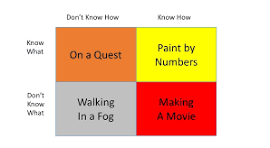
Our approach focuses on the behaviour you want to change. The frame asks what kind of behaviour is presenting? We use the framework that Professor Alex Bentley and I created back in I’ll Have What She’s Having, using the patterns that diffusion science has identified.
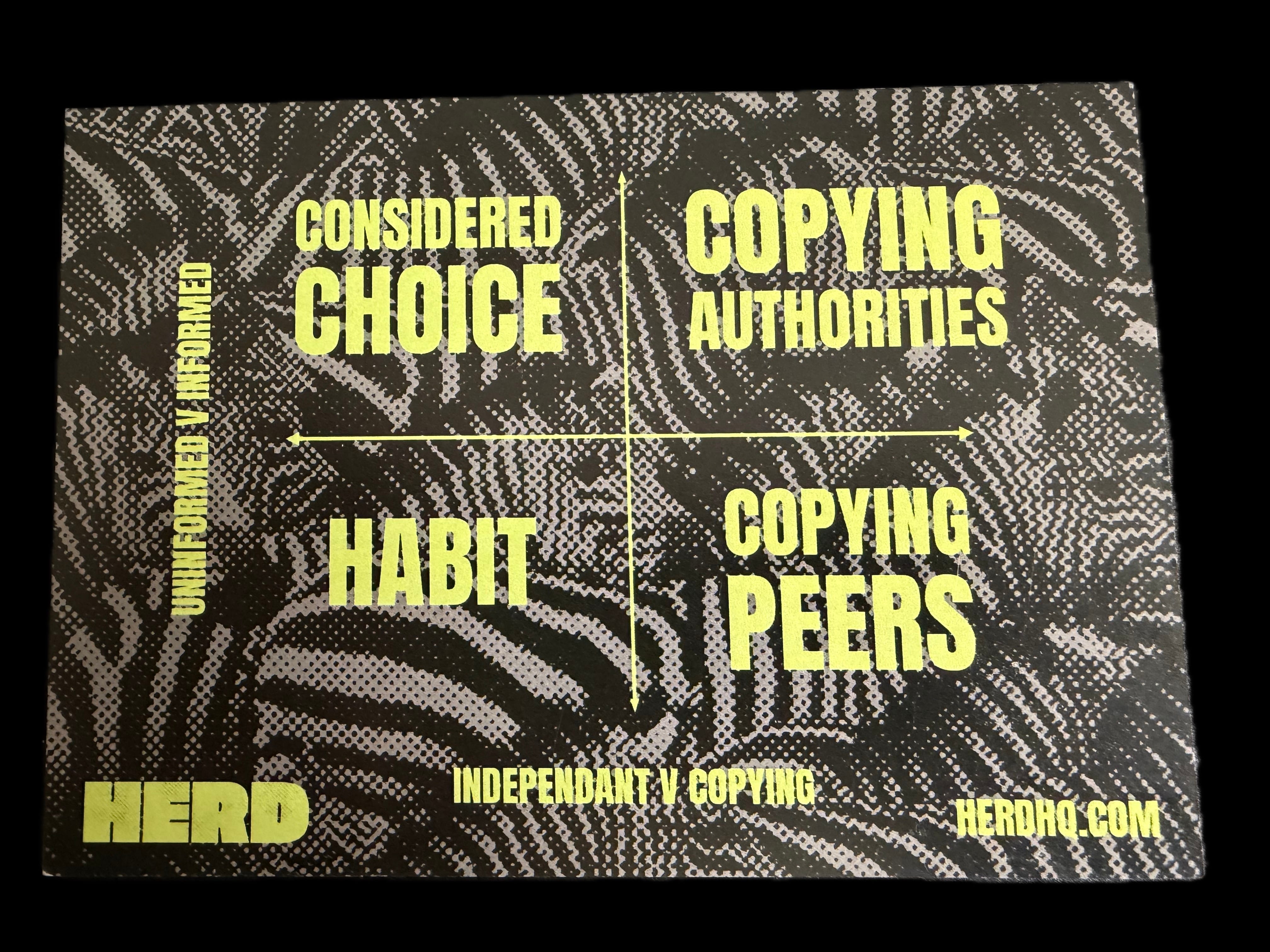
In our triage, we ask whether the targeted behaviour is independently or socially shaped? Is it made an informed way or much faster? In other words, is it a habit or is it something that is shaped by the decisions of experts or cultural identity? Is it something that is shaped by popular culture or is really a considered independent decision, based on better or best?
Note, we don’t fall for what I’ve come to think of the House Fallacy – that is, that every project or task is unique and requires a special kind of genius to solve it (very flattering to the Dr Houses of this world). Most of the problems we face, in marketing, behaviour or culture change are like problems that other people have faced before. Only by classifying them by the type of behaviour you are looking to change, can you hope to find reliable solutions (stand down, Dr House). And do so rapidly. Indeed, as the many, many workshops we have led in recent years show, once you know what kind of thing – what kind of behaviour – you’re trying to solve for, you can much more easily look for examples of how other people have solved this kind of thing. And Copy Copy Copy them. And prototype and learn which ones work. It’s rocket fuel for innovattion, to be honest.
But does that mean that triaging should take forever (those 6 months “Discovery” that consultants charge millions for?). No. It should be rapid. It should be something that you can do in minutes, hours or days. Not months and months and mot
That’s what we explored at the 100 top marketers on Thursday 19th’s Little Grey Cells 4th Anniversary event. If you want to know how to do so, too, ask someone who was there. Or, just get in touch on Linkedin
References
Bentley, R.A., Earls, M. and O’Brien, M.J. (2011), I’ll Have What She’s Having: Mapping Social Behavior, MIT Press.
Earls M (2014) Copy Copy Copy – how to do better marketing using other people’s ideas (illustrated by JV Willshire) J Wiley and Sons
Gourgiotis, S. (2017), “Baron Dominique-Jean Larrey: founder of military surgery and trauma care”, Hektoen International.
National Museum of Civil War Medicine, “The Development of Triage”.
Niderost, E., on Dominique Jean Larrey, Warfare History Network.
Obeng, E. (1995), All Change! The Project Leader’s Secret Handbook, Financial Times Prentice Hall.