Well. That escalated quickly.
What started with a flutter of red, white and blue on a municipal lamppost has turned into something bigger. Hotter. Stranger.
A St George’s cross on a pub window.
A keffiyeh wrapped like a scarf.
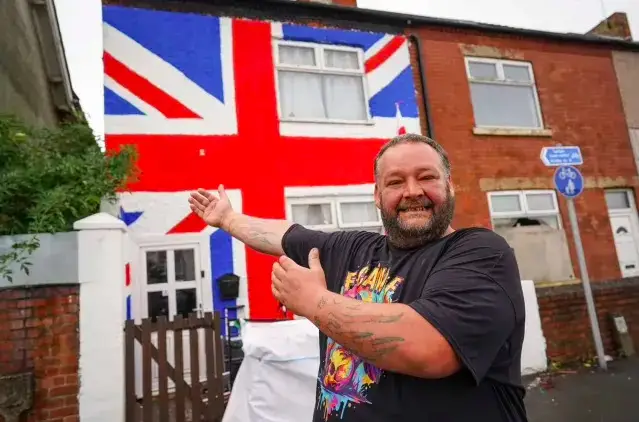
A Union flag waved in tribute or defiance or confusion.
And what we’ve seen, across 5 dispatches, is that flags don’t behave.
They don’t stay in their box or their protocol manual.
They bleed. They burn. They provoke. They perform.
They mean too much and never just one thing.
We tried to make sense of this through anthropology, semiotics, and the social science of ritual. Not to settle anything, but to loosen the grip of the usual takes.
To stop asking “Are you for or against the flag?”, and instead ask:
What kind of ritual is this? What type of signal are we sending and who’s receiving it?
We looked at flags as:
- Cultural memes (Part 1) – spreading the same way other stuff spreads, by copying
- Ritual containers (Part 2) – holding group identity in place, until they start to leak
- Speech acts (Part 3) – declarations open to interpretation, not control
- Costumes (Part 4) – worn identities, and boundary-marking through performance
- Symbols in conflict (Part 5) – signs that shout across divided crowds
Each time, the story shifted. Because the meaning of a flag isn’t fixed it’s socially negotiated. It’s contested. Performed. Re-performed. And sometimes rejected altogether.
If that sounds messy, it is.
But it also tells us something profound.
Not about flags.
About us.
About how we try to hold together or hold each other off.
About how our ritual behaviour lives, even when the script goes missing.
About how culture communicates sideways, performatively, under the radar of intention.
That’s why I keep banging on about flags.
Because they’re where we work it out. Or don’t.
And if you think the flag wars are over, look again.
They’re in the town hall. The football ground. The school gates. The council debate.
They’re on T-shirts and lampposts and balconies and memes.
And no surprise they’re heading straight into the Rituals series we’re kicking off next.
Because if you want to understand how humans behave, don’t ask what they say.
Watch what they repeat.
And what they wear.
And what they raise up on poles.
The flag isn’t just a symbol.
It’s a ritual in motion.
And the real performance is only just beginning.