HERDspotting in the changing room
There are times when two sets of beliefs about how the world works collide. When someone says something that seems to make eminent sense yet clashes entirely with your own worldview and conviction. It is always worth paying attention to this kind of thing and the way it makes you feel. And (if you can) try to express simply where and how you disagree. Not that these meetings ever need to be confrontational: indeed, that rarely helps anyone. Seeing the other side, their perspective, and what use an explanation of things that you disagree with might have really helps with how you express your objections, both to yourself and to others. Who wants a fight over rats and brain studies (outside the labs that conduct them)? Indeed, accepting that other world views are useful and valuable in certain contexts is one of the ways you can get people to listen to your alternative view; one of the ways that you can avoid our tribal instincts taking over.
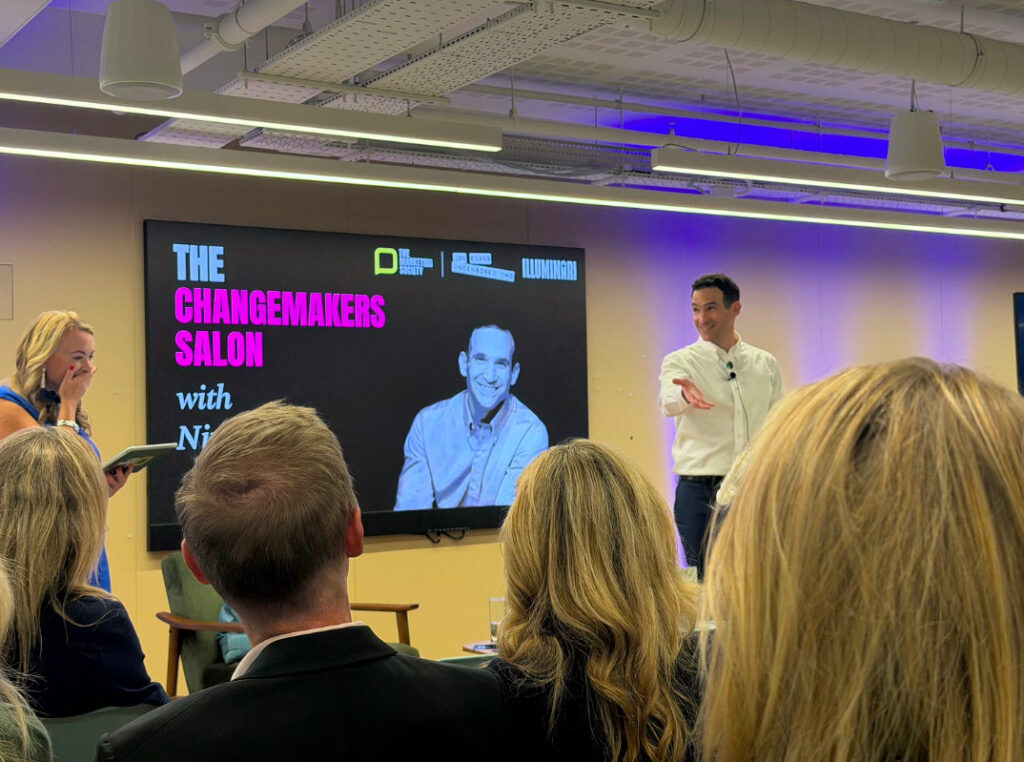
I had one of these moments a week or so ago. This year’s excellent series of Marketing Society Changemaker events continued with a discussion between the charming Nir Eyal, author of bestselling Hooked and the Society’s inspiring CEO, Sophie Devonshire. The conversation circled around the ideas in Eyal’s latest book, Beyond Belief. Notably, he suggests our beliefs shape what we notice (our attention), what we feel (especially anticipation and dread) and what we do (our behaviour). Belief, he suggests in a catchy phrase, is upstream of behaviour. So if you want to change the behaviour, change the belief.
Eyal (rather uncomfortably for me, at least) cites drowning rat studies from the 1950s (yep, that’s right, rats in water cylinders who are threatened with death by drowning) to support the idea that it is humanity\s limiting beliefs are what prevent us from achieving our goals in life, from becoming who we want to be, from winning (he didn’t say the last bit tbf). Putting aside the strange semiotic slap of the analogy, I can really see the appeal of following the example of those who “perform” so much better than their peers (10x or 20x, in modern parlance). Who wouldn’t want some of that, in business or the bedroom?
I think Eyal is correct in characterising beliefs as learned rather than fixed (e.g. by genetics) and thus, accordingly, mutable. Indeed, he suggests that this is the work each of us has to do if we want to unlock our potential: to identify and challenge these negative and self-limiting believes. It helps, he says, to think of beliefs as tools, not truths: spot the debilitating ones, swap them for more liberating ones and away you go.
It’s a great line of thinking for those interested in personal development, the great cultural marker of the hyper-individualist age: the optimisation of me. For those who live in the dark aisle of the bookstore. For those who live in an elite sporting performance metaphor bubble. For those who suffer from things like stage fright or are anxious about public speaking, as Eyal suggests. For those who don’t fundamentally believe they are worthy of love or respect or accolades. And marketing people, like so many of us in the modern world, love this stuff. Let me get this clear, we say: all I need to do, to get the sweetie, is to flick a switch in my head; to pick another circuit, another tool, and use that instead. Bingo!
As you would expect, I have a rather different take on the argument put forward here on how to make change. First, belief is not “upstream of behavio(u)r”. Our beliefs constantly change to reflect our behaviour: behaviour, especially socially-transmitted, collective or ritual behaviour, is the precondition not the product of belief. Belief is the prize (or at least, the byproduct) not the incentive. Second, belief is (unsurprisingly, for the super-social animal other human sciences insist we are) social, too. What we believe is largely what the people around us believe. Tools, maybe, but not from individual sheds. We borrow these ideas from the people we spend our time with and with whom we identify. Indeed, beliefs often become the price of entry for what we really want: group membership and belonging.
To put the first point in context: over the last couple of months, I’ve been looking here at different forms of ritual behaviour in our culture. How ritual makes it easier to live together in huge numbers (You Say Hello I Say Goodbye ), to bind ourselves together (Everybody Dance Now) and to take us through uncertain times and places together (In Between Days). Yet a number of folk I’ve interacted with around these examples still hold strong to the idea that all of this ritual stuff depends on participants and audience believing before they start. That these are all, in their different forms and composition, essentially rituals of the faithful.
Our own experience tells us that this isn’t true. Morris dancers don’t have to believe in the primitive pagan theology behind the ritual jangly prance outside the country pub and nor do the onlookers. Travellers on the 390 bus don’t need to believe in some higher purpose in order to develop the habit of greeting the driver. Fishing fanatics don’t tend to start with a passion for fishing: they go along, normally with a relative, and soon enough they find themselves part of the gang. We just do stuff, together, and then, only afterwards, might we reflect on what we think and believe. And bring our opinions and attitudes into line with our behaviour (as Leon Festinger demonstrated in the 1950s).
The father of modern sociology, Émile Durkheim, observed more than a century ago that the magic of religious rituals does not require actual belief to flourish. Two millennia before Durkheim, the Confucian philosopher Xunzi spotted the same thing as he considered how Chinese farmers enacted rituals to bring the rain their rice paddies needed. Put bluntly, the new behaviour, done in the company of others, is what shapes the way you think and feel and see the world. Not the other way round.
Marketers, of all people, should know this. The central finding of the work of the late Andrew Ehrenberg and his colleagues (and key to the findings observed in How Brands Grow) is that brand attitudes and opinions follow behaviour change rather than precede it. As far back as 1966, he showed that behaviour changes first in marketing; attitudes and beliefs catch up after the fact. Particularly if the behaviour is done in front of or in the company of others, we would add.
The literature on religious conversion tells the same story. The fears that the close relatives and loved ones of those recruited into cults and other religious groups focus on brainwashing (a bad actor using tricks and manipulation to recruit the convert) or, as the missionaries might have it, the power of the doctrine and the compelling way that it is argued. In fact, it’s really clear that social factors matter more: in early work on the rise of the Unification Church (the Moonies), Lofland and Stark showed that what really counts is forming an affective bond with a group member, weakening ties outside the religious group (so that it becomes the de facto emotional home of the newcomer), and intensive, repeated interaction, in daily life alongside members and in their rituals. Converts tend to join before they believe.
Later, in studies of Mormon missionaries, Stark and Bainbridge went on to emphasise the power of the social in shaping belief. They showed that missionaries cold calling on doorsteps produces a strike rate of less than one in a thousand. By contrast, when first contact happens in the company of a friend or family member, in their home, say, the equivalent number is one in two. Same church, same doctrine, same missionaries. The network wins. It’s “we” again.
Which bridges us to my second objection: belief is social, not individual. We learn from other people, with other people, from other people. This is, after all, how belief, like everything else, spreads: not through analysis, reflection and careful consideration but through connection and belonging. (Frank Bass, the other great mind behind the work of the team that gave us How Brands Grow, would insist that most things spread through social means, through what we now call social learning.)
This is also why our beliefs cluster together. In the US, if you think any sort of gun control is to be resisted strongly, you are unlikely to be an advocate for women’s sexual health. Not because the two positions are logically connected (freedom vs no freedom) but because these are totemic beliefs, tickets to ride for a particular social group. Philip Converse spotted this sixty years ago: ordinary people’s beliefs don’t hang together by logic; they hang together because that’s the package the group holds, learned by repeated interaction with other group members, both in the banality of everyday life and the excitement of ritual, with and through others.
Which all leads me to think that asking “what do I believe and how do I change it so I can change my behaviour?” is a slightly odd place to start if you want to actually change that behaviour. Isn’t it?
Yes, the question makes sense. It fits with the assumptions we have inherited from our culture (e.g that beliefs are individually held and remain “upstream of behaviour”). But is it the most useful way to think about belief? If you really want to change it….?
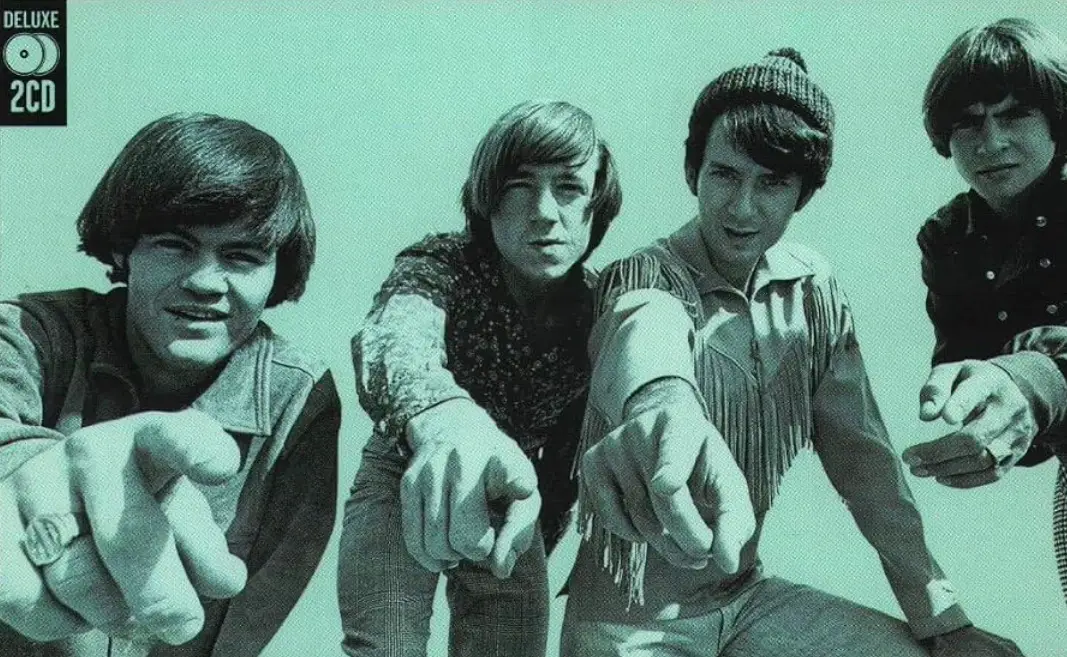
As Mickey Dolenz sings in the Monkees biggest and perkiest hit, I’m A Believer. “then I saw her face, now I’m a believer….”. Do/experience then believe, not the other way round.
HERDspotting
Watch: The closing scene of Shrek (2001), where the whole cast dances to Smash Mouth’s cover of I’m a Believer. Notice that nobody is asked to sign up to anything first. They join in, and the belonging follows.
Listen: At the next wedding, funeral or football match, listen for “I’m not really religious (or superstitious), but…”. The “but” is the tell: people are already doing the rite and explaining it away afterwards.
Reflect: Think of something your team or organisation “believes”. Did you arrive at it through consideration and reflection, as individuals and then as a team or did you pick it up by turning up and doing what everyone else did?
References
Bass, F. M. (1969). A new product growth model for consumer durables. Management Science, 15(5), 215-227.
Bird, M. and Ehrenberg, A. S. C. (1966). Intentions-to-buy and claimed brand usage. Operational Research Quarterly, 17(1), 27-46.
Converse, P. E. (1964). The nature of belief systems in mass publics. In D. Apter (ed.), Ideology and Discontent. New York: Free Press.
Durkheim, E. (1912). Les formes élémentaires de la vie religieuse (The Elementary Forms of Religious Life).
Eyal, N. with Li, J. (2026). Beyond Belief. New York: Portfolio.
Eyal, N. (2014). Hooked: How to Build Habit-Forming Products. New York: Portfolio.
Festinger, L. (1957). A Theory of Cognitive Dissonance. Stanford University Press. See also Festinger, L. and Carlsmith, J. M. (1959). Cognitive consequences of forced compliance. Journal of Abnormal and Social Psychology, 58(2), 203-210.
Lofland, J. and Stark, R. (1965). Becoming a world-saver: a theory of conversion to a deviant perspective. American Sociological Review, 30(6), 862-875.
Sharp, B. (2010). How Brands Grow. Oxford University Press.
Stark, R. and Bainbridge, W. S. (1980). Networks of faith: interpersonal bonds and recruitment to cults and sects. American Journal of Sociology, 85(6), 1376-1395.