Stopping is not the same as recovering, and the gap between them is where good leadership come undone.
Most of us are not planning to recover this summer. We are planning to collapse, and call it recovery.
You push through the first half of the year taking pressure from every direction, and the plan, if it even counts as one, is to limp to the finish, switch off for a fortnight and hope the tank refills itself. It rarely does, because stopping is not the same as recovering. I know, because I have caught myself doing exactly the same after the eighteen months I have just had, telling myself the break would sort it out.
It is a pattern I saw again and again when I interviewed 25 senior leaders for my book, The HOW of High Performance. Recovery emerged as one of the strongest indicators of sustained high performance, yet it was mentioned less than almost every other trait. That has stayed with me ever since because it is exactly what I still see across the table week after week. We know the value of recovery and we protect it fiercely for everyone on our team. Yet when it comes to our own recovery as senior leaders, it is the first thing we let slide. Often without even noticing.
Think about an elite athlete. Recovery is not something they fit in once the real work is done, it is baked into the routine as a fundamental part of how they perform and win. The hardest thing for a senior leader is baking the same thing in for yourself.
Think about an elite athlete. Recovery is not something they fit in once the real work is done, it is baked into the routine as a fundamental part of how they perform and win. The hardest thing for a senior leader is baking the same thing in for yourself.
As senior leaders, we often feel our own needs matter less than the needs of everyone under our watch, so the thing we would protect without question for someone else is the first thing we drop for ourselves.
It is easy to read about it, easy to agree with it, easy to understand recovery intellectually.
Where it gets stuck is whether you will give yourself the same permission you hand out so freely to everyone else?
So, with the summer almost here, let me say it plainly.
Sacrifice your own recovery now and you will pay for it later in more stress, less enjoyment and less effectiveness, walking (or crawling!) back into September depleted rather than primed.
This is not me being dramatic, it is simply what happens when rest is the thing you keep meaning to get to but never quite achieve.
So here is the HOW of building effective recovery into your high performance, rather than hoping it happens:
1) Start with permission, because if part of you still believes recovery is selfish or something to earn once everything else is done, no technique will ever get past that belief.
2) Get clear on what genuinely restores you, which is rarely what restores the person next to you. One leader recovers in solitude, another needs a completely different kind of stimulation. For me it is Reformer Pilates rather than a hard demanding HIIT gym session (I could not think of anything worse, though I have friends who need exactly this!), a walk with my dog, an hour of gloriously rubbish television that my old Sociology teacher always called ‘chewing gum for the brain’, and sitting watching my pond, which still makes me ridiculously happy.
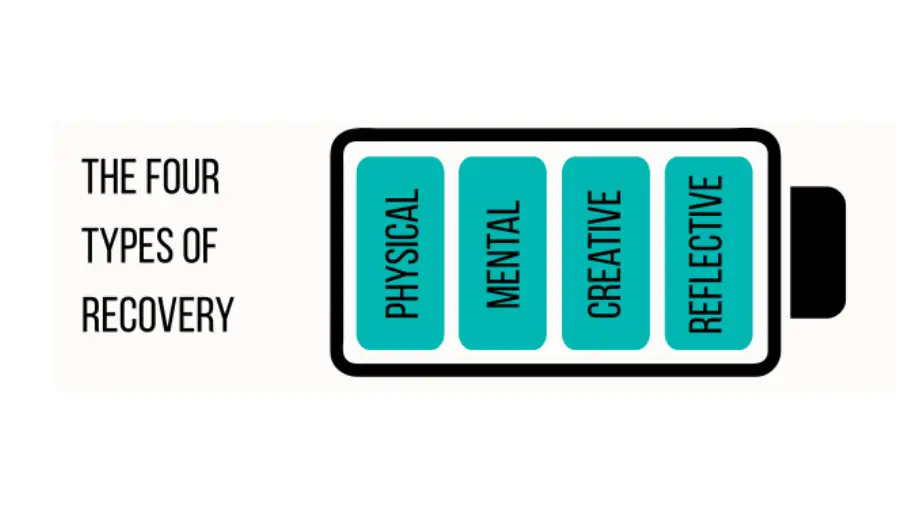
Yours will look completely different to mine. In my book I break recovery into four types, physical, mental, creative and reflective, and most of us lean on one or two and forget the rest.
3) Build it into your rhythm, not just your holiday, because recovery you only reach for once a year is repair, and by then the cost has already been paid.
4) Measure how your recovery is going and give yourself permission to adjust it, the way you would with anything that truly matters to you.
5) Then underpin all of it with kindness to yourself, because commitment on its own just becomes another item you are failing to tick off, whereas commitment combined with kindness, now that is powerful.
One thing I have learned after twenty six years of working with high performers is that poor recovery is never the sole issue, it is a symptom.
Underneath it usually sits something much bigger – how a leader is operating, what they’ve normalised, and the assumptions they’ve never had the chance, or the right structure and support, to question.
That is why recovery is so often where my leadership mentoring starts and almost never where it finishes.