Our resident columnist Mark Earls explores the rapid rise-and-rise of Brooklyn rockers, Geese: how talent and luck inevitably had their part to play and also how people follow other people – never more so than with musical choices.
One of the perpetual talking points in modern consumer culture is why something — a band, a song, a politician, a meme — becomes popular and other, seemingly similar things don’t. Back before everyone carried the internet in their pocket, TV chat show supremo David Letterman used to play a game with his audience: is this a thing, he’d ask, holding up some weird gadget or fashion — or is it not a thing? Is it real, or just a fad that will vanish like the hula hoop and the whale-tail tattoo (or that’s stuck around in a different way!). It’s easy to explain success once it’s happened. That’s literally post-rationalisation. It’s much harder to call it in advance.
The other evening I was at dinner with my nephew, J, who spends his working life trying to answer exactly this question. He’s been in the music business for most of his adult years, and he’s intimately familiar both with the industry’s obsession with finding the next big thing, predicting a hit and with how reliably it gets the answers wrong. Interestingly, what he told me might as have been written by what my colleagues in anthropology and network science have been finding for years.
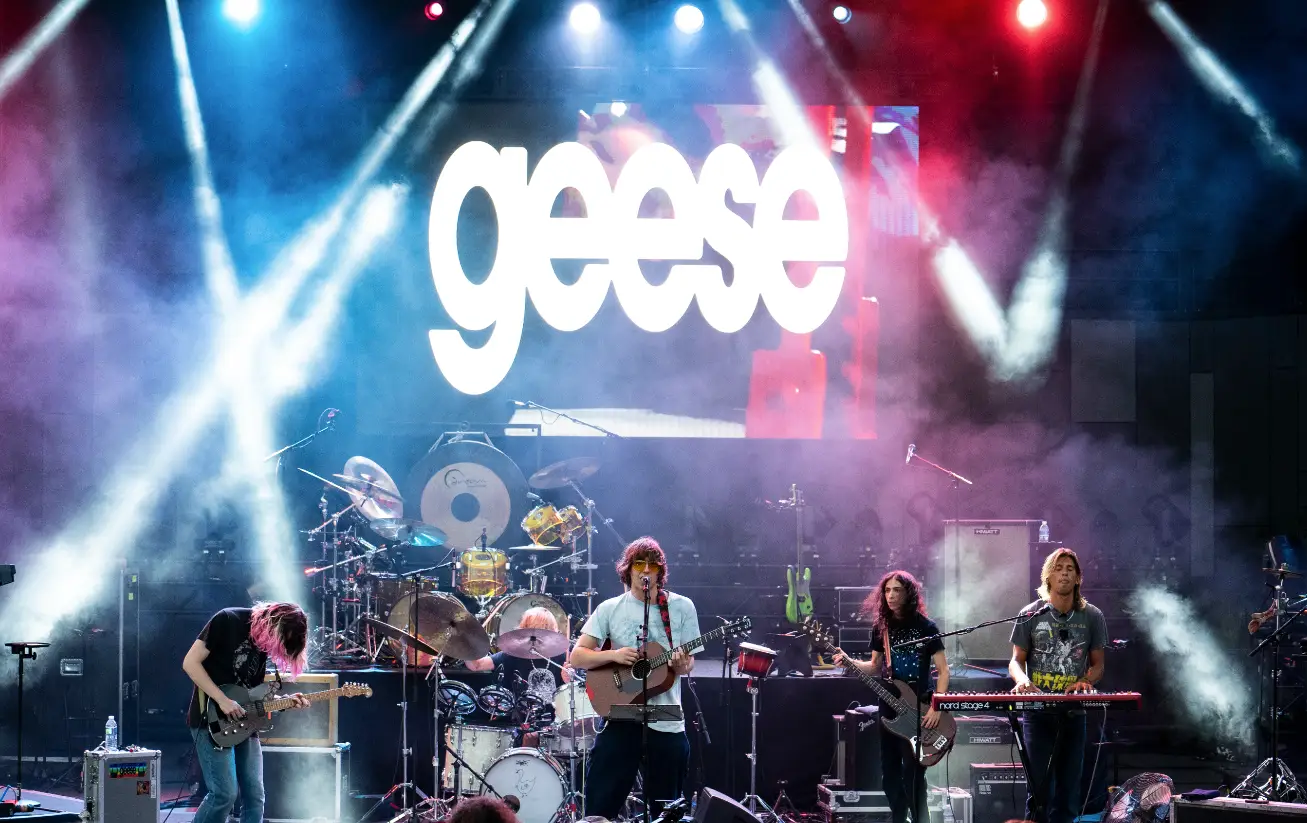
We asked him to explain Geese — the indie guitar band of the last twelve months. Why did they go from also-rans, another Brooklyn basement band, to golden boys of the festival circuit in a matter of months? How did they get from three respectable but not remotely world-changing albums to being the name, the band, the sound everyone else gets measured against?
J gives three reasons. First, they’re good enough. The sound isn’t especially novel — and that familiarity is the point: there’s no barrier to entry for the many ears who already like guitar-based indie music. Put bluntly: “good enough” is good enough for most people, most of the time.
Second, as Wired reported in April, Geese benefited from an outstanding digital marketing campaign run by Chaotic Good Projects, a boutique agency whose other clients include Alex Warren, Sombr and Zara Larsson, alongside established names like Justin Bieber, Dua Lipa and Coldplay. Chaotic Good’s method — confirmed by its own founders — is to build networks of social media accounts that seed clips, comments and “organic-looking” content until an artist is pulled into the recommendation algorithm. This didn’t just create a false sense of popularity for potential fans — a trick that generations of bands have pulled — it did so in a way that hijacked the algorithm itself. It’s a new-tech version of what we used to call “astroturfing”: manufacturing the impression of grassroots popularity.
Third, they got lucky. Luck is something musicians young and old despise and secretly hope for in equal measure — the big break, the A&R exec who happens to wander into a sweaty club, the tour slot that opens up when another band drops out. In Geese’s case, J observes, the luck was timing: at the turn of 24/25, there was a widespread appetite for exactly this kind of band — swaggering, surly, boysy. There are always hundreds of acts capable of filling that gap (the same technology that was supposed to democratise expertise in medicine, has done the same thing for musicians, enabling them to record and distribute their wares easily). Geese happened to be standing in the gap when it opened. And, as noted above, they had a great team helping them be lucky.
Musicians, old and young, have always hated the idea that success has less to do with talent or hard work than with popularity and chance. (Marcus John Henry Brown, of the presentation studio Speakery (speakery.de), has a mantra for the alternative view: the work, the work, the work). Surely, we want to believe, it must come down to the music and the musicians. But then “musos” would say that, wouldn’t they?
Looking backwards from the top of the pile, from the position of success, we like to believe — wrongly — that we can trace some inherent superiority behind the winners. Superior talent, superior song-writing, superior production etc. Surely, it must be possible to rationalise the success in “thing” terms. Harry Styles is undeniably a great pop star, we tell ourselves. If you’re a Geese fan, you’re probably objecting right now: they do make great music, their live shows are genuinely excellent. “Awesome,” even. And that last album deserved its popularity. “Deserved” is the big tell here.
Sadly, this trio of factors — good enough, perceived popularity, and chance — remains central to success across most “culture markets,” whatever we’d prefer to be true. And in many other contexts, too. The statistical patterns identified by Frank Bass (half the intellectual inheritance behind the Ehrenberg-Bass Institute) show that most things spread not through individual, independent choice but through people copying the choices of those around them (which is also why we’re so fixated on “early adopters” and tipping points, but that’s for another day).
What’s different now is that the perception of popularity has been given an algorithmic engine. Chaotic Good rebuilt that old astroturfing model for the TikTok era — and, once it caught, its founders told the trade press exactly how they did it.
HERDspotting tips
Watch for the post-rationalisation of success — the story that reaches back into the product itself, the songs, the talent, the work-ethic. It’s plausible. It’s rarely the real explanation.
Listen for the language of inevitability creeping into how people describe a hit after the fact — “of course they were going to break through.” That certainty is manufactured in hindsight; nobody was saying it with confidence beforehand.
Reflect on your own campaigns and ideas. However good the work, its success will owe less to you and to the thing itself, and more to popularity and chance, than you’d like to admit. How can you help yourself be lucky? Or luckier?
References
Bass, F. M. (1969). A new product growth for model consumer durables. Management Science, 15(5), 215–227.
Bentley, A., Earls, M., & O’Brien, M. J. (2011). I’ll Have What She’s Having: Mapping Social Behavior. MIT Press.
Brown, M. J. H. Speakery. https://speakery.de/
Semley, J. (2026, April 14). The Fanfare Around the Band Geese Actually Was a Psyop. Wired. (Building on: McLamb, E. (2026, April 2). Fake Fans. words from eliza. https://www.wordsfromeliza.com/p/fake-fans)
To further address your strategic needs: contact Mark Earls: [email protected]