The growth marketer tells Tim Healey why brands need to move beyond solving pain points, how 7am commuter ridealongs challenged his customer assumptions and why marketing investment must connect to numbers CFOs recognize.
You spent eight years at Groupon, then Urban, H&H group, Soly, and now you’re at YourParkingSpace. Tell us about your journey.
I have always thought of myself as a builder who uses marketing as the primary growth lever. Every role I have taken, I have treated as a commercial problem first and a marketing problem second. That framing has shaped my career.
Groupon was my foundation. I joined when their shopping business was doing around £10m in revenue and left when it was approaching £1 billion. It gave me an unusually direct relationship between marketing decisions and financial outcomes. You sent an email, you saw the number the next day. That commercial discipline never left me.
After Groupon I deliberately chose smaller, newly funded scale ups Urban, H&H Group, Soly. All high growth, all requiring you to make decisions with incomplete information and learn quickly. At Soly I was employee number two in the UK. We reached £15m+ in our first year and I built the team to 30 people. Running something close to a P&L rather than a marketing budget was a valuable period of my career.
The opportunity at Your Parking Space is exciting. Parking is a category that touches every driver in the country and is on the verge of fundamental change. EV, AV, and shifting urban mobility patterns are rewriting the rules. YourParkingSpace has the network, the data capabilities, and the tech to lead that transition. That is the opportunity I joined to help build.
What is the offer at Your Parking Space?
15 million drivers use YourParkingSpace, with a 4.5 Trustpilot rating from over 105,000 reviews. For drivers we solve three things: coverage, so wherever you need to park we are most likely to have something nearby; certainty, reserve before you leave, cancel up to arrival for a full refund; and ease, one app, drive in, drive out, no kiosk, no permit, no barrier card. UK drivers lose 44 hours a year to parking searches. We give that back.
The other problem we solve is for landlords. Hotels, supermarkets, shopping centers, airports, commercial car parks all have a parking asset that is significantly underperforming its potential. We connect them to 15.8 million drivers, give them dynamic pricing intelligence, and handle the operational complexity. A hospitality client saw back-to-back annual growth of over 20% in their parking revenue across their sites. That is a fundamentally different outcome from an asset they already owned.
Both sides of that marketplace are growing. That is what makes this a genuinely exciting business to build a brand around.
What’s coming up for Your Parking Space over the next year?
One in four new cars sold is an electric vehicle (EV). Car parking is not prepared for this. We’re uniquely positioned to be super useful to both drivers and to landlords, and therefore make lives easier, make cities more livable. Our new initiative launching this year addresses this, helping EV drivers to navigate, find and pay for EV charging and EV suitable parking spaces.
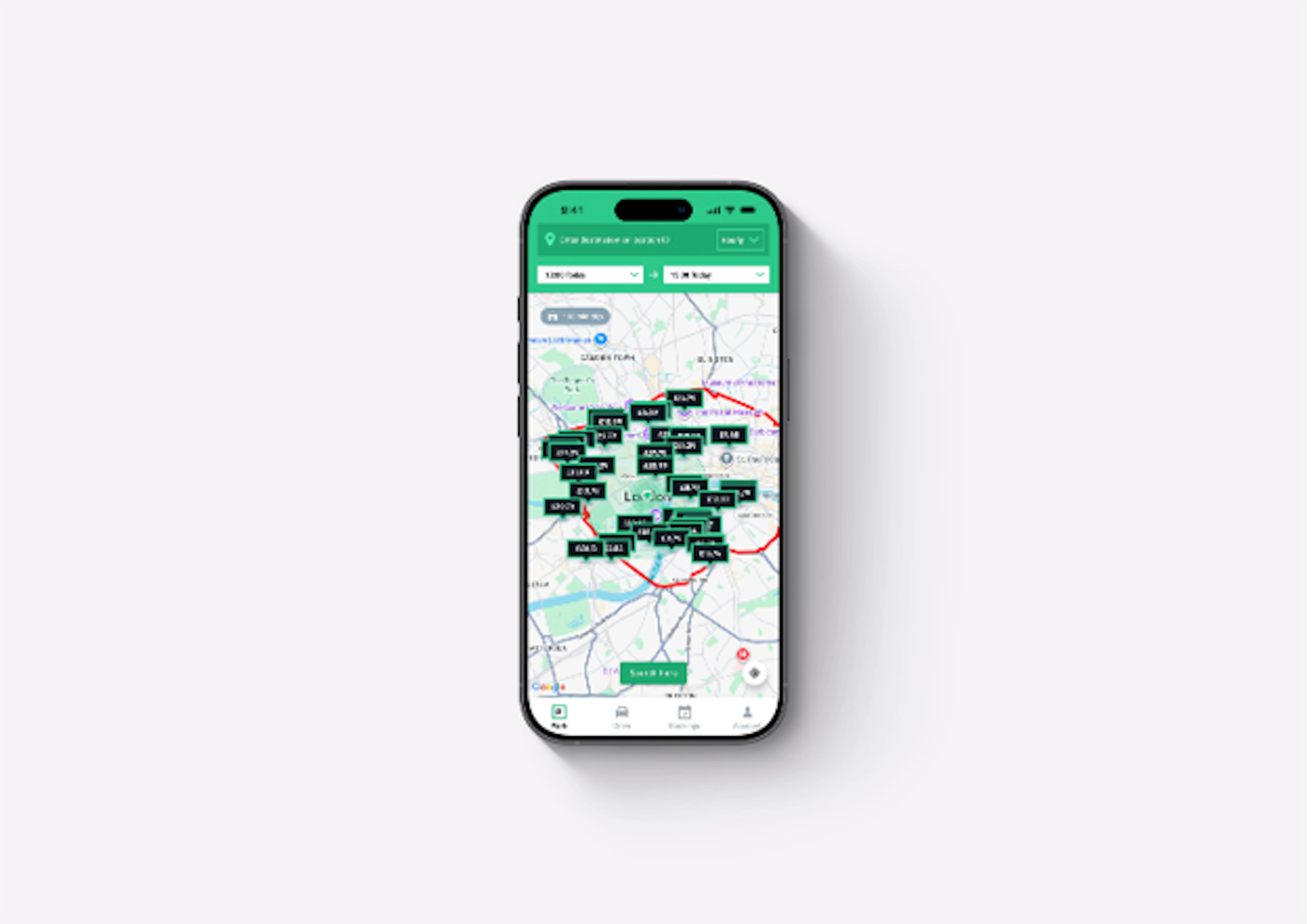
We have just launched our fleet product. We’ve enabled our app to be ready for vehicle fleets. So if you have five, 50 or 5000 vehicles, you can now plug into our ecosystem so that all your drivers can park. As a business we then provide you with a single unified invoice. We believe this will help reduce fines and increase employee satisfaction.
You have worked across a number of different sectors in different commercial contexts. Is there a growth playbook that travels across categories? Or do you have to start from scratch and dismantle your assumptions each time?
There is a playbook. The core principle is simple: only work on the things that actually move the business.
That sounds obvious. In practice it requires constant discipline. Every organization I have joined, the first job is ruthless prioritization. Understanding the market well enough to know where you can genuinely win and being deliberate about where you choose not to compete. You have to be willing to deprioritize things that feel important. That is the hard part.
Once you know where to focus, you build the team directly around those outcomes. Every key result has a named owner. Every week you review whether the needle moved. Not activity, not output – whether the business actually changed.
The feedback loop is everything. We review key results weekly because the only way to compound growth is to get more right than wrong over time and to do that quickly. We are still in a phase at Your Parking Space where we are failing regularly because we are being bold. The failure rate is shrinking each quarter. That is what progress looks like.
How is your marketing team organized and set up?
We are organized around audiences and a key result. Every person on my team has a clear owner relationship with either drivers or landlords, and they are accountable for the full commercial outcome for that audience, not just a channel metric.
That gives us four growth areas. Driver acquisition, driver retention, landlord acquisition, and landlord retention. Each has a dedicated head who operates across every channel relevant to their audience rather than sitting inside a single discipline. That cross-functional ownership is what removes the handoff problems that slow most marketing teams down.
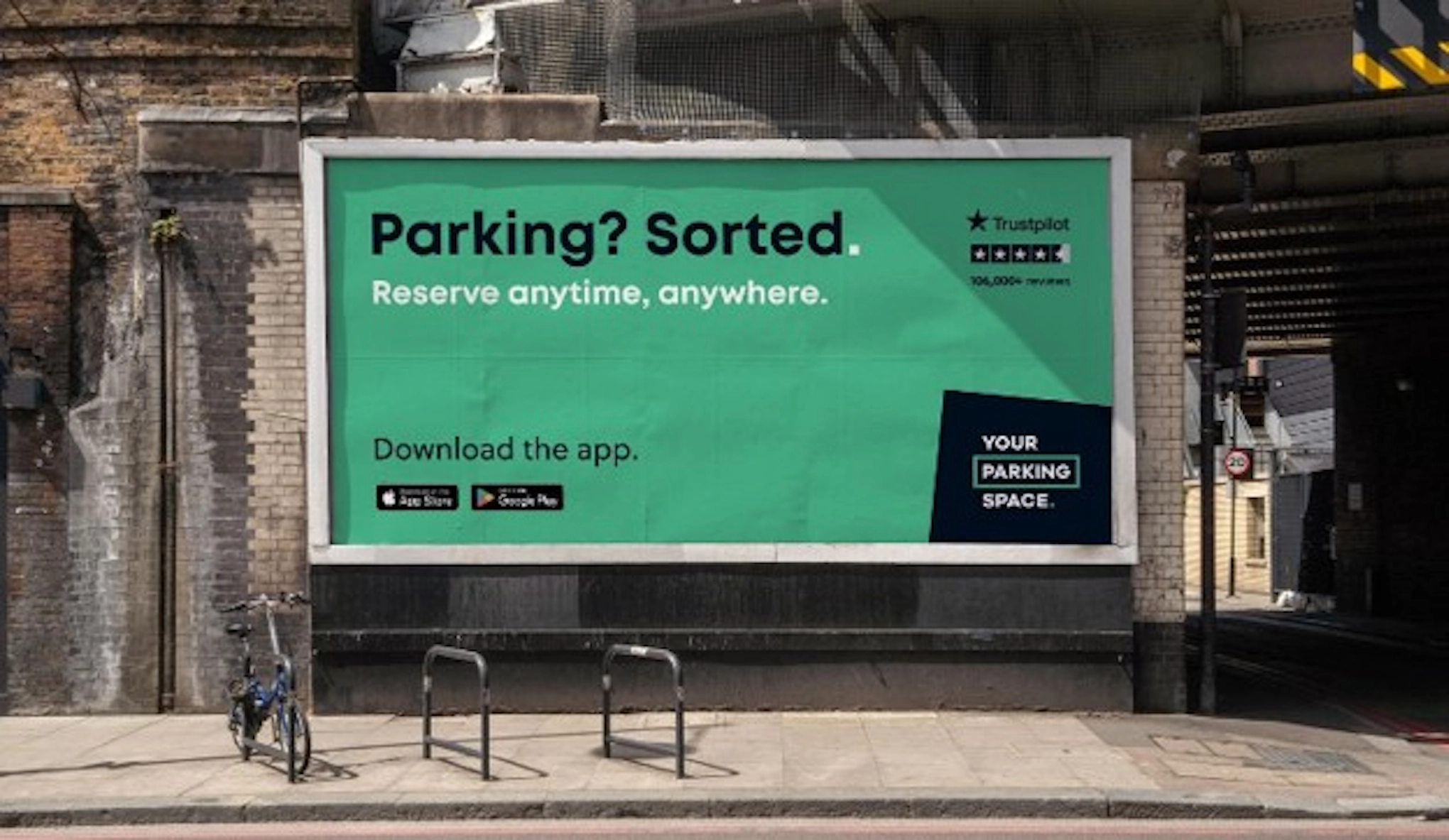
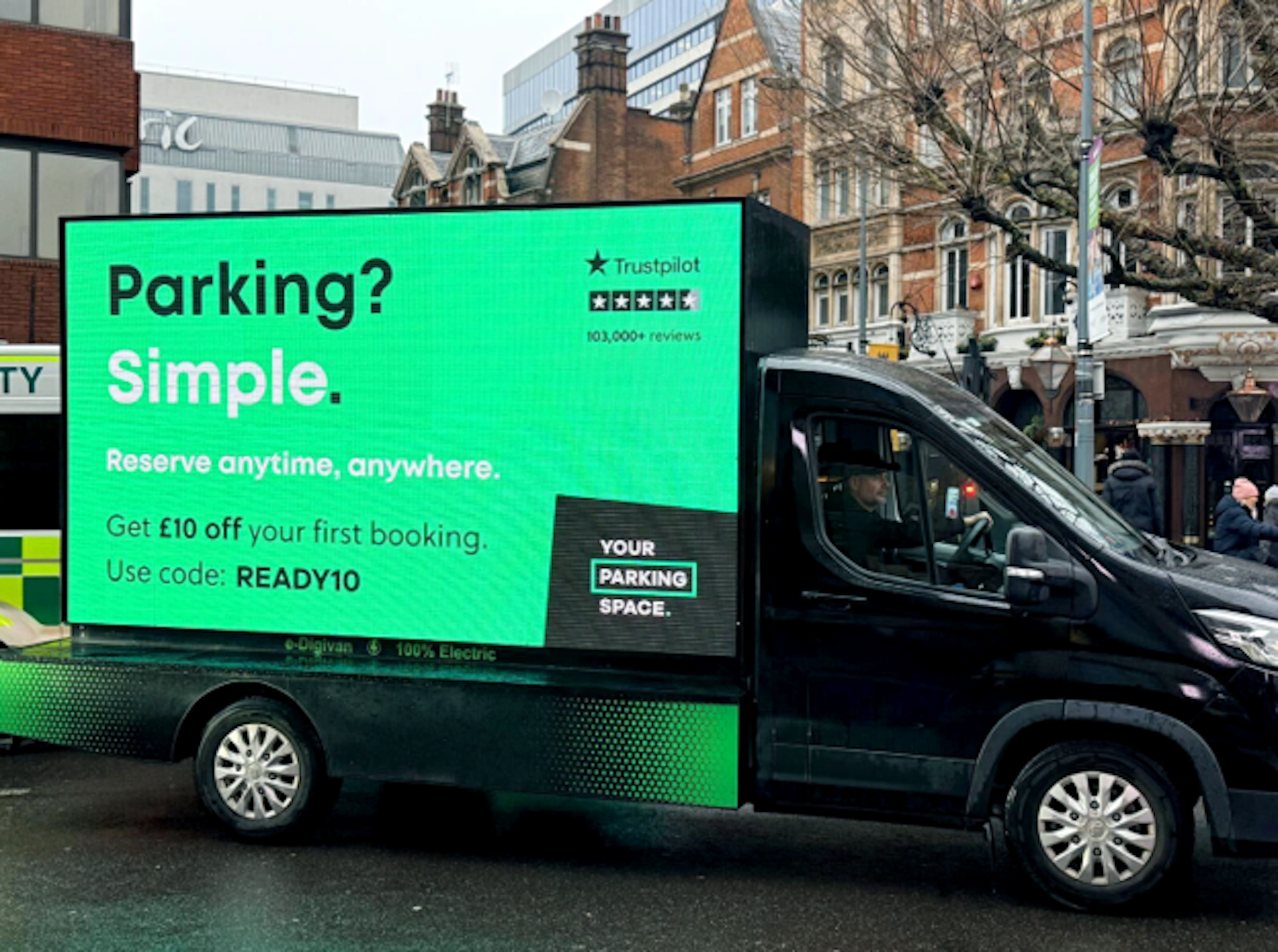
Within that we have three distinct jobs to do. Brand and search:we need to be present when someone is actively looking for parking, whether that is on Google, Apple Maps, or any other directory. Partnership and demand: we need to be present earlier in the journey, when someone is planning something that will eventually require parking. Buying a train ticket, booking an event, planning a commute. And growth marketing, which we run regionally: identifying the highest density user locations, mapping commuter routes, and placing ourselves at the right moments in the journey through radio, out of home, and door drops.
What’s the creative or strategic challenge developing a brand around something that some might argue consumers only think about when they’re frustrated?
Want to go deeper? Ask The Drum
- How can emotional utility increase long-term customer loyalty?
- Can celebrity partnerships effectively build long-term brand trust?
- How can I align marketing objectives with broader business goals?
- How can data-driven strategies improve business appointment bookings?
- What are effective strategies to boost e-commerce sales in competitive markets?
The category default is to position parking as a painkiller. Remove the frustration, fix the problem, job done. Every competitor does some version of that.
We are deliberately moving away from it. Painkiller positioning anchors your brand to a negative emotion. You are forever associated with the thing people don’t like rather than the outcome they want.
The more interesting opportunity is gain creator. The commuter who arrives calm. The family that actually enjoys the day out. The driver who gets to the event on time. Parking is not the point. What parking enables is the point.
What is your first memory of a marketing success that you were part of where you felt: ‘This is the role for me’?
When I joined H&H, we launched a CBD brand with a variety of different use-cases. It was the first time that I felt I was properly integrated into how the customer felt about their problem that they were facing and about how they felt about how our product answered that problem.
We set up a mechanism for constant customer feedback in terms of how we can develop the product. It included what products we developed, how we went to market, where we advertised. If you can find people that have a problem and who actively want a solution and they haven’t found it yet then you can build it for them.
When you do those two things, marketing is straightforward. Things become more tricky as you scale and you now need to market to people that fall outside your group of top users. For them the issue is not as serious and as a result marketing may appear disconnected.

How do you surf the tsunami of rapidly evolving marketing technology?
Most marketing teams are using AI to do the same things faster. That is not the opportunity.
The teams that will win are the ones that use AI to do things they could not do before, and that requires a change in mindset. My job is not to hand my team an AI tool and ask them to optimize their existing workflow. My job is to change what the workflow is.
In practice that means we have built tools rather than just using off-the-shelf products. We built a custom competitor tracking tool that monitors pricing, availability, search rankings, and ad messaging across our competitive set simultaneously, and surfaces the signals that matter to pricing and brand decisions.
The broader shift I believe is coming is a collapse of the boundary between marketing, product, and engineering. AI is the common language. The marketers who learn to speak it fluently will end up with more leverage than any generation before them.
What myth about marketing would you most like to bust?
The myth that I would like to bust is that marketing is a cost center. I look at product as a function: identifying the opportunity, building it, and then knowing good or bad if it has affected the business. I try to make my marketing team the same. We look at data, ensure there is a value case, and experiment. After each experiment we evaluate whether the business has changed. The worst experiments are when nothing happens. I’d rather see a positive number or a negative number.
Marketing adds a huge amount of value to a business. Sometimes the challenge is being able to articulate this clearly – being able to show the clear benefit of your actions.
If you could go back in time, what advice would you tell your younger self?
Learn how finance thinks. I wish someone had told me this on the first day of my working life.
Early in my career I had good ideas that never got the backing they deserved. Not because they were wrong but because I was speaking the wrong language. I would walk into leadership meetings and talk about channel performance, audience growth, engagement metrics and the room would nod politely, approve a small budget and move on. The really important changes, the ones that needed cross functional buy in and real resource, never happened. The shift came when I stopped presenting marketing problems and started presenting business problems, opex, EBITDA and revenue. The moment I learned to frame a marketing decision in those terms, everything changed. I started getting real buy-in. Cross-functional teams started moving with me instead of around me.
The engineer sitting in my marketing team right now is the clearest example of what that shift unlocks. I could put a CVR problem and a revenue number in front of a CEO and make it obvious this was our bottleneck. Younger me would have dressed that up in channel metrics and lost the room before I got to the point.
Tell us about a challenge you’re facing right now, and your advice for other marketers that might be facing that challenge?
The challenge I am facing right now is knowing whether our brand investment is working and how much is the right amount. The feedback loop is slow and the pressure to prove return is immediate. At the heart of it is a balance every marketing leader must figure out: how much to spend on customers who are in the market right now, and how much to invest in customers who will be in the market in six to 12 months.
Brand tracking is one of the hardest things to get right. National surveys move awareness two points and nobody can tell you what that change was actually worth to the business. We track one thing: do the specific people we are targeting know us and are we the first name in their head when they need to reserve parking. Not the whole country, not a broad demographic, but the exact person we identified after six months of research, including getting into their cars at 7am and riding their commute with them.
What those ridealongs taught us was that our assumptions about where our customers were paying attention were wrong. You cannot build a brand around a person you have only met in a spreadsheet. Meeting them in real life changed our strategic focus. Once we knew who our super users were we could build a genuinely precise picture. We know which neighborhoods they live in, the routes they take into work, and which media they consume at which point in their journey. Working with a data partner we layered on which channels actually persuade people like them to try a new brand.
The advice I would give any marketer is to get ruthlessly specific about who you are trying to reach before investing significantly in brand. Awareness among the right segment compounds into revenue in a way that broad reach never does. And if you cannot draw a straight line from your brand metric to a number your CFO recognizes, go back and find the key result it connects to before you run another campaign.
What question would you like me to ask the next senior marketer that I interview?
What advice would you give to a school or university leaver who wants to go into marketing – especially in the era of AI adoption?
Your question from the last senior level marketer that I interviewed is this: when was the last time that you spent more than an hour or two with your target market, interacting in the environment that they exist in, hoping to grab their attention?
We just undertook a project identifying who our ‘super-users’ are. It is a combination of quantitative data and doing interviews with them. Over six months, we interviewed 100 customers. Then we selected four of them to do morning ‘ridealongs’ and join them on their commuter journey. If customers love a product, they want to help you, they want to talk. They want to feel part of the community.
We wanted to know everything: where are you making your coffee? What are you listening to when you get into your car? Are you listening to the radio? Are you listening to your phone radio? Are you listening to your smartphone podcast? Where’s your attention when you’re driving? Where are they travelling to and from? They might be in Chelmsford and be driving into Canary Wharf. Which roads do they take? What signs do they see?
We learned so much from this exercise and now we are experimenting with ways to be present in our customers’ lives – on signage and radio we got a ton of stuff wrong, but we also got a ton of stuff right. We’re running more experiments in May.
If there’s one thing you know about marketing, it is?
Brand is the most important thing that you can work on as a marketing leader. Having a strong brand unlocks your entire funnel. It makes everything that you do easier.
This interview is brought to you in partnership with Worth Your While – an independent creative agency based in Copenhagen, working globally. Named one of The Drum’s Indie Agency Top 100, WYW exists on the belief that time is humanity’s most valuable resource, and that the only ideas worth making are ones that earn it. You might die tomorrow. Make today worth your while. https://wyw.agency/
Tim Healey listens, learns, and synthesizes real-world best practices from hundreds of marketing professionals and serves them up in his weekly interviews for The Drum.Tim’s Little Grey Cells Club is a trusted, no-sales, peer-driven network where senior-level marketing directors unite to exchange authentic insights, confront challenges, and drive leadership forward.