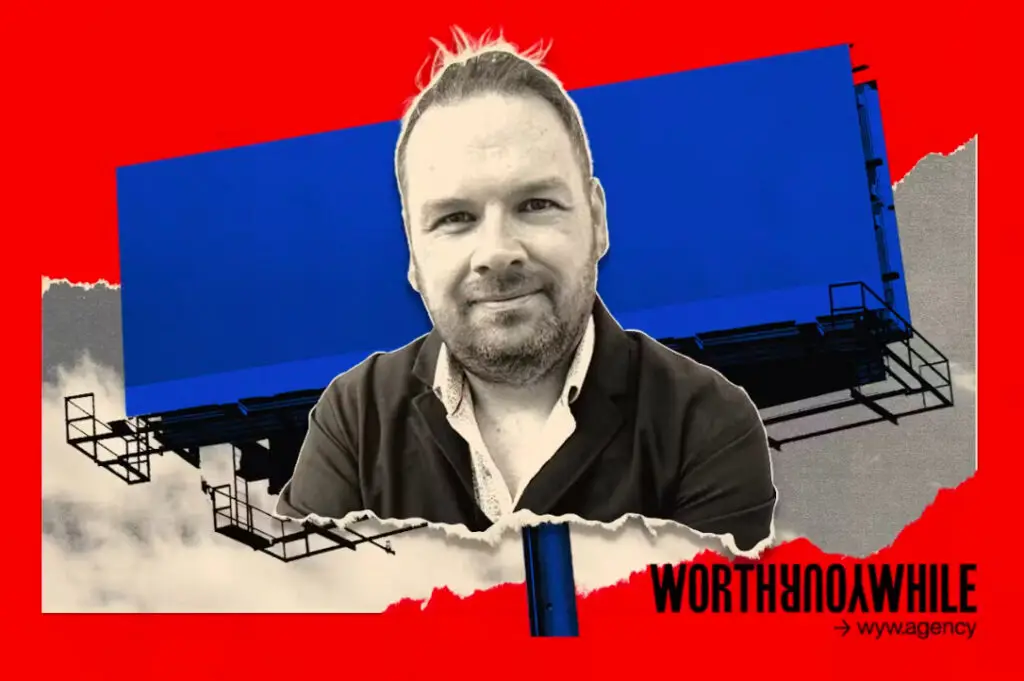
The travel giant’s UK & Ireland marketing and sales chief tells Tim Healey why holiday brands must balance inspiration with reassurance in a tougher travel market, how the business paused a campaign to meet value-conscious consumers and why AI is changing how trips are discovered.
You joined Tui as a graduate trainee, later moved to Google and returned to lead marketing and sales in the UK and Ireland. How did that journey unfold?
I loved traveling and played a lot of sport growing up, so my goal was always to find a way into working in sport or travel. I joined Tui on the graduate scheme back when that wasn’t the brand name, Thomson was our main UK brand then. My first placement on the scheme was in marketing and sales, and since January 2025, I’ve had the pleasure to lead marketing and sales at Tui in the UK & Ireland.
The graduate rotation scheme was 18 months, and then I had a number of different roles in digital and in the commercial function, and ended up leading our web development as head of product and innovation. I loved the company, it felt like a great fit for me. We sell an amazing product, holidays. I really connected with that.
After several years, I started to get slightly itchy feet as I took on bigger digital roles, and I began to explore where I could learn more about the sector but in a different business. I took on a role at Google, leading relationships with many of the UK’s travel brands.
Google was an amazing place to work. It gave me a perspective on the breadth of the industry. But as time passed I recognized that working ‘platform-side’ didn’t connect with me in the same way. I preferred being in a business that’s building and selling the end products for travel consumers.
Katie McAlister, who was CMO of Tui at the time, asked if I’d want to come back. I hesitated at first, but when I stepped back and thought ‘what do I connect with?’, I realized I loved being more consumer-facing. I returned to Tui to run all the performance marketing, and as part of that I brought our performance marketing in-house and onto a new tech stack.
A couple of years later I was offered an extended role leading the P&L of our Holiday Hypermarket business, where I led the launch of a new website called Holidays for Heroes during Covid. I then became managing director at First Choice, one of the business units within Tui. We relaunched the brand, targeting it at new consumers, and I ran that business for a couple of years.
Last January, I became marketing & sales director back on the Tui side of the business. I run all of our marketing in the UK and Ireland and our sales channels, which includes overseeing all digital sales, plus our 330 retail shops across the UK and Ireland, our relationships with the trade, and our Irish business.
It has been, and continues to be, a real privilege to have joined the company as a graduate trainee and then to lead a significant part of it, drive change, and move us forward in a challenging market for travel. But my role is also about making sure that, in the UK and Ireland, Tui continues to feel relevant, modern and close to what UK consumers want from their holidays.

What’s the offer at Tui?
Holidays are life’s best and often most important moments. We’re all about creating great holidays and at Tui we can take care of the whole journey. You can book a Tui holiday in a store, online or through our app. You can fly with TUI Airways, stay in one of our own or partner hotels, sail on our ocean or river cruise ships, and be looked after by our teams in destination.
That’s one of the real strengths of Tui Group: we’re an integrated tourism business, so we don’t just sell the holiday, we help create and deliver it end to end. The customer benefit is very simple: more consistency, more reassurance and more control over the quality of the holiday experience.
We create amazing holidays and give people the certainty that comes with booking a trusted brand. A big part of that is investing more in our own products, created with the customer in mind.
What’s coming up for you over the next 12 months?
The next 12 months are really about growth, modernization and making Tui even more relevant for UK customers. That means launching new hotels and new routes, such as direct flights to Zanzibar for winter 2027, and we’ve added more flights to Thailand and we’ve got a number of new hotel concepts in the pipeline.
We’re also focused on customer experience. We’re investing in the marketing proposition and imminently launching a loyalty scheme for UK customers. The benefit of being part of a group is that we launched it initially in the Nordics, and soon we’ll bring it to the UK, really rewarding our loyal customers, of which we’ve got millions across the group. That’s going to be a really important part of what we’re doing, alongside constantly improving our digital experience.
Personalization will be a big focus. We’ll be introducing new concepts that use AI to help our customers discover the right products for them. The choice available in holidays is enormous, and we understand how important one-to-one relationships with our customers are, personalizing the experience is one way we address that.
We’ll also continue to invest in and modernize retail. Many customers still want the face-to-face service our stores offer, so we’re looking at how we evolve and modernize that experience too.
Two years at Google advising travel brands and then back to Tui: what did you see from the Google side of the table that you couldn’t see from inside a travel business?
I learned to really understand the technology ecosystem that businesses can use, whether that’s search, YouTube, analytics or programmatic advertising. Google has great solutions that help you reach customers in a personalized way. They use data brilliantly and put those tools directly in the hands of marketers
I also had the benefit of meeting lots of different travel businesses. You get a different perspective seeing how a range of businesses build strong partnerships across the technology and advertising ecosystem, and how those businesses operate. I learned a lot from that.
That external perspective has really helped me. Google invests a lot in people and culture, they’ve led on workplace initiatives like wellbeing. Having the perspective of a massive global company taught me a lot that I’ve been able to bring into Tui, and it gave me confidence from seeing how things were done well elsewhere. I’d happily have stayed longer, but this role came up at the right time and it felt like the right move. Google remain a key partner we continue to work with very, very closely.

At First Choice, you went from owning marketing to owning the business, and you brought in no-fly holidays. What did running the full P&L teach you about where marketing earns its keep?
It gave me a broader perspective. Having clarity on what the brand and business stand for, a purpose for your colleagues to get behind, and a really sharp proposition, all of that compounds how marketing affects the bottom line, without a doubt.
For me, marketing is a commercial function. In that role I learned more about the commercial side of a business, and how important great operations are for a holiday business.
Marketing drove our decisions around things like flight-free holidays. That was our way of differentiating in a crowded market and doing something people wouldn’t have expected from a brand that had been around for decades.
Customers care about the environmental impact of their holiday. As part of the First Choice relaunch, we became the first company to introduce carbon emissions into the booking flow of a holiday site. We used Google’s carbon-emissions data per flight, and we partnered with a company called Byway, a leading flight-free holiday provider, white-labeling their site for First Choice.
That let us go to market with a genuinely different proposition, which was really exciting. It created a real buzz, internally and in customer-facing media.
You moved from a patchwork of agencies to more in-house and teams in house. What does that in-housing give you that the old model never could?
Performance marketing and digital distribution are a core competency for a travel business. The vast majority of what we sell is through tui.co.uk or the app, so we needed more control, more speed and more expertise inside the business. Bringing more of that capability in-house meant we could respond to trading conditions much faster. We’d been in a position where too much of it was done by third-party partners. Bringing it in-house gave us a few things.
First, speed and agility: we might make a commercial decision on a Thursday and want to execute it that same day, increasing spend in certain channels. That’s much harder when you’re working across a number of different partners.
Second, cost: the spend had grown so much since the advent of Google AdWords that it had become a huge cost for the business. As a travel business, marketing is one of our biggest cost bases, so we needed more of that competency in-house. We ran a big program of work to up-skill and recruit teams to deliver it, and that’s come to fruition, giving us the speed and agility we needed, and measurable benefits on our cost per acquisition.
We still actively work with lots of great agency partners, it’s not that we do everything ourselves, but some things are so core to how you operate as a business that you need them brought in-house.
Another huge benefit has been owning the data. We now have a greater level of personalization because we understand the data, and that lets us make better decisions.
We’re also very aware of the need to stay current. One of the risks of being in-house is that you miss the evolution of the technology, something external agencies are good at bringing. So we still work with partners who consult with us to keep us at the industry’s cutting edge. Our media partners, like Google and Meta, advise us and challenge our thinking and ways of operating, for the better.

Holidays are a big emotional purchase people make once a year. What does that ask of your marketing that maybe other categories don’t have to consider?
A holiday is often the biggest spend consumers make in the UK each year, but it’s also one of the most emotional purchases people make. It’s time with family, something people save for, and often the thing they look forward to all year. So it’s incredibly important that we show up in an emotionally resonant way. We have to stand for something, so that consumers recognize us and remember us.
We need to be top of mind when people are thinking about their holiday. We put a lot of focus on that, but we also need to stay close to how consumers are feeling. For a category like travel, that means balancing inspiration with reassurance. People need to feel excited about their holiday, but they also need to feel confident they’re making the right decision.
In more stable times people are simply excited about their holiday and making that decision, but there are also times when people are really uncertain and that has probably been a theme of 2026.
Costs have gone up and wages haven’t kept pace, so disposable income has shrunk. Getting your holiday right matters more than ever. It’s not a casual purchase, so the role of the brand is to give people confidence as well as inspiration.
With the Middle East conflict, customers in destination faced immediate uncertainty, and that was quickly followed by risk and uncertainty around fuel. As a business we needed to adapt and be more reassuring. Earlier this year, with the market moving fast and customers more value-conscious than ever, we were about to launch a new campaign, and we made the call to pause it and build a new, value-led campaign, ‘Tui gives you more’, within a couple of weeks. It was a reminder that sometimes you have to serve the moment rather than the plan. We have to give people confidence that their hard-earned money is being spent with a business that can deliver that end-to-end holiday with certainty. Our customers need to know that what they’re paying for is safe, secure and protected by a trusted brand that has the scale, people and operational control to look after them if things change.
At certain times of the year, we show up in a way that’s all about emotion. A great example of this is our Christmas campaign, based around Elves, launched by my predecessors. Advertising at Christmas was unusual for the category, because normally in November and December the advertising space is full of retailers rather than holiday brands, holiday brands traditionally show up on Boxing Day and through January.
Our Elf campaigns have been fun and light-hearted, but we’ve also adapted to be a bit more rational and make sure people feel reassured. That’s the balance we have to strike: brand work that creates emotion and memory, but also gives people confidence that they’re in safe hands. Staying close to our customers and what matters to them has been more critical than ever this year.

In your opinion, is there an AI versus human sweet spot?
There is, and I think finding that sweet spot is the job. Where exactly it sits, I think we’re all trying to figure out and the opportunity today is to lean into it as much as possible, be really curious and explore.
Our approach is upskilling everyone. As leaders, we need to lead by example in how we understand the benefits AI will bring to our work. We’ve given a lot of consideration to how we set the business up structurally to have the learning agenda that supports AI adoption.
Then we need to watch how far that goes: for example, AI in our creative output, or in contrast making sure Tui is recognized by the large language models, which is a really fascinating challenge.
As marketers we need to navigate the change AI is creating in search. People still discover holidays through search, but it is changing – longer, more complex queries are increasingly given an answer rather than a list of links. So our objectives are changing from just winning the ranking or click, to being in the recommended answer that the customer, and the model, already trusts and recommends.
What experiments can we run to understand what to do differently? How does our marketing mix need to change in response to LLMs? Thankfully, we’re learning that many of the things we were already doing are the right ones, but we need to double down on them: more investment, great storytelling, and clear, distinct propositions that customers can understand, because the large language models understand them as well.
Drawing on your leadership expertise, what has your career taught you that helps to make a great team?
Breadth and diversity of experience is essential. We’re a business that promotes from within a lot, and when I built the First Choice team from scratch, I loved bringing great talent from Tui into it but also people from other travel brands and other categories.
The other half of it is an open and psychologically safe culture. A great environment lets people bring their full self to work, and I try to lead by example. I’ll share what’s going on for me outside work, and what might be affecting how I show up, because I think that gives others permission to do the same.
Breadth of experience, and creating psychologically safe, open teams, I think is at the core of a successful team. That’s what I ’ve tried to focus on and continue to do so, now leading a team of more than 3,000 people.

What question would you like me to ask the next senior marketer when I interview them?
What’s the thing you do that keeps you effective that has nothing to do with work?
Your question from the last senior marketer that I interviewed: in the context of AI: what is ‘human value’?
For me, human value is the bit a machine can’t give you. In travel that’s easy to see, it’s the people. We’re in the business of humans going somewhere to feel something and in our business, humans play a huge role in making that.
Having true human connection has become even more important for us. Our colleagues providing holiday advice, flying the planes, looking after people on board, supporting customers in destination, those human moments are the bits people remember, and they all represent our brand.
What most of us love about travel is going to new and different places, experiencing a culture and connecting with people. If you boil it down, it’s the human experience that creates the value.
If there’s one thing you know about marketing, it is?
Marketing and commercial are one and the same. The sweet spot for marketing is where customer value and commercial value come together. It’s where you understand what you can build for customers, and how that delivers great outcomes for the business, that’s where marketing really creates value.
This interview is brought to you in partnership with Worth Your While – an independent creative agency based in Copenhagen, working globally. Named one of The Drum’s Indie Agency Top 100, WYW exists on the belief that time is humanity’s most valuable resource, and that the only ideas worth making are ones that earn it. You might die tomorrow. Make today worth your while. https://wyw.agency/
This interview has already appeared in The Drum. Discover the best campaigns, industry insights and interviews from world-leading marketers, creatives and more.