The bank’s brand strategy chief tells Tim Healey why financial services choice is still driven by feeling as much as function, how Santander is moving Ant and Dec closer to consumers’ real lives and why brands that trade in belief and meaning will survive the rise of AI recommendations.
You started in Labour politics before moving through Mars, Kantar and into Santander, where you now lead brand marketing and communications. How did that journey shape the marketer you are today?
While working as a speechwriter for a minister, I was of the view that if I wanted to be in politics for the long term, I should go and understand what life was like outside it and learn a trade. I understood concepts around positioning, communications and creating campaigns, so it seemed logical that I should explore marketing.
The two disciplines, communicating on behalf of brands or political parties, are not very different. I was in Scotland working for a Scottish minister, and this gave me time to do a master’s in public policy. In turn, that gave me the opportunity to have another pass at the milk round.
My girlfriend at the time, now my wife, was applying for jobs, and I picked up one of the application forms and filled it in. It was for Mars and I was lucky enough to get in. I spent four years there, the best of which was working in supply chain management, not because I love supply chain management, but it trained me to have an unbelievably commercial outlook on my trade and I have brought this back with zeal into my marketing work.
If you are going to excel in a discipline within a business, you need to understand the whole business. I think marketing as a trade is actually under threat because too many marketers fail to have a better understanding of the whole business. We allow other units to judge our work without being able to position our work in the context of the economy of the business we work in. We need to be better at standing up to the commercial challenge.
Next, I explored life as a consultant, and fast-forward 15 years: Santander was my client, and as a result of a two-year program of work, I was invited to set up a team to provide the same service but work in-house, and that’s what I have been doing since 2017.
What has Santander got planned for 2026-2027?
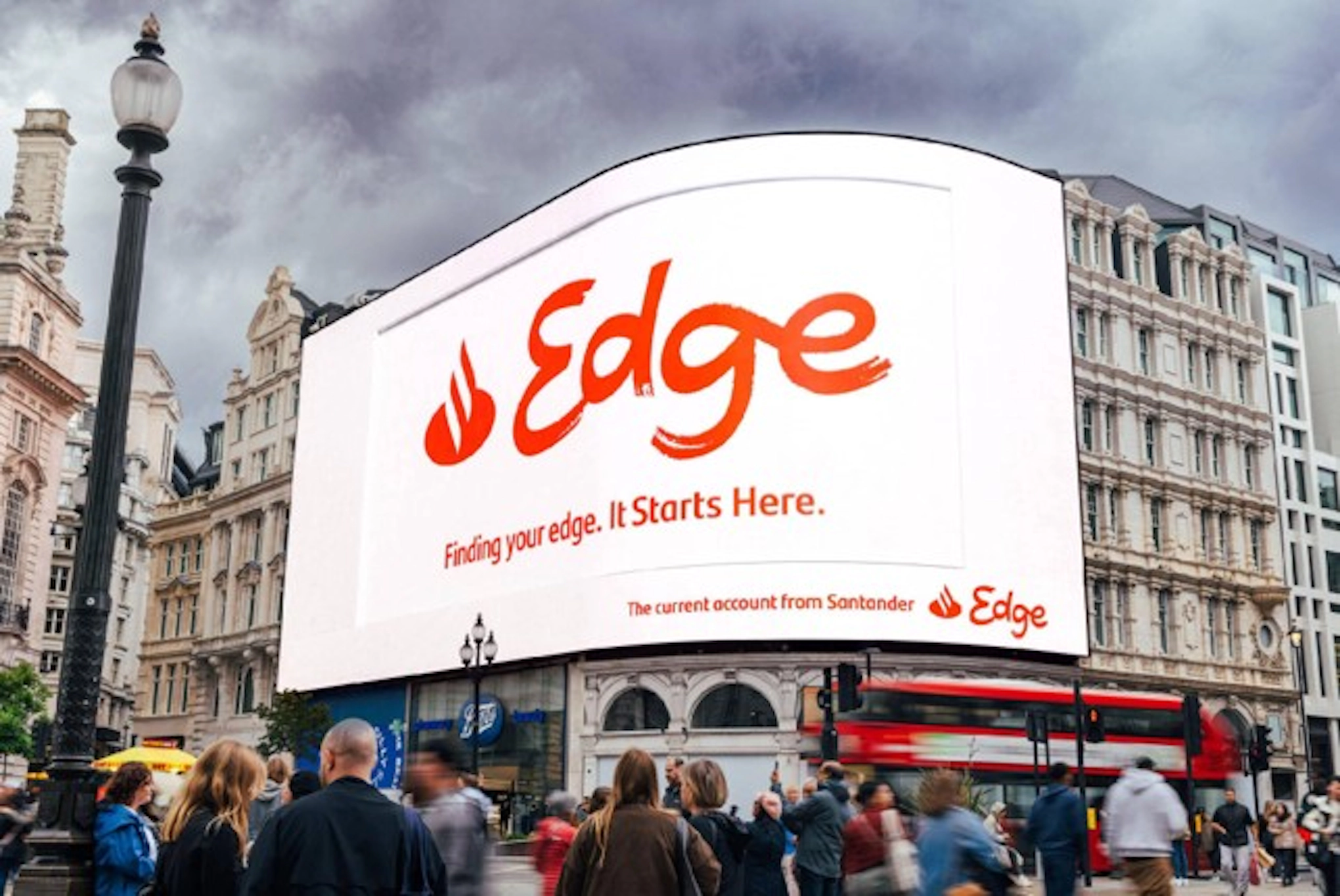
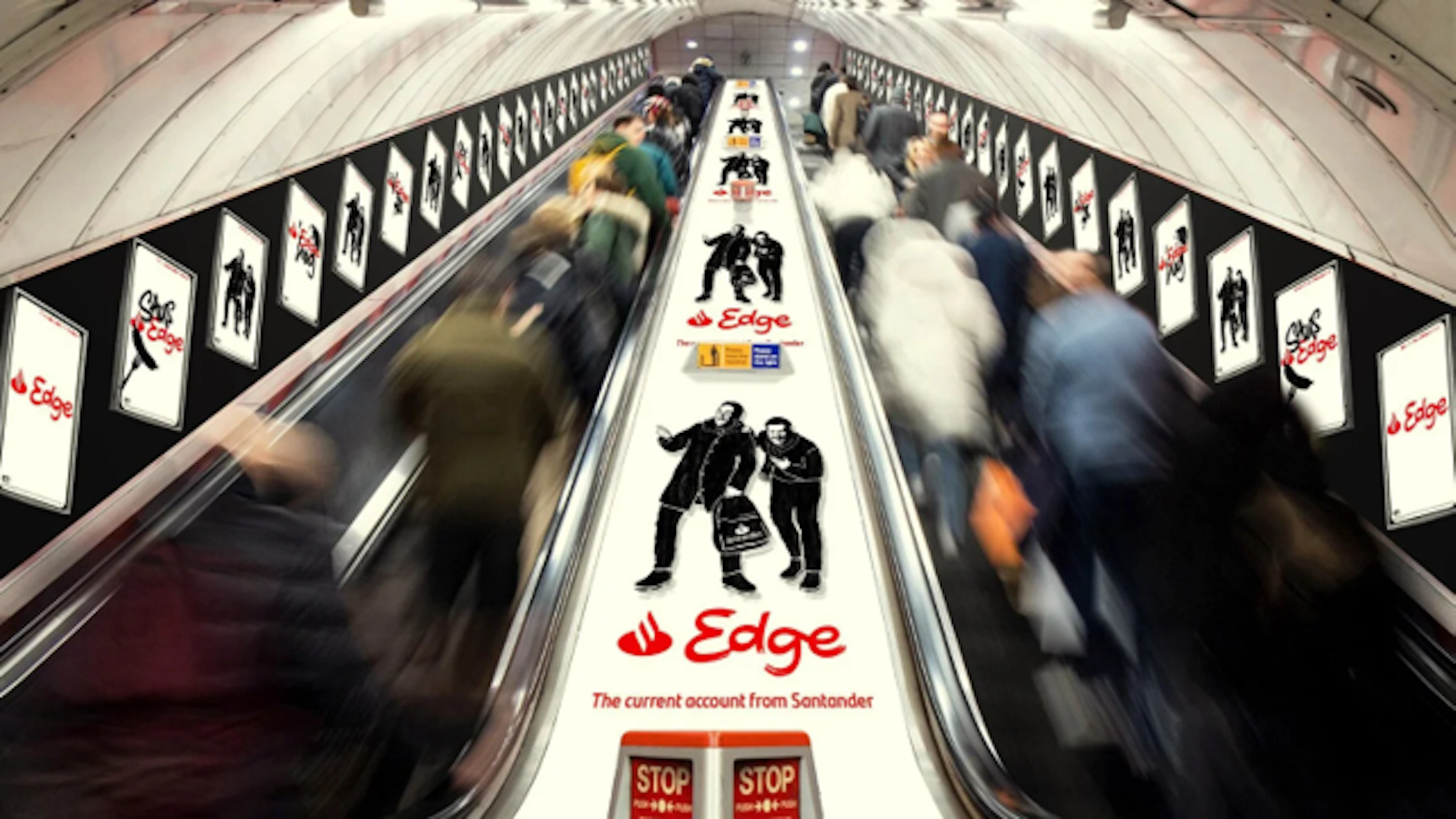
The previous campaign with Ant and Dec did a great job for us in terms of salience, but I can’t wait to see how the new campaign lands. We’re trying to take the brand into space where it connects with real-life challenges and problems for people.
The first of these has led to a first-time buyer proposition designed to make home ownership affordable again for the younger generation – and without the backing of mum and dad. What has been interesting about the campaign is we haven’t just taken the proposition and run with it, but shaped the proposition suite with them, so we not only have the mortgage with just a £10,000 deposit, but a vehicle to save the £10,000 too.
But I think the magic of the campaign, and kudos to Dan Sherwood, Tina Boyle and the team at Saatchi’s who have led on this work, is that it has moved Ant and Dec out of a slapstick world that mocks the category and into the consumer’s world, where they keep their charm but make people feel more seen.
This is Publicis’ first campaign for us in the UK, and Franki Goodwin, and Sam Wise have been really clear that banking customers deserve better, more active engagement that actually gets to grips with the grit and grind they are facing. The next one is shaping up even more nicely.
Santander has recently completed a global creative and media review with a stated aim of unifying brand strategy across different markets, one agency, one platform. What have you learned from the process? How do you hold on to what makes Santander genuinely relevant to a British consumer when the imperative from the center is global coherence?
We’re still very much on the journey. You have to consider that Santander is a Spanish bank that has acquired other banks across culturally and economically diverse markets. In most cases, we have acquired a challenger in each territory.
Santander has built and grown on all of those institutions but as [executive chair] Ana Botin says, we need to be a global financial powerhouse rather than a federation of local banks. In my view, brand has to be critical to that. The process of bringing us together as one creative engine is not really any less difficult for marketers as it is for tech engineers. There is a lot of rewiring that needs to be done, but we are getting to a place where we are telling the same story – and that is the critical first step.
We need to consolidate and create a consistent brand of scale so that when we put a Santander flame on a Ferrari car in F1 or on a Champions League team, it becomes a meaningful asset, and it means the same thing everywhere.
It can be really tricky, as there is localized nuance across all of our markets. The challenge is that we need to have a single point of view. That view must be built on evidence and insight into who our consumers are. Then we can tell compelling stories, drive compelling experiences, have a central sense of excellence to build our applications and have a central set of propositions and partnerships that can be deployed across all our markets. This will give us scale and consistency and make us meaningful in every territory.
I’d like to revisit your time working with the Labour Party: what does political communications teach you about persuasion, audience and message that maybe conventional marketing training doesn’t?
Marketers are here to pursue a creative endeavor. We operate on the agency and the currency of belief, then seek facts to assess, manage and mitigate risk. Fact has a place, but if you don’t start with belief, then you are going to struggle to create something customers can believe in. You can create hypotheses, but you can never fully evidence stuff until you do it.
It’s the same in politics as it is in marketing. I don’t believe people vote for Nigel Farage, Keir Starmer or Zack Polanski because they love their policies. Labour didn’t win the last election because they really loved the policies. Nobody ever says: ‘yeah, they had my vote. I devoured each and every one of their manifestos and P43 – the bit about dog passports had me right there.’
In the ‘new world,’ it is widely believed that people at the next election will use AI for the first time to ask who they should vote for. I think the rejection of AI’s recommendation will be huge. The reason for that is because people vote on a feeling. They will look to confirm their bias and with a character like Nigel Farage you are going to love or hate him because he stands out and he stands out for something.
The parallel with marketing here is that the consumer is fickle, has little time to rationalize any decision, and psychologists would even argue that they have no ability to make anything other than an emotionally driven decision. Just like politicians, you need to respond to their changing needs and desires: that’s no different for political leaders, parties, brands or a bank. What puts you in doesn’t necessarily keep you in.
First, you create feeling by being focused on a belief. You need to respond to the change in customer sentiment. The customer is never wrong, and so if they’ve changed their mind, they’re entitled to do so. It’s their vote. It’s their pounds, and you need to kind of move with what they what they’re telling you and if not be the best at persuading them to think otherwise. That is the very definition of innovation. No one asked for an MP3 player – but Jony Ive made one cool enough for people to use.
How’s your marketing team structured?
I run the strategy unit within marketing. We have four pillars of marketing. We’ve got the person who buys media: his job is to make sure the eyeballs are there and ensure best use of our budget and our plans are aligned to commercial objectives. We have a campaign team who run our content cycles and all our customer communications. And then we have a team that run sponsorships and events.
We report into corporate communications because we look after brand reputation. The ‘below the line’ and performance sits within the retail bank, within the individual business units.
My team is there to look around corners. We are a strategic foresight business, culturally and intellectually curious, and we look at our world through the lens of brand and how that can be used as an operating system within the business.
We have built a really strong level of insight into customer motivations that plugs into FRESCO, the atomistic, industry-wide tool, so we have a view of the customer that is deeply humanistic – understanding their cultural connection points, their jobs to be done, and their cognitive biases. We have then leveraged that model to build two additional segmentations for our retail business and corporate banks.
These tools help us focus on what we can do to make the customers’ lives better and so drives us into questions like ‘What does the proposition look like in five years’ time?’ And then, ‘How do we shape the customer experience?’ so that we’ve got something cool to go to market with. Once that is established, we own all the tone of voice and design elements that you would expect a brand strategy to do. But we aren’t here to put lipstick on pigs – we are here to breed new animals.
How do you surf the tsunami of rapidly evolving marketing tech?
I’m not best placed to answer this on behalf of Santander, but what I will say is that the debate right now is shifting from share of search to share of model. We know that LLM is going to have a bigger role in driving consumer choice than Google has – unless, of course, it wins that battle. There will be a battle to conquer how that works.
If you drink the AI kool aid you’ll believe that we’ll surrender our choice to the bots. We’ll just let Claude pick stuff for us. I’m just going to have to call that out. I simply don’t believe it. If I need a six-inch screw, then I might use an LLM to find me the cheapest one, and for sure, Rufus is going to have a strong start in that space. If I’m in a commodity business, then this is hugely important because I’m going to move decisions that don’t matter to me on to bots to just automatically get it done, and it’s going to open up markets and drive prices lower.
But this isn’t the case for more considered answers to questions like: ‘What’s the best bank account for me?’ Traditional core brand marketing is going to become really important here. The bots will serve what people are saying about us: their knowledge will be based on the content which is informing the bots. If we’re not salient, we won’t be an answer to the question.
When you are presented with brands, you often have a sense of loyalty to a specific brand, in spite of an online recommendation. I’m not going to suddenly buy Adidas trainers if I am a Nike fanboy. I’m not suddenly going to switch brands because a machine told me to. That loyalty won’t be there to the machine. And indeed if I pride myself on being on it, I am going to want to zag when everyone else zigs, so I am not going to listen to the ultimate zigbot.
As a result, I think people’s emotional attachment to brands will matter. If we are only swayed by LLM choices for us, then the culture of influencers and celebrity endorsements will be dead in the water. And this will not happen – fans will always want to know what Taylor Swift is wearing.
They will care because of the cultural impact – and that fact that culture prompts conversation – in real life or online on Reddit: “Oh, did you see the new Superstars that Taylor Swift was wearing?” Brands that are brand-led today will be brand-led tomorrow. Brands that are price-led today will be price and function-led tomorrow. But value – commanding an acquisition and more importantly a price point – that is going to be commanded by those that can trade in belief and meaning.
In banking, the data from Kantar is very clear. It’s a brand-led choice. Banking choice has more in common with choosing a luxury car than airlines, grocery stores, or telcos. For whatever reason, people seem to actually care about the logo on the card that’s in their wallet. People may well have accounts with multiple banks, and there’s definitely a race for us then to secure a relationship of any sort, but their ‘primary’ account is one that is going to connect on an image and emotion-based.
Once we have secured that relationship, we need to be the bank that people come back to again and again. For example, to be the banking app that they enjoy using the most. If we do that then we will win out. At Santander, we want to be the best app in town that people want to use again.
What myth would you most like to bust about marketing?
The myth that I would like to bust is the perception outside of marketing is that ‘marketing is free’. This fuels the idea that marketing doesn’t really make a difference, and the idea that marketing only leads to short-term sales growth.
That people still hold these views is unbelievable, given that Binet and Field’s work ‘The Long and the Short’ (which lays out the irrefutable evidence of the benefits of long-term brand marketing) is nearly 15 years old. CEOs would benefit from understanding turning off ‘the brand marketing taps,’ is going to drain capital from your business. Nike’s share price is testament to that. Promotions are like morphine – they take away the pain, but they don’t treat the cause of it and in the process they make you hallucinate.
What question would you like me to ask the next senior marketer when I interview them?
What was your biggest failure? And what did you learn from it?
Your question from the last senior marketer I spoke to is from Antoine Le Nel, CMO of Revolut. He asked: ‘What do you think Revolut is doing wrong?’
I don’t know whether I’d say Revolut is doing anything wrong. It’s built a very distinctive brand and that clarity has undoubtedly been a source of its success.
Revolut’s brand has often felt tailored to highly driven, digitally confident consumers who value speed, control and modernity. That’s been one of its strengths and it’s helped it carve out a very clear position in consumers’ minds.
The challenge with owning such a distinctive position is that it can become both an asset and a constraint. It gives you differentiation and focus, but as you grow it can make expansion into adjacent categories more complex. The next stage of growth in financial services is often about building deeper relationships across savings, lending and longer-term financial needs, and doing that successfully requires you to broaden your appeal without diluting what made the brand distinctive in the first place.
In that sense, I think Revolut’s opportunity and challenge are one and the same. It has built a very clear space for itself in the market, and the question for the future is how far that positioning can stretch while remaining authentic. That’s not a challenge unique to Revolut – it’s one faced by almost every successful challenger brand as it matures.
If there’s one thing you know about marketing, it is?
Marketing is always emotional. The value you create as a marketer, in terms of being either easy to acquire or to command a higher price, comes because you’ve injected intangible value into your asset. If you are simply the sum of your parts, you’re not going to make good margin.
We know that because Coke exists, and more than half Coke’s value in the market, in terms of its share price, is worth way more than its tangible assets. We also know that because Tesla share price grew to be 10 times more than its next 10 competitors combined, and it definitely wasn’t worth that in terms of its sales value or its capital holding. This ‘perceived value’ isn’t just how the consumer feels brand and business value, it’s how the investor community feels it too.
This interview is brought to you in partnership with Worth Your While — an independent creative agency based in Copenhagen, working globally. Named one of The Drum’s Indie Agency Top 100, WYW exists on the belief that time is humanity’s most valuable resource, and that the only ideas
This interview has already appeared in The Drum. Discover the best campaigns, industry insights and interviews from world-leading marketers, creatives and more.